Just 122 kilometers from Mumbai, the Adivasi village of Dapurmal in Maharashtra presents a stark contradiction: perched above the Upper Vaitarna Dam, one of the region's largest water reservoirs, its 250 residents endure a daily struggle for drinking water. While the dam supplies water to millions in Mumbai, the villagers trek through forests and steep slopes for hours each day to fetch a single pot of water.
A Village Above Water, Yet Without It
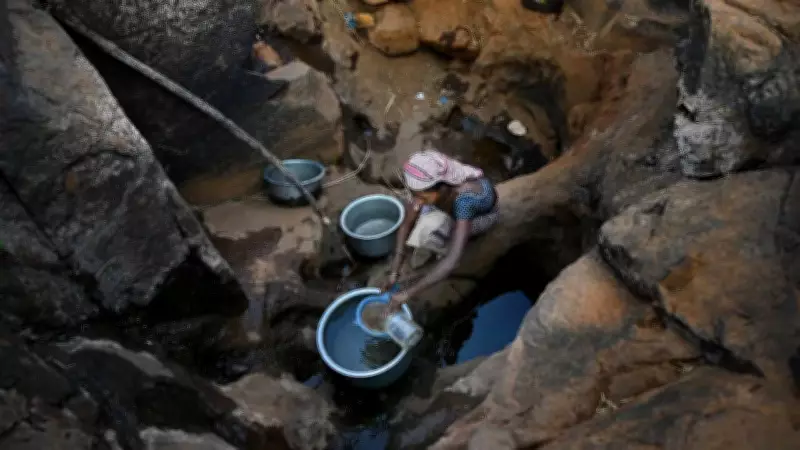
The vast Upper Vaitarna reservoir shimmers below Dapurmal under the summer sun, but above it, families ration every drop. In 2025, villagers dug a small rainwater well with their own hands, hoping it would sustain them through harsh summer months. For a while, it worked. Then April arrived. The heat intensified, the earth cracked, and the well dried completely. What remained was desperation and the return of a journey the village knows too well.
The 8-Kilometer Walk for Survival
Every morning before the heat becomes unbearable, women, children, and elderly residents begin descending nearly four kilometers through rugged forest terrain to collect water. The route is steep, uneven, and dangerous. Loose rocks shift underfoot. Dry soil crumbles along narrow paths. In several places, there is barely enough room to walk safely while balancing empty containers. The forest offers little protection from the heat, especially in summer when shade disappears and temperatures rise sharply. For the villagers, this is not an occasional hardship. It is their daily routine.

‘What Choice Do We Have?’
For many who marry into Dapurmal, the reality is difficult to imagine until they live it. Asha, 30, who came to the village from Igatpuri after marriage, says the hardest adjustment was understanding what it meant to live without accessible water. “I cried the first time I came here,” she recalls. “Back home, tap water was normal. Here, every trip feels like my body is refusing to go. But what choice do we have?” Her words echo across the village, where survival depends not on convenience, but endurance.
A Crisis Measured in Exhaustion
Walking alongside the villagers changes one’s understanding of distance. The climb quickly drains energy. Breathing becomes difficult. Muscles begin to ache under the relentless summer heat. The journey that residents undertake every single day feels punishing even once. Yet for the people of Dapurmal, there is no alternative route, no backup supply, and no escape from the terrain. Scarcity here is not just about lack of water. It is about the physical cost of reaching it.
So Close to Mumbai, Yet Worlds Away
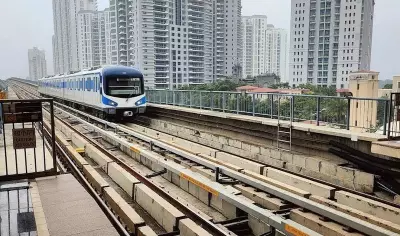
Dapurmal is barely 122 kilometers from Mumbai, one of India’s wealthiest and most connected cities. But the distance between the two places feels immeasurable. One lives beside abundance; the other climbs mountains for a pot of water. One receives water through pipelines every day; the other depends on dangerous forest treks for survival. For the residents of Dapurmal, the struggle for water is not a headline or a temporary crisis. It is life, repeated every single day.
Children Growing Up with the Burden
In Dapurmal, the water crisis begins shaping lives early. Children often accompany their parents on the daily trek, learning from a young age that fetching water is as essential as going to school or eating a meal. During summer, many spend hours each day helping carry pots uphill instead of studying or playing. The exhaustion is visible in their slow climb back home, stopping repeatedly under the sparse shade to recover strength before continuing the journey. For them, scarcity is not an abstract issue. It is the reality they grow up carrying.
A Story Bigger Than One Village
Dapurmal’s struggle reflects a larger reality faced by many remote settlements across India. Even in regions located close to major cities and critical infrastructure, access to drinking water can still depend on geography, poor connectivity, and years of neglect. The image of a village overlooking a massive dam yet lacking water for survival captures the sharp inequalities that continue to define development. The people of Dapurmal are not asking for miracles. They are asking for what much of urban India already considers ordinary: safe roads, accessible water, and a life where survival does not begin with an exhausting climb every morning.

The Climb Back Is Even Harder
Fetching water is only half the struggle. Carrying it back uphill is the real test. With pots balanced on their heads, villagers slowly make the exhausting four-kilometer climb back to Dapurmal. The round trip stretches beyond eight kilometers and can take more than two and a half hours. Children frequently stop midway, drained by exhaustion. Elderly residents struggle for breath. Some stumble on the rocky incline. Others fall. And yet, the next morning, the journey begins all over again.
No Roads, No Tankers, No Easy Rescue
Dapurmal’s water crisis is inseparable from its isolation. There is no motorable road connecting the village to the outside world. Tankers cannot climb up to replenish wells like they do in nearby settlements. During medical emergencies, patients are carried for hours on makeshift stretchers through the same steep forest paths. Children must walk long distances for education beyond primary school. The absence of a road shapes every aspect of life here, from healthcare and education to water itself.
Waiting for More Than Rain
For the people of Dapurmal, the monsoon is not just a season; it is survival. Every year, villagers wait for the rains to refill streams, wells, and small storage pits that help them endure the months ahead. But with summers growing harsher and water sources drying faster, uncertainty hangs over the village longer each year. Residents say they do not want sympathy; they want basic infrastructure: a road, reliable drinking water access, and a system that ensures no family has to risk injury every day for a single pot of water. Until then, the people of Dapurmal will continue making the same long climb, carrying on their heads the burden of a crisis the rest of the world rarely sees.