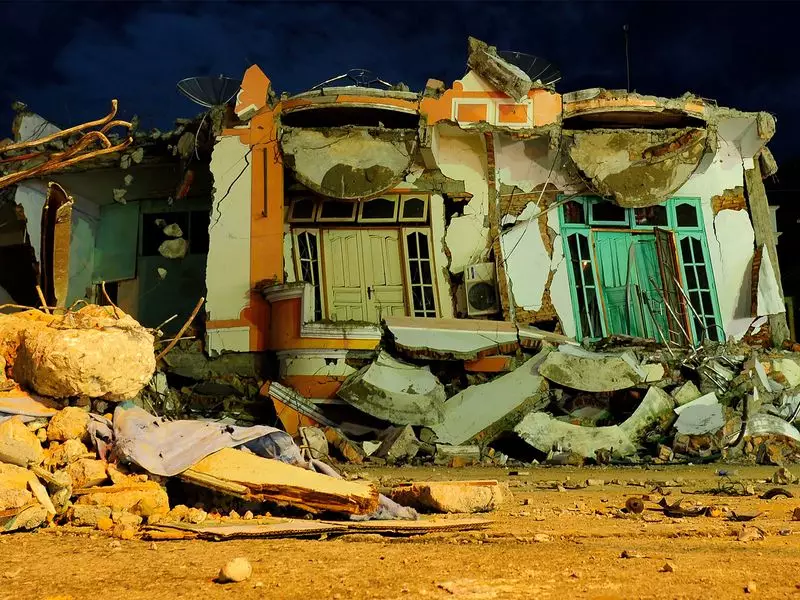
A moderate earthquake measuring 4.5 magnitude has struck Indonesia, according to recent seismic reports. The tremor occurred in the early hours, adding to the region's frequent geological activity.
Earthquake Details and Epicenter Location
The seismic event was recorded by monitoring agencies with precise coordinates placing the epicenter at 6.77 degrees South latitude and 112.37 degrees East longitude. The earthquake struck at a depth of approximately 10 kilometers beneath the Earth's surface, making it a relatively shallow seismic event.
Indonesia's geographical position makes it particularly vulnerable to earthquakes, sitting along the Pacific Ring of Fire where multiple tectonic plates converge. This region experiences frequent seismic and volcanic activity due to the complex interactions between the Australian, Pacific, and Eurasian tectonic plates.

Timing and Seismic Measurements
The earthquake occurred at 05:46:30 Indian Standard Time (IST), with the National Center for Seismology confirming the exact timing and magnitude readings. The 4.5 magnitude places this event in the moderate category, capable of causing noticeable shaking but typically minimal damage when occurring at this depth.
Seismologists use the Richter scale to measure earthquake magnitude, where each whole number increase represents a tenfold increase in amplitude. A magnitude 4.5 earthquake is generally felt by people indoors and can cause slight vibration of objects, but rarely causes significant structural damage.
Regional Context and Seismic History
Indonesia has a long history of seismic activity due to its position along one of the world's most active fault lines. The country experiences thousands of earthquakes annually, though most are too small to be felt by residents. The Java region, where this recent earthquake occurred, has experienced several significant seismic events in recent years.
Earthquake preparedness remains a critical concern for Indonesian authorities and residents. Building codes in many parts of the country have been updated to withstand seismic activity, and public awareness campaigns continue to educate people about earthquake safety procedures.
While this particular earthquake did not generate a tsunami warning, Indonesia's history includes several devastating tsunamis triggered by undersea earthquakes. The country's early warning systems have been significantly improved since the catastrophic 2004 Indian Ocean tsunami.
Monitoring agencies continue to track aftershocks and seismic activity in the region. Residents in affected areas are advised to remain vigilant and follow safety protocols during any subsequent tremors. The relatively shallow depth of this earthquake means it was likely felt more strongly at the surface than deeper earthquakes of similar magnitude would be.