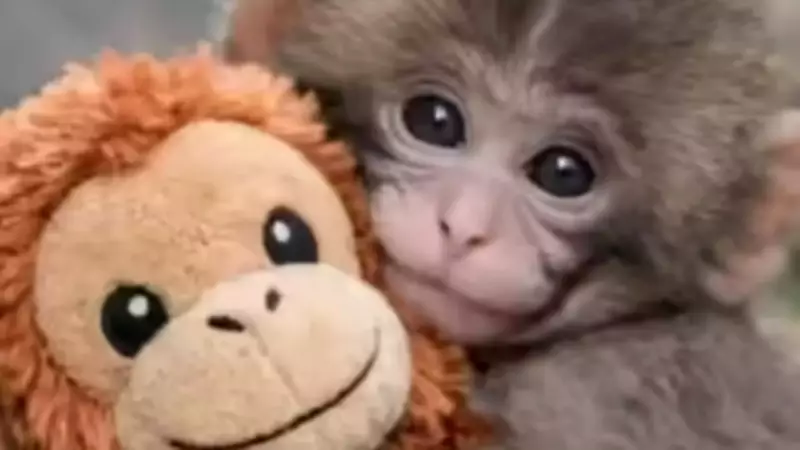
Punch the Macaque: How a Stuffed Toy Helped an Abandoned Baby Monkey Find Hope
It all began with a series of heartbreaking videos that captured global attention. Clips of a tiny Japanese macaque being chased, dragged, and pushed away by older monkeys at a zoo in Japan spread rapidly across social media platforms. The baby, named Punch, would often retreat to a quiet corner, clutching a stuffed orangutan toy tightly to his chest. This plush companion became his only source of comfort after being rejected by his own mother, a scene that resonated deeply with viewers worldwide.
People across the globe saw something profoundly familiar in that image: a frightened infant, alone in a crowd, seeking reassurance in whatever he could hold on to. Punch’s story transcended mere animal behavior; it evolved into a powerful reflection of vulnerability, resilience, and the universal need for attachment. Zookeepers had given Punch the toy after observing he had nothing to cling to, recognizing that for baby Japanese macaques, physical contact is essential for warmth, protection, and emotional security.
The Science Behind Maternal Abandonment in Primates
While emotionally distressing, scientists explain that maternal abandonment in primates is a natural, though relatively uncommon, behavior shaped by survival, biology, and environmental pressures. Several key factors contribute to this phenomenon:


- Inexperience of First-Time Mothers: First-time mothers often lack the behavioral and hormonal readiness needed to care for an infant. In primates, maternal care is partly learned through social observation and experience. Without prior exposure, some mothers may fail to recognize infant cues or struggle to respond appropriately. In Punch’s case, experts noted his mother was a first-time parent, making inexperience a likely factor.
- Environmental Stress and Extreme Temperatures: Environmental stress plays a major role in maternal decision-making. Extreme heat, habitat disturbance, noise, overcrowding, or resource scarcity can increase stress hormones like cortisol. Under such conditions, mothers may prioritize their own survival over caring for an infant whose chances of survival appear uncertain. Punch was born during a heatwave, a physically demanding period that may have influenced maternal behavior.
- Poor Maternal Health or Physical Condition: Caring for an infant requires enormous energy. Mothers in poor physical condition, suffering from illness, malnutrition, or exhaustion, may lack the capacity to nurse and protect their young. From an evolutionary standpoint, conserving energy for future reproduction can increase long-term reproductive success.
- Infant Health and Survival Assessment: Some primate mothers instinctively assess the strength and viability of their infants. If an infant appears weak, unresponsive, or unhealthy, the mother may reduce care or abandon it entirely. This behavior, though harsh, is rooted in evolutionary survival strategies, allowing mothers to invest resources where survival chances are higher.
- Social Hierarchy and Group Dynamics: Japanese macaques live in strict matrilineal societies, where rank determines access to resources and protection. Infants inherit their mother’s social rank. Without maternal protection, infants may face aggression from higher-ranking members, leaving them socially vulnerable and slowing their ability to learn submission and communication cues.
- Psychological and Developmental Factors: Studies show that mothers who experienced neglect or trauma as infants themselves may be more likely to display poor maternal care later in life. Maternal behavior is influenced by early developmental experiences, hormones, and social learning, making caregiving both instinctive and shaped by environment.
The Role of Attachment and Substitute Figures
Punch’s attachment to his stuffed toy highlights a well-documented psychological phenomenon. Infant primates form deep bonds with attachment figures for emotional regulation and stress reduction. When the biological mother is absent, substitutes, including objects or caregivers, can provide partial emotional support. The toy helped Punch regulate fear, build confidence, and navigate social interactions, serving as a lifeline in an unfamiliar social world.
Over time, there have been hopeful signs of progress. Visitors and zoo officials observed Punch slowly interacting with other monkeys. Some were seen grooming him, a crucial sign of acceptance in macaque society. He still carries his plush companion, but he has also begun exploring, playing, and cautiously building social ties. The same troop that once intimidated him is now, gradually, becoming his community.
A Story of Loss and Resilience
Punch’s journey illustrates both the fragility and adaptability of infant primates. His fragile grip on a plush toy initially symbolised isolation, but today, that same grip represents survival—a bridge between loneliness and belonging. This story reminds us that maternal abandonment, while painful to witness, is not cruelty in the human sense. It is a complex biological response shaped by survival, stress, and instinct.
With care, patience, and a little help, even the smallest and most vulnerable can find their way back into the social world they were meant to be part of. Punch’s experience underscores the importance of understanding animal behavior through a scientific lens while acknowledging the emotional parallels that connect all living beings.