

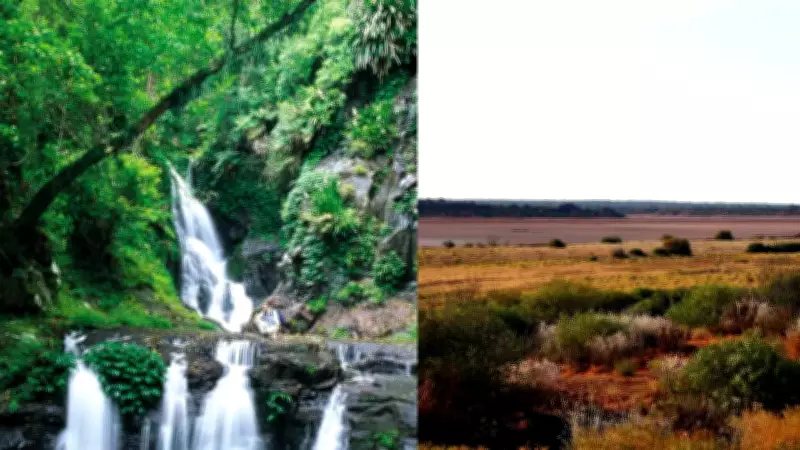
Australia's Extreme Climate: From Deserts to Rainforests in One Nation
Our planet is far more unpredictable and fascinating than most people realize. While most countries are dominated by a single climate type, such as a hot desert or a wet rainforest, Australia completely breaks this pattern. Travel just a few hundred kilometers, and you can step from sun-baked dunes directly into dense, dripping forests. The country manages climatic extremes like few others on Earth.
How Geography Shapes Australia's Extreme Landscapes
The primary reason for Australia's remarkable climate diversity lies in its unusual geography. A massive central landmass sits beneath persistent high-pressure zones, creating a barrier that prevents rainfall from reaching the interior. This geographical feature explains why vast deserts dominate the country's heartland. Meanwhile, moist winds blowing in from the Pacific Ocean collide with the northeastern coast, dumping heavy rainfall that sustains lush tropical rainforests.
Experts emphasize that this combination of extreme arid and humid environments existing side by side is exceptionally rare and occurs on a scale unmatched anywhere else in the world. Nearly one-third of the Australian continent consists of desert or semi-arid regions, including legendary expanses like the Great Victoria, Great Sandy, Simpson, and Tanami deserts.

Australia's Unusual Mix of Deserts and Rainforests Side by Side
In the northern regions of Queensland and northern New South Wales, ancient rainforests thrive in stark contrast to the arid interior. The Daintree Rainforest stands as the most famous example, reportedly over 180 million years old, making it one of the world's oldest surviving tropical rainforests. This ecosystem hosts unique plants, insects, birds, and mammals found nowhere else on Earth, sustained by heavy rainfall, fertile soil, and warm temperatures.
It seems miraculous that such vibrant greenery can survive so close to some of the planet's driest deserts, but nature maintains this delicate balance through complex interactions between coastal rainfall patterns and inland wind systems. Fertile soil supports life where moisture is available, while high-pressure zones block precipitation where it's scarce, allowing both ecosystems to coexist in what experts describe as an environmental oddity.
Australia's Incredible Diversity: From Deserts to Rainforests and Coral Reefs
Deserts and rainforests represent just the beginning of Australia's ecological variety. The continent also features expansive savannas, rugged mountains, extensive wetlands, winding rivers, pristine beaches, and the world's largest coral reef system—the Great Barrier Reef, located near tropical rainforests. Few countries pack such environmental diversity into a single landmass.
Approximately 70 percent of Australia's land is classified as arid or semi-arid, yet ecosystems flourish throughout the continent in what appears to be nature's impossible puzzle. Australia stands as one of the most ecologically varied and scientifically significant countries globally, offering endless surprises for travelers, scientists, and nature enthusiasts alike.
The country's size, latitude, and unique weather systems create these dramatic contrasts, telling a compelling story about geography, climate, and life's remarkable ability to adapt to extreme conditions. For visitors, experiencing Australia feels like exploring two different planets within one nation, showcasing nature's incredible capacity for diversity and resilience.






