Bagaha: While migration for employment has long defined Bihar’s economic narrative, an unusual pattern is emerging along its borders — residents are crossing into neighbouring regions like Uttar Pradesh and Nepal not for work, but to consume liquor. In West Champaran’s Bagaha subdivision, the ripple effects of prohibition are being felt not just socially but economically, with neighbouring areas in Uttar Pradesh and Nepal reaping unexpected benefits.
Every afternoon, groups from Bagaha and adjoining blocks head towards bordering towns. By evening, eateries and liquor outlets in these areas are packed, creating a thriving cross-border economy.
Impact on Uttar Pradesh Border Towns
Govind Kumar, a resident of Amwa Khirkiya in Uttar Pradesh’s Kushinagar district, said the transformation has been striking. “After the liquor ban in Bihar, many hotel operators started setting up meat and fish shops in Padrauna and Khirkiya. By evening, these shops see huge crowds,” he said. Govind added that a trader from Nawalpur near Bettiah set up a meat shop six years ago. “Today, he sells 15-20kg of chicken and 5-7kg of mutton daily. He also sells Champaran’s famous ‘bhoonja’, which is quite popular among people from Bihar.”

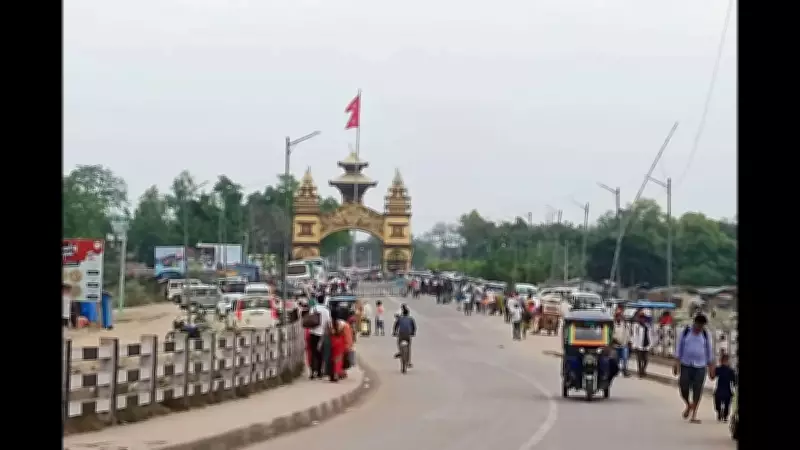
Bagaha subdivision — including Bagaha, Madhubani, Piprasi and Thakaraha — shares a porous border with Uttar Pradesh, with thousands crossing daily into towns such as Tamkuhi Raj, Padrauna and Khadda. Pawan Sahni, a resident of Paniyahwa, pointed to the visible shift. “If you want to see the effect of Bihar’s liquor ban, just come here. Earlier, there were only one or two shops where people came to taste fish from the Gandak river. But after prohibition, everything changed,” he said. “Now, more than 20 fish and meat dhabas are operating here. By evening, they are filled with people coming from Bihar,” Pawan added.
Suraj Jaiswal, a ‘dhaba’ operator, said, “Most of our customers come from Bagaha and nearby areas. The liquor ban in Bihar has benefited hotel businesses here. After noon, you won’t find a single empty eatery.”
Shift in Livelihoods in Bihar
Back in Bagaha, prohibition has altered livelihoods. Nikhil Yadav, once in the liquor trade, said, “After prohibition, we faced a major employment crisis. I shifted to real estate.” Another trader said, “I had to start a jewellery and clothing business. It has increased Uttar Pradesh’s revenue and created employment there.”
Spillover into Nepal’s Terai Region
The trend extends to Nepal’s Terai. Deepak Kumar from Valmikinagar said, “After prohibition, people who enjoy drinking often travel to Nepal. Tourists visiting the Valmiki Tiger Reserve without family prefer staying across the border.”
Sujit Kumar from Sikta added, “In the evenings, places like Bhiswa in Nepal are crowded mostly with Indian visitors. If prohibition is lifted in Bihar, these businesses could face a serious downturn.”