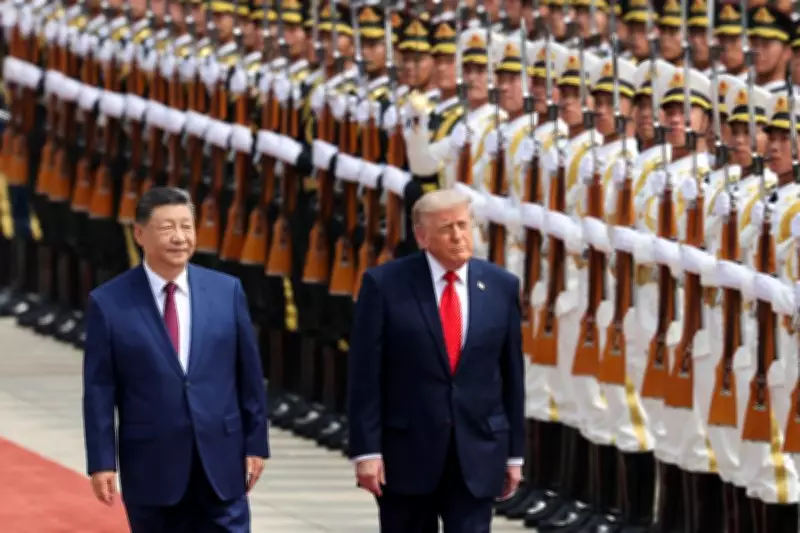
The concept of a bipolar world order, once a hallmark of the Cold War era, is making a significant comeback in contemporary international relations. According to a recent commentary, this shift is not temporary but a lasting reality. The article argues that the global system is increasingly defined by the strategic competition between the United States and China, relegating other powers to secondary roles.
Understanding the Bipolar Shift
The commentary emphasizes that the bipolar structure is not merely a return to the past but a new configuration shaped by unique 21st-century dynamics. Unlike the Cold War, where ideology was the primary driver, today's bipolarity is fueled by economic interdependence, technological rivalry, and divergent governance models. The United States remains the preeminent military and cultural power, while China's economic rise and technological ambitions challenge this dominance.
Key Factors Driving Bipolarity
- Economic Clout: China's GDP has grown to rival that of the US, and its Belt and Road Initiative extends influence across Asia, Africa, and Europe. Meanwhile, the US maintains control over global financial systems and innovation hubs.
- Technological Competition: The race for supremacy in artificial intelligence, 5G, and quantum computing is intensifying. Both nations are investing heavily to secure leadership, leading to decoupling in critical sectors.
- Military Modernization: The US retains the world's largest defense budget and advanced weaponry, but China is rapidly modernizing its forces, particularly in the Indo-Pacific region.
Implications for the Rest of the World
Other nations face increasing pressure to align with one of the two poles. The European Union, India, Japan, and others are navigating a delicate balance, seeking strategic autonomy while managing dependencies. The commentary notes that middle powers may gain leverage in this scenario, as both US and China vie for their support.

Regional Dynamics
- Asia-Pacific: This region is the epicenter of the rivalry, with territorial disputes in the South China Sea and Taiwan being flashpoints. Countries like Australia, Japan, and South Korea are strengthening alliances with the US, while others like Pakistan and Cambodia lean toward China.
- Europe: Traditionally aligned with the US, Europe is now grappling with China's economic influence. The EU's recent policies aim to reduce dependency on Chinese supply chains while maintaining trade ties.
- Global South: Many developing nations are benefiting from Chinese investment but are wary of debt traps. The US is countering with initiatives like the Build Back Better World framework.
Challenges to Bipolarity
The commentary acknowledges that the bipolar order faces several obstacles. The rise of regional powers like India, Russia, and Brazil could create multipolar tendencies. Additionally, transnational issues such as climate change, pandemics, and cyber threats require cooperation, which is hampered by rivalry. The article suggests that despite these challenges, the structural forces of economic and technological competition will sustain bipolarity.
Conclusion
The bipolar world order is here to stay, reshaping global politics, economics, and security. Nations must adapt to this reality by diversifying partnerships and building resilience. The commentary concludes that understanding this shift is crucial for policymakers and businesses to navigate the complexities of the 21st century.