The recent West Bengal assembly elections and the Bharatiya Janata Party's (BJP) historic landslide victory received extensive coverage in Bangladesh. This marks the first time since 2014 that the political leadership in Kolkata is ideologically aligned with New Delhi, coinciding with Bangladesh's new government under Bangladesh Nationalist Party (BNP) chairperson Tarique Rahman, who became prime minister in February general elections after public protests ended Sheikh Hasina's 15-year rule.
Border Fencing and Illegal Immigration
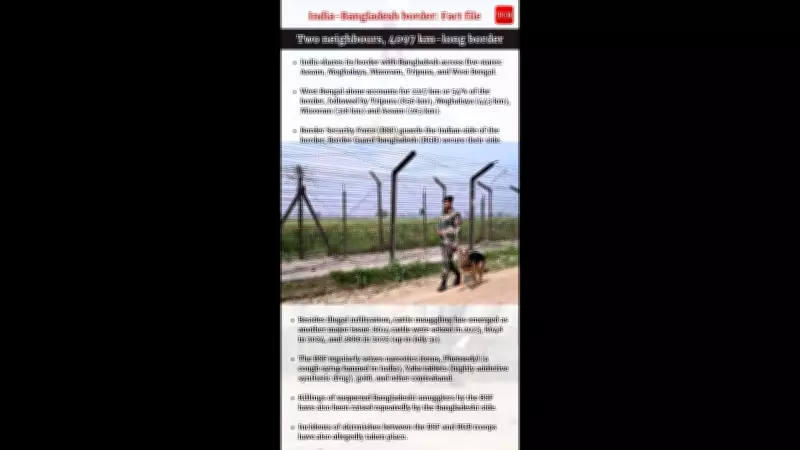
The BJP now governs three of the five states bordering Bangladesh, with West Bengal sharing the longest border of 2,217 km—nearly 54% of the total 4,096-km frontier. The new administration's first decisions included transferring land to the Union home ministry for border fencing, triggering a reaction from Dhaka. Foreign affairs advisor Humayun Kabir stated, "People of Bangladesh are not afraid of barbed wire. The government of Bangladesh is also not afraid."
As of August 2025, about 1,648 km (74%) of the West Bengal–Bangladesh border had been fenced. Of the remaining 569 km, 456 km was feasible for fencing, but land acquisition delays under the previous Trinamool Congress (TMC) government left 378 km pending.

'Assam Model' in West Bengal?
Assam Chief Minister Himanta Biswa Sarma, known for his "pushback" policy against illegal immigrants, shared a photograph with West Bengal Chief Minister Suvendu Adhikari, hinting at a similar approach. Sarma announced the return of 20 illegal immigrants on April 25, stating, "Rude people don't understand soft language." This prompted Dhaka to summon India's acting High Commissioner.
Teesta Water-Sharing Agreement
A positive outcome is expected on the long-pending Teesta river water-sharing agreement, previously blocked by Mamata Banerjee in 2011. BNP leader Azizul Bari Helal said, "Previously, we saw that Mamata Banerjee was actually the impediment. Now, the Teesta Barrage agreement would be helped by Suvendu." The treaty, initially agreed in 1983, allocated 39% water to India and 36% to Bangladesh, but remains unsigned.
India's Outreach to Bangladesh
India appointed former Union minister Dinesh Trivedi as high commissioner to Bangladesh, signaling a political engagement approach. Constantino Xavier of CSEP noted, "Trivedi's appointment signals a clear commitment to repairing relations with Bangladesh." New Delhi had also reached out to Rahman after his return from the UK, with External Affairs Minister S. Jaishankar attending Khaleda Zia's funeral and Lok Sabha Speaker Om Birla attending Rahman's swearing-in.
The Way Forward
The BJP's "double-engine" model in West Bengal aims to coordinate Centre-state policies, especially on Bangladesh matters. However, the party must balance electoral promises on border security with maintaining fragile bilateral ties. The Adhikari government faces a real test in navigating these challenges while rebuilding trust with Dhaka.
About the Author: Karan Manral is a journalist at the Times of India, covering politics, social issues, and international affairs.