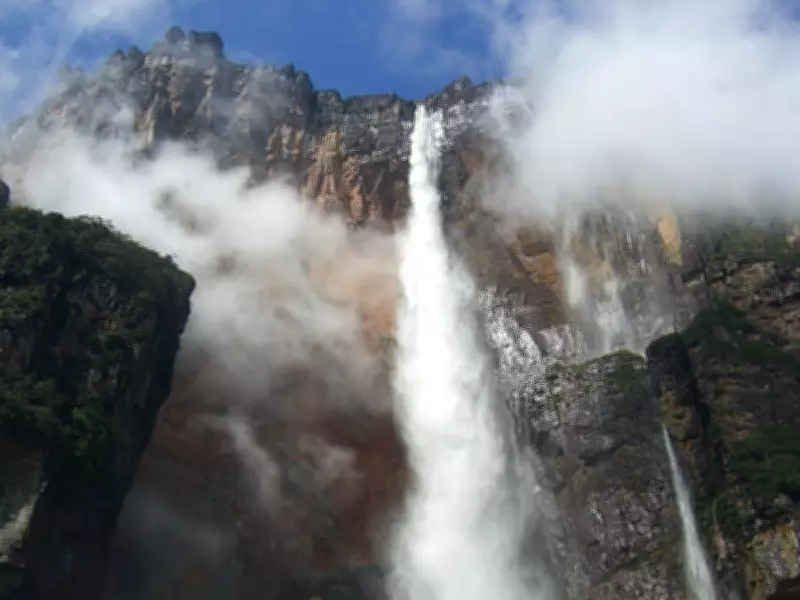
There exists a place on Earth where time seems to have stopped. Long before the first backpacker stamped a passport or Instagram algorithms shaped travel desires, nature was crafting an extraordinary landscape in southeastern Venezuela. The tepuis rise like colossal, moss-covered fortresses from the dense jungle floor—massive table-top mountains that pierce the clouds. These prehistoric monoliths may look familiar, as they directly inspired Arthur Conan Doyle's iconic novel The Lost World and Pixar's beloved animated film Up.
The craving for genuine, unadulterated isolation has never been stronger for a generation of US travelers exhausted by hustle culture and hyper-connected urban life. People are no longer satisfied with just a pretty beach; they seek places that transform their perspective. That is precisely what Canaima National Park offers—a protected wonderland the size of Maryland. It is a vast, ancient playground where the modern world holds no significance.
Ecological Islands in the Sky
What makes the tepuis so fascinating is not only their sheer vertical rock faces but also what exists on their summits. These plateaus have been physically isolated from the surrounding rainforest for millions of years, functioning as ecological islands. Evolution took a different path up there, creating a hyper-localized ecosystem found nowhere else on Earth.

Wandering the misty summits feels like entering a living laboratory. The park hosts strange carnivorous plants like sundews and pitcher plants, which adapted to eating insects to survive in poor soil. The animal life is wonderfully surreal. These high-altitude habitats are home to tiny creatures such as the elusive Roraima mouse and Tyler's mouse opossum, which evolved in complete isolation from the world below.
This unique evolutionary phenomenon has long intrigued the global scientific community. According to a landmark research paper published in Frontiers in Plant Science, these isolated mountaintops hold secrets to understanding how climate change and geographic separation drive species evolution over millennia. The research shows how the extreme isolation of each tepui creates micro-habitats that act as evolutionary pressure cookers.
Where Giants Walk and Waters Blow
If the summits are realms of the small and rare, the vast savanna grasslands and dense river valleys below belong to giants. Canaima National Park is the second largest reserve in Venezuela, after the mammoth Parima Tapirapecó National Park. Within this territory, a beautiful and fierce ecosystem flourishes.
Venture into the lowland grasses, and you might spot giant anteaters, pumas, or the notoriously secretive jaguar. Near the waterways, giant river otters play in the currents. Meanwhile, hundreds of bird species live in the canopy above. The undisputed king of these skies is the harpy eagle, a magnificent raptor with a six-foot wingspan that effortlessly hunts sloths and monkeys through the dense foliage.
Conservationists warn, 'If we lose this ecosystem, we lose a big chunk of biodiversity on the planet.' Large protected areas like Canaima are crucial structural refuges for vulnerable biodiversity rapidly losing habitat elsewhere on the continent, according to a comprehensive research paper titled Establishing a baseline of plant diversity and endemism on a neotropical mountain. The paper emphasizes the importance of conserving these intact biological corridors to ensure the long-term persistence of South America's most vulnerable systems.
Finding the Edge of the World
For the modern traveler, Angel Falls is the ultimate crown jewel of Canaima. This wonder plunges from the massive Auyán-tepui and is the world's tallest uninterrupted waterfall, dropping an astonishing 2,979 feet into the green abyss below. Watching the water atomize into a thick mist before it even hits the jungle floor is humbling, almost spiritual.
Reaching this remote location requires effort—small planes, motorized canoes, and a willingness to disconnect from cellular service. But for young adults seeking a travel experience that values unfiltered authenticity over curated luxury, Canaima National Park is the frontier of true adventure. It serves as a powerful reminder that even in a fully mapped world, there remain places of pure magic and mystery to be discovered.