

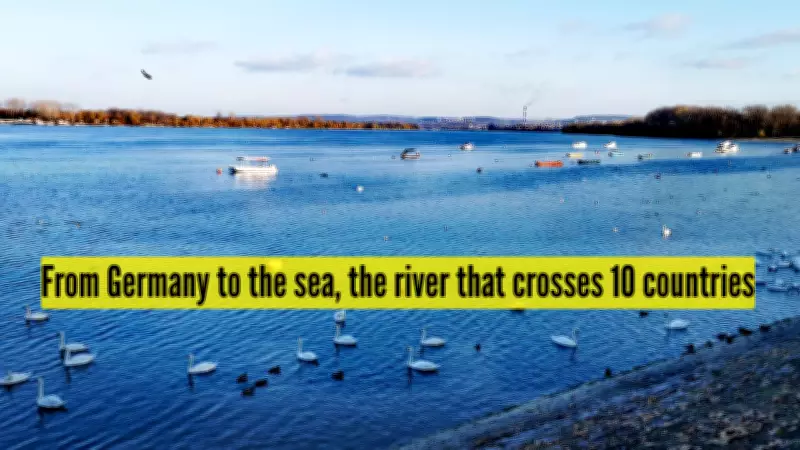
The Mighty Danube: Europe's River of Nations
The Danube River represents one of the most remarkable geographical features on the European continent, beginning its journey quietly in Germany's picturesque Black Forest before making its final expansive entry into the vast waters of the Black Sea. This extraordinary waterway follows a course that distinguishes it from every other river on our planet, creating a unique continental pathway that has shaped history, culture, and ecology across Central and Eastern Europe.
A River That Defies Borders
The Danube holds the distinctive honor of flowing through ten different countries, more than any other river in the world. This remarkable geographic reach transforms what might otherwise be a simple flow of water into a powerful continental connector that links diverse regions and peoples. The river's waters travel through Germany, Austria, Slovakia, Hungary, Croatia, Serbia, Bulgaria, Romania, Moldova, and Ukraine, cutting across political boundaries that were established centuries after the river itself had already carved its path through the landscape.
Spanning approximately 2,860 kilometers in length, the Danube transcends the concept of a national river to become what many consider Europe's shared river. It binds together regions with distinct languages, cultural traditions, and political histories, creating a natural thread that weaves through the continent's complex tapestry.

From Humble Beginnings to Historic Capitals
The Danube takes its initial form at Donaueschingen, where two modest streams—the Breg and the Brigach—converge to create the river's first flow. From this unassuming starting point, the river journeys eastward, winding through dense forests, expansive agricultural plains, dramatic narrow valleys, and some of Europe's most historically significant urban centers.
What makes the Danube truly exceptional is its unique distinction as the only major river worldwide to pass through four national capitals: Vienna, Bratislava, Budapest, and Belgrade. Each of these cities developed in intimate relationship with the Danube, drawing economic vitality, strategic advantages, and cultural identity from its steady, life-giving presence.
A River of History and Conflict
Throughout much of recorded history, the Danube has stood at the center of European power dynamics and conflicts. During the Roman Empire, it served as the northern boundary, fortified and protected as both a defensive line and a crucial transportation route. Later centuries saw the river become both divider and connector between the Habsburg and Ottoman Empires, with castles, citadels, and river towns constructed along its banks—many of which still stand today as testament to this turbulent past.
As Europe evolved into its modern configuration of nation-states, the Danube transformed from a disputed border region into a shared economic corridor. Early modern agreements began regulating river navigation and trade, facilitating the movement of goods across international boundaries. This cooperation was formalized following the Second World War with the establishment of the Danube Commission, which continues to oversee navigation and cooperation along the river.
The Danube's Ecological and Economic Significance
The Danube Basin encompasses approximately 817,000 square kilometers of land, receiving water from the Alps, Carpathian Mountains, and surrounding lowlands. The river system includes over 300 tributaries, with major contributors being the Drava, Sava, and Tisza rivers. This complex network creates a remarkably varied landscape featuring dramatic gorges, productive agricultural areas, and vital wetlands.
At its eastern terminus, the river fans out into the magnificent Danube Delta, shared between Romania and Ukraine. Formed over centuries by sediment carried toward the Black Sea, this delta represents one of Europe's most important ecological regions, supporting hundreds of bird and fish species and receiving international recognition for its exceptional biodiversity.

The Modern Danube: Working River and Environmental Challenge
Today, the Danube continues to function as a vital working river. The engineering marvel of the Main–Danube Canal connects it to the Rhine River, creating an uninterrupted inland waterway that allows vessels to travel from the North Sea to the Black Sea. Hydroelectric projects, including the significant Iron Gate dams, harness the river's energy for power generation, while environmental programs attempt to balance economic utilization with conservation efforts as pollution concerns and climate pressures intensify.
Flowing across more international borders than any other river on Earth, the Danube persists as both a physical and symbolic link across the European continent. It serves as a powerful reminder that long before modern nations established their boundaries, this remarkable waterway was already connecting landscapes, ecosystems, and human communities in a continuous flow of shared destiny.





