

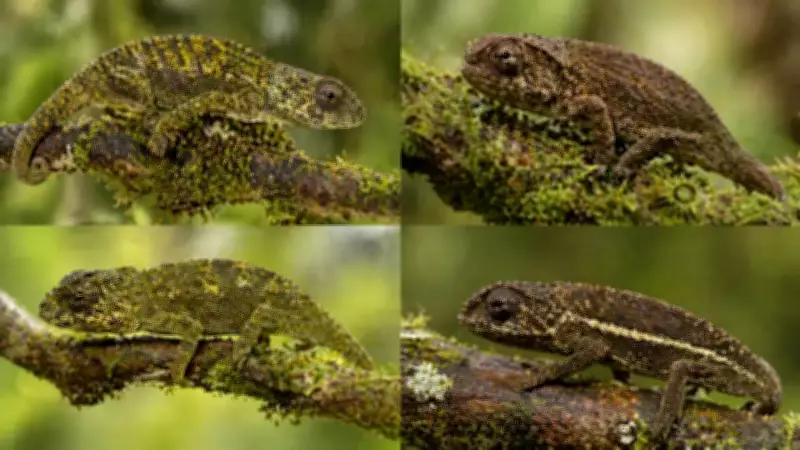
In northern Mozambique, pioneering scientific expeditions have revealed the discovery of four previously unknown chameleon species. These findings underscore the richness and under-explored nature of the region's biodiversity. The new species were found within isolated mountain ecosystems known as sky islands, which feature unique environmental conditions that have allowed long-term independent evolution.
Sky Islands and Their Significance
Sky islands are isolated mountain ranges that rise abruptly from their surroundings, creating distinct climates. In Mozambique, moisture at high altitudes sustains rainforests even when nearby lowlands are dry. Because each mountain range is separate, organisms on each sky island evolve independently, resulting in a high percentage of unique species. This makes them crucial for studying evolution and biodiversity.
Four New Chameleon Species Discovered
Researchers identified one new chameleon species on each of four mountains: Mount Namuli, Mount Inago, Mount Chiperone, and Mount Ribáuè. All belong to the genus of miniature forest chameleons (Rhampholeon platyceps complex), known for their camouflage abilities. The study, published in Zootaxa, confirms that each mountain hosts a distinct species, highlighting how geographic isolation drives speciation.

Threats to Newly Discovered Species
Despite being newly identified, these chameleons face immediate threats. Their forest habitats are being cleared for agriculture and development, with some regions losing significant forest cover. Since these species occupy limited areas, habitat loss directly impacts them, making them highly vulnerable to environmental change and human activity.
Importance for Science and Conservation
This research demonstrates that much biodiversity remains undiscovered in isolated environments. It also provides insights into evolution through geographic separation. The findings underscore an urgent need for conservation to preserve these habitats and maintain ecological balance. Sky islands serve as natural laboratories for evolutionary studies, making them invaluable for both science and biodiversity conservation.






