

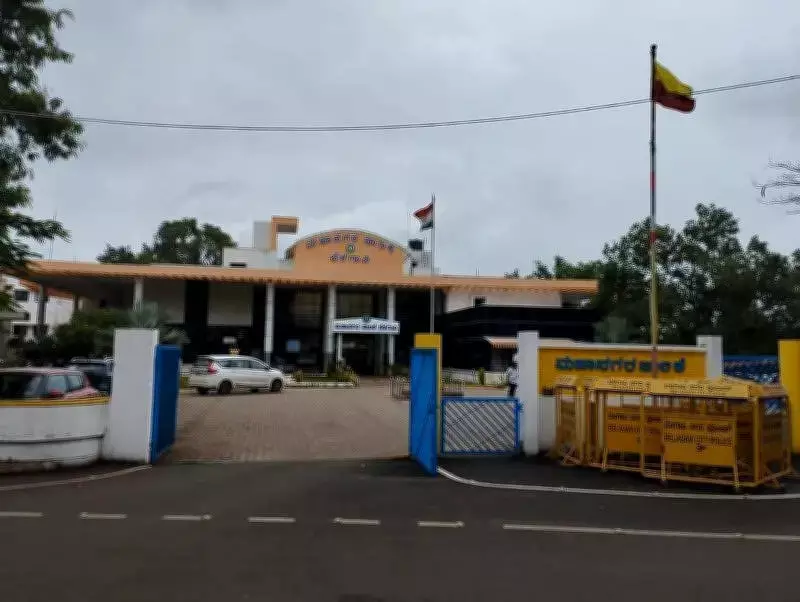
The proposed compressed biogas (CBG) project by the Gas Authority of India Ltd (GAIL) in Belagavi continues to face uncertainty as delays mount over the non-availability of suitable land. The Belagavi City Corporation (BCC) is caught in a dilemma over GAIL's insistence on a contiguous 10-acre plot at a single location.
Project Details and Funding
Sanctioned in November 2025 under the central government's GOBARdhan scheme, the project is designed as a waste-to-energy initiative with no financial burden on the civic body. GAIL has committed to fully funding the project, with a capital investment of Rs 54.2 crore and an estimated annual operational cost of Rs 7.6 crore.
Waste Processing Capacity
The plant aims to process around 150 tonnes of wet waste generated from across the city, converting it into compressed biogas and organic fertiliser. This initiative is widely viewed as a crucial step towards scientific and sustainable waste management in Belagavi.

Land Acquisition Challenges
Initially proposed at the Turmuri waste management facility, the plan was shelved following strong local opposition. Subsequent attempts to identify alternative sites in both the northern and southern parts of the city also faced resistance, leaving the land issue unresolved as of April 2026.
Requirement of Contiguous Plot
The requirement of a single, unbroken 10-acre plot has emerged as a major stumbling block. Identifying such land within city limits has proved difficult, significantly constraining the corporation's options. Officials acknowledge that the delay could have wider implications for the city's waste management strategy.
Impact on Waste Management
The proposed relocation of the Turmuri waste depot is closely tied to the timely execution of the CBG project, raising concerns about future waste-handling capacity. With the project's future hanging in the balance, pressure is mounting on the BCC to take a clear and decisive stand.
The continued delay not only risks derailing a key environmental initiative but also underscores the growing challenge of balancing infrastructure development with public acceptance. The BCC is now under pressure to resolve the land issue to move forward with this crucial project.






