

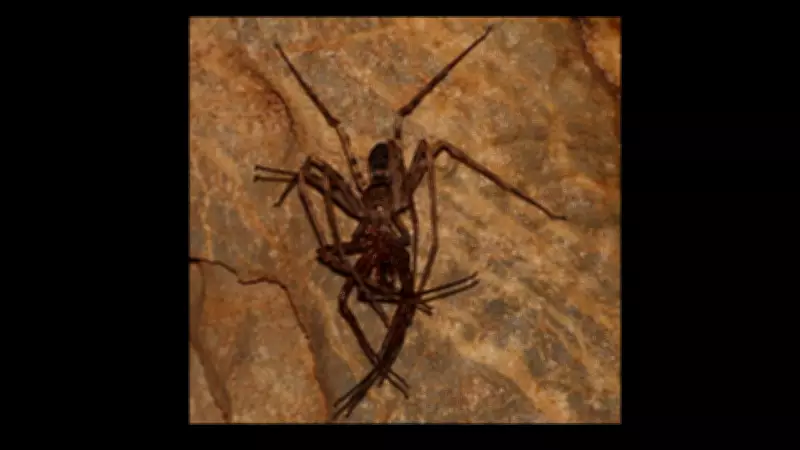
The Giant Huntsman Spider: A Cave-Dwelling Marvel from Laos
In 2001, a discovery emerged that seemed plucked from the pages of a science fiction novel. Deep within the caves of Laos, researchers uncovered a spider of staggering proportions—the giant huntsman spider, boasting a leg span reaching up to a formidable 11.8 inches (30 centimeters). This colossal arachnid not only shattered records but continues to hold its place as one of the largest spiders ever documented in terms of leg span. Beyond its intimidating appearance lies a fascinating story of adaptation and scientific significance.
Discovery by German Arachnologist Peter Jäger
The giant huntsman spider was first identified in 2001 by Peter Jäger, a renowned German arachnologist, during a research expedition in Laos. His findings were formally reported in scientific literature in 2001 and 2002, under the study titled “May gen. n. (Araneae: Sparassidae): A Unique Lineage from Southern Africa Supported by Morphological and Molecular Features.” Jäger’s work confirmed that this spider represents the largest known huntsman species to date.
The discovery occurred in the Khammouane region of Laos, within a cave environment. This setting underscores how much remains unknown about subterranean ecosystems, revealing that even large and conspicuous creatures can elude detection in remote areas.

Size, Appearance, and Unique Adaptations
Scientifically named Heteropoda maxima, this spider is distinguished by its exceptionally long legs, which can span up to 30 centimeters. Unlike bulkier spiders such as tarantulas, it features a flat body structure and legs that extend sideways, a trait known as laterigrade posture. As Jäger noted in his research, this configuration allows for rapid movement, which is crucial in its cave habitat.
Despite its imposing size, the giant huntsman spider poses no threat to humans. Its light body coloration and elongated limbs are adaptations to the dark, confined spaces of caves, enabling it to navigate efficiently and hunt prey.
Habitat, Behavior, and Scientific Importance
Primarily inhabiting caves, the giant huntsman spider’s environment has shaped its behavior and physiological traits. Cave-dwelling often leads to specialized adaptations, and this spider is no exception. Its pale hue and lengthy legs are evolutionary responses to low-light conditions, aiding in camouflage and mobility.
This discovery has profound implications for biology and biodiversity studies. The Senckenberg Research Institute emphasized that finds like Heteropoda maxima demonstrate how significant species can remain hidden in distant regions, urging continued exploration and taxonomic research.
Why This Discovery Matters
Over two decades since its discovery, the giant huntsman spider continues to captivate both scientists and the public. It serves as a powerful reminder that nature still harbors secrets, despite advances in modern science. For researchers, it highlights the importance of field studies and taxonomy in uncovering Earth’s diversity. For the general populace, it showcases the incredible variety of life forms that exist, often in unexpected places.
While its size may initially evoke fear, this spider is merely a testament to nature’s complexity, not a danger. The 2001 finding stands as a landmark achievement in arachnology, inspiring further investigations into the hidden wonders of our planet.






