Pytheas of Massalia: The Greek Explorer Who Charted Britain Before Maps Existed
Historical narratives often concentrate exploration achievements within specific centuries, frequently overlooking earlier pioneers whose journeys left fewer tangible records. Centuries before Marco Polo embarked on his eastern travels or Christopher Columbus crossed the Atlantic Ocean, a remarkable Greek explorer from the Mediterranean region is believed to have ventured into European territories that lay completely outside the geographical understanding of his era.
The Fourth Century BC Voyager from Massalia
Pytheas of Massalia lived during the fourth century BC, at a time when Greek knowledge about the Atlantic Ocean remained limited and largely speculative. What survives from his remarkable journey suggests an expedition that stretched northward through uncharted waters, reaching Britain and potentially lands even more distant, possibly including Arctic regions. His accounts survived only in fragments, later repeated and debated by subsequent writers, yet they continue to fundamentally influence how historians perceive early exploration in northern Europe.
The ancient Greek mariner who may have reached Britain when geographical maps barely existed originated from Massalia, the Greek colony that would eventually become modern-day Marseille. During Pytheas's lifetime, this port served as a bustling hub connecting Greek traders with Celtic communities throughout Gaul. While little documentation exists about his early life, the city's daily interactions with sailors, merchants, and stories from beyond the Mediterranean likely fostered an environment where long-distance travel seemed achievable, despite inherent risks.

The Groundbreaking Northern Expedition
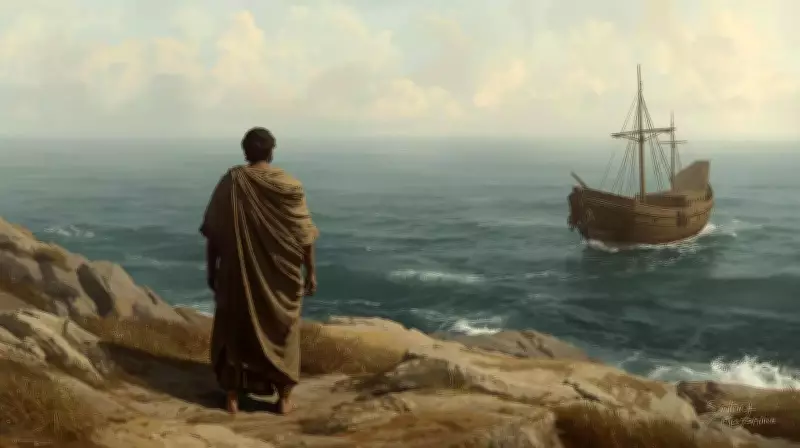
The voyage northward followed maritime routes that few Greeks had previously documented. Around 325 BC, Pytheas is believed to have sailed westward through the Pillars of Hercules, entering the vast Atlantic Ocean. From this point, he appears to have navigated along the western European coastline before crossing the English Channel. Later historical writers suggest he traveled extensively around Britain, possibly even circumnavigating the entire island, though specific details remain obscured by time.
Britain made its first appearance in Greek written records through Pytheas's accounts. While he didn't discover Britain in the literal sense, he may well have been the first Greek explorer to provide direct descriptions of these islands. He referred to them as 'Prettanike' or 'Bretannike' and recorded valuable observations about:
- Local communities and their social structures
- Agricultural practices and farming techniques
- Fishing methods and maritime activities
He also documented the significant tin trade in Cornwall, a detail of considerable economic importance to Mediterranean civilizations.
The Enduring Mystery of Thule
Beyond Britain, Pytheas described a mysterious place called Thule, reportedly six days' sail to the north, where summer nights barely darkened. Scholars have debated its possible location for centuries, with various theories suggesting:
- Iceland's northern regions
- Norwegian coastal areas
- The northern islands of Scotland
While no definitive conclusion has emerged, Pytheas's descriptions align remarkably well with high-latitude conditions, representing knowledge far beyond what Greek civilization had previously recorded about northern territories.
Preserving Fragments of Ancient Exploration
Pytheas's original texts have been lost to history. His extraordinary journey survives primarily through references by later writers including Strabo and Pliny the Elder, some of whom expressed skepticism about his accounts. Modern historians generally adopt a more cautious perspective, recognizing Pytheas's significant contributions:
- He measured latitude using solar observations
- He established connections between tidal patterns and lunar cycles
- He documented unfamiliar climates and indigenous populations
His work occupies a unique space between mythological narrative and scientific measurement, remaining both unsettled in its details and quietly influential in shaping our understanding of ancient exploration.