

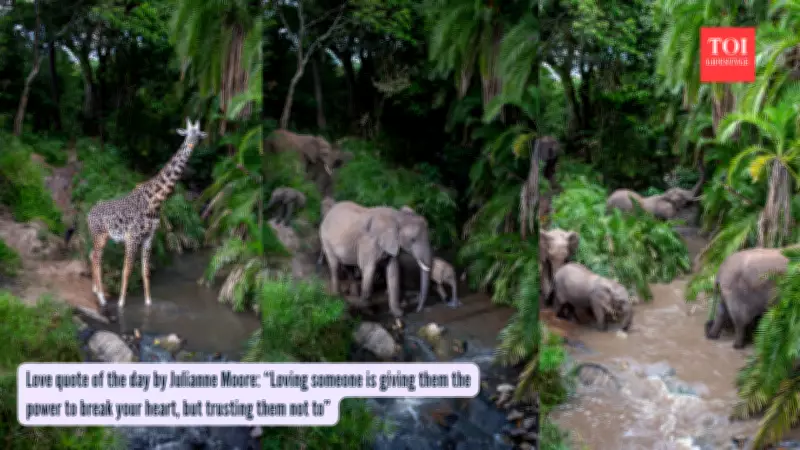
When most people hear “Maasai Mara,” they imagine sweeping golden plains, endless herds of wildebeest and zebra, and lions resting under acacia trees, scenes that even inspired Walt Disney’s The Lion King. Yet, deep inside this world‑famous reserve, far from safari roads and tourist eyes, lies another Mara, hidden within dense forest, which a secret parade of animals uses daily, from endangered black rhinos to elephants, giraffes, and even a long‑lost kudu.
Masai Mara secret highway
British wildlife photographer Will Burrard‑Lucas uncovered this hidden “wildlife highway” by leaving a camera trap running for months at a remote river crossing in Kenya’s Maasai Mara National Reserve.
How did Burrard discover the secret pathway?
Working with local rangers who monitor the reserve’s critically endangered black rhino population, Burrard‑Lucas set up his own Camtraptions system to capture nocturnal movements in a part of the reserve inaccessible by regular tourism. What he discovered was not just a new gallery of breathtaking animal portraits, but a new, practical conservation data that helped rangers confirm the presence of rhinos and even spot species they had not recorded in the area for years. According to Burrard‑Lucas, “The opportunity was irresistible”. He explains on his blog that, even in one of the most famous wildlife destinations on Earth, there are corners that very few people ever see; placing cameras in areas closed to tourism offered “a rare chance to document a hidden side of the Mara”.

What is the hidden highway crossing?
The story begins in a small, forest‑lined river that rangers knew black rhinos used regularly, but which was hard to monitor because of the thick vegetation. “Entering the forest felt like stepping into another world,” Burrard‑Lucas says on his blog. He describes the air as hot and heavy, filled with the smell of rhino, buffalo, hippopotamus, and elephant dung, and adds that the place felt “primordial, like a fragment of an older landscape hidden within the savanna”. The photographer chose a spot where the riverbanks were elevated, allowing him to mount his remote camera system high above the crossing. This gave him “environmental portraits”, images showing animals fully surrounded by their natural habitat, framed by palms arched over the water that “gave the scene a wonderfully prehistoric feel”.
The magical windows into the life of Mara animals
Once the trap was rigged, the camera ran continuously for months, with Maasai Mara Reserve Rhino Unit rangers visiting every few weeks to replace memory cards and batteries. The primary aim was to monitor black rhinos, but the system quickly revealed far more than the team expected. According to the photographer, the camera “revealed this to be a well‑used corridor for multiple rhinos moving between feeding areas,” including individuals the rangers had not seen for many months, and one sighted for the first time since 2023. The images did not stop at rhinos. Burrard‑Lucas describes how elephants passed through in breeding herds, leopards slipped in and out of the shadows, hippos emerged from the water, and bushbuck and giraffe moved cautiously down to drink. On his blog he calls the crossing “a window into the hidden life of the Mara,” stressing that most visitors see the reserve only by day, while the Mara after dark remains largely invisible.
Tech Tested by Nature
Unsurprisingly, wildlife did not gently respect the electronics. Elephants dismantled one setup; hippos knocked over another. Following a heavy downpour, a flash flood submerged one sensor, destroying it. Yet from this chaos emerged one of the project’s most striking images: a black rhino forcing its way through floodwater.






