A 1990s jingle famously declared, "Doodh hai wonderful, pee sakte hai roz glass full," capturing India's deep cultural and nutritional connection with milk. Dairy, particularly milk, has played a pivotal role in the Indian subcontinent, not only as a dietary staple but also as a cornerstone of agricultural production. India stands as the world's largest milk producer, contributing approximately 24-25% of global milk output.
Beyond its domestic success, India has also supported dairy development in other nations. One of the earliest and most remarkable examples is the story of a bull named Krishna, who traveled from Gujarat, India, to Brazil in the late 1950s.
The Journey of Krishna
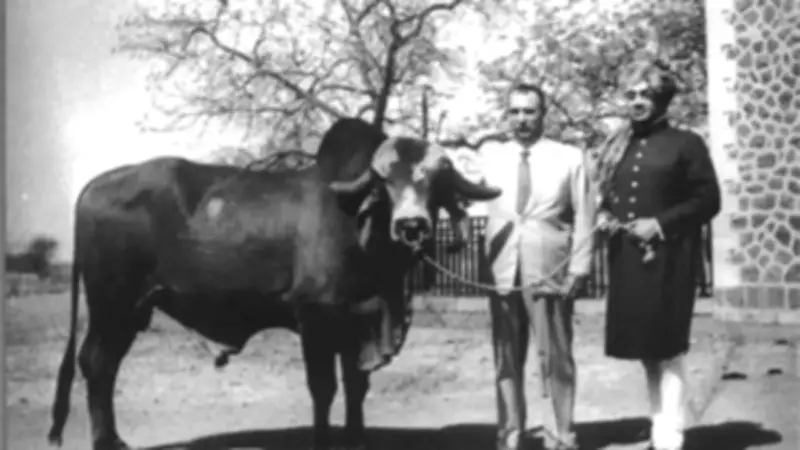
In 1958, Brazilian cattle baron Celso Garcia Sid dispatched cowboy Ildefonso dos Santos to India with a mission: find a bull capable of improving Brazilian livestock, according to the BBC. While browsing photographs, Sid's attention was captured by a calf named Krishna, distinguished by its reddish-white coat and downward-hanging horns. Impressed, Sid ordered the purchase of this robust bull, which arrived in Brazil two years later.

Upon arrival, dos Santos described Krishna as "a colossus," adding that "nothing that is said about this animal can reveal anything—it is a colossus." However, rather than being sold, Krishna was gifted to the cowboy by the Maharaja of Bhavnagar, Krishna Kumarsinhji Bhavsinhji, who was also the first Indian Governor of Madras.
Genetic Revolution in Brazil
Krishna's arrival triggered a genetic transformation in Brazil's cattle industry. His lineage now accounts for 80% of the country's milk production. The bull enhanced the genetic diversity of Brazilian dairy cattle, addressing issues of inbreeding that had been limiting productivity. As Guilherme Sachetim, grandson of the cowboy, noted, "He renewed the national dairy cattle's blood at the time when inbreeding was restraining productivity."
In India, Krishna elevated the status of the Gir breed, which is now highly valued in the global bovine embryo market. However, the breed nearly disappeared in India due to failed crossbreeding attempts. In a twist of fate, the Indian government later sought Brazil's help to import Gir embryos and revive the breed in its homeland.
A Lasting Legacy
Krishna's impact extended beyond genetics. The Maharaja of Bhavnagar reportedly visited the cowboy's farm in Sertanopolis and, before his death, left all his cows to him, cementing a lasting friendship. After Krishna's death, Sid had his body embalmed and placed in a glass coffin at the farmhouse, where it remains today. A sign between Krishna's paws reads: "Want to meet Gir? Watch me!" Krishna was also honored during Brazil's White Revolution, with his image featured on stamps and coins.
Today, a strong Brazilian Gir cow can produce up to 20 liters of milk per day—ten times more than the original cattle brought to Brazil nearly a century ago. Krishna's story remains a testament to the enduring bonds between nations and the transformative power of a single animal.