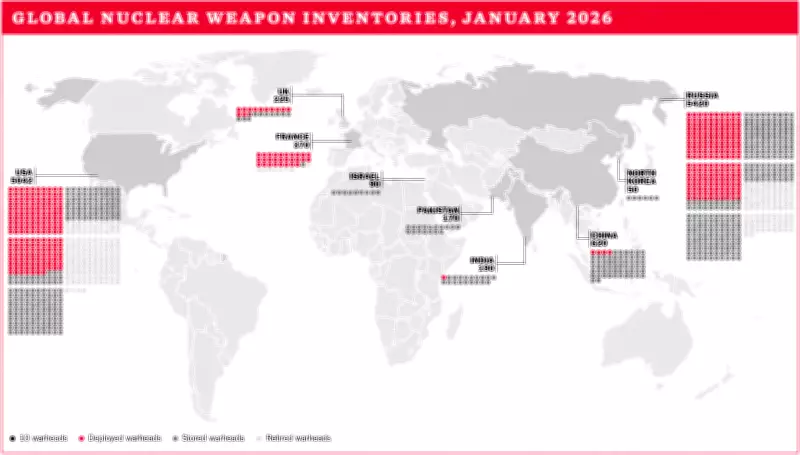
Since the end of the Cold War, the global nuclear stockpile has generally been on a downward trajectory. For many years, Russia and the United States dismantled retired warheads at a faster rate than they introduced new ones, leading to a steady decline in the total number of nuclear weapons worldwide.
Shift in Global Nuclear Trends
However, this trend may be reversing. The pace of dismantling old warheads is slowing, while countries are increasingly deploying new nuclear weapons, according to the Stockholm International Peace Research Institute (SIPRI). This could lead to a spike in the global nuclear inventory in the coming years.
India's Nuclear Arsenal
India has an estimated 190 nuclear warheads, of which 12 are deployed, according to SIPRI. This marks a significant increase from previous years, reflecting a heightened nuclear posture. The country has been expanding its nuclear triad capabilities, including land-based missiles, aircraft, and submarine-launched systems.

The increase in India's warhead numbers is part of a broader trend among nuclear-armed states to modernize their arsenals. While the total number of warheads globally has decreased due to reductions by the US and Russia, the number of deployed warheads has seen a slight uptick.
Regional Implications
India's neighbors, particularly Pakistan and China, also continue to expand their nuclear capabilities. Pakistan is estimated to have around 170 warheads, while China has approximately 410. The strategic dynamics in South Asia remain tense, with all three nations investing in new delivery systems and warhead production.
The SIPRI report highlights that despite the overall decline in warhead numbers, the qualitative improvements and increased deployment of nuclear weapons raise concerns about global stability. Experts warn that the modernization programs could lead to new arms races and reduce the threshold for nuclear use.
Global Context
Globally, the nine nuclear-armed states possessed an estimated 12,705 warheads as of January 2026, with about 3,900 deployed. The US and Russia together account for nearly 90% of all nuclear weapons. However, both countries are modernizing their arsenals, and the pace of dismantling retired warheads has slowed.
Other nuclear states, including the UK, France, North Korea, Israel, and India, are also enhancing their capabilities. The SIPRI report underscores the need for renewed arms control efforts to prevent a resurgence of nuclear competition.