

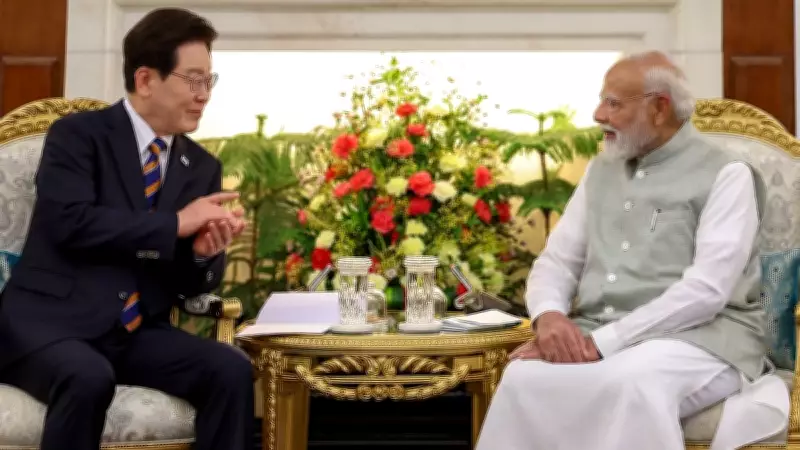
India and South Korea are transitioning from cultural nostalgia to strategic necessity in a turbulent global landscape. This shift, highlighted by K P Nayar in his analysis, underscores the growing convergence of interests between New Delhi and Seoul in the Indo-Pacific region.
From Cultural Ties to Strategic Imperatives
Historically, India and South Korea have shared deep cultural connections, rooted in Buddhist exchanges and shared historical narratives. However, the current geopolitical climate demands a more pragmatic partnership. South Korea’s bet on India as a key partner in the Indo-Pacific is now testing New Delhi’s ability to respond effectively.
Seoul’s Strategic Calculations
South Korea, under President Yoon Suk Yeol, has actively pursued stronger ties with India. This includes enhanced cooperation in defense, technology, and trade. Seoul views India as a crucial counterbalance to China’s growing assertiveness in the region. The country’s Indo-Pacific strategy, unveiled in 2022, emphasizes partnerships with like-minded nations, and India is central to this vision.

New Delhi’s Response
India, for its part, has welcomed South Korea’s overtures. The two nations have elevated their relationship to a “Special Strategic Partnership” and are working on deepening economic integration. However, challenges remain. India must navigate its own complex relationship with China while balancing its ties with the United States and other regional powers.
Economic and Defense Cooperation
Bilateral trade between India and South Korea has grown significantly, reaching $27 billion in 2025. Key areas of collaboration include semiconductors, electric vehicles, and renewable energy. Defense cooperation has also intensified, with joint military exercises and technology transfers. South Korean companies like Hyundai and Samsung have major investments in India, while Indian IT firms are expanding in South Korea.
The Geopolitical Context
The Indo-Pacific region is witnessing heightened competition between the US and China. South Korea’s alignment with the US-led Quad and its own Indo-Pacific strategy places it at odds with Beijing. India, a Quad member, shares similar concerns about China’s military expansion and economic coercion. This convergence of interests provides a strong foundation for bilateral cooperation.
Challenges Ahead
Despite the positive trajectory, several hurdles exist. India’s non-alignment legacy and its strategic autonomy sometimes clash with South Korea’s expectations. Additionally, domestic politics in both countries can influence foreign policy. The upcoming elections in India and South Korea could impact the pace of engagement.
Nevertheless, the shift from nostalgia to necessity is irreversible. As K P Nayar notes, Seoul’s bet on India is a test for New Delhi to prove its reliability as a strategic partner. The outcome will shape the future of the Indo-Pacific order.






