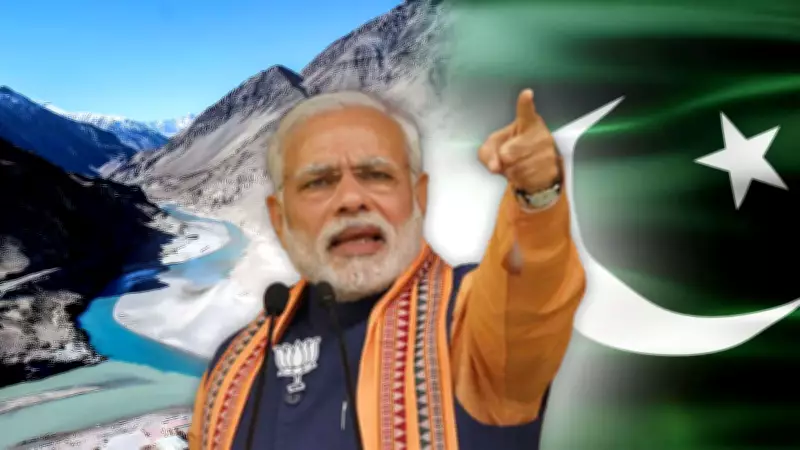
Union Minister C.R. Patil has declared that Pakistan will not receive "a single drop" of water from India in the coming years, emphasizing that the government is actively working to stop the flow of Indus waters. Patil stated that the Indus Waters Treaty remains in abeyance and that both Prime Minister Narendra Modi and Home Minister Amit Shah are closely monitoring the implementation of this decision. The minister's remarks signal a significant escalation in the long-standing water dispute between the two nations, with India taking a firm stance on water sharing under the treaty.
Background of the Indus Waters Treaty
The Indus Waters Treaty, signed in 1960 between India and Pakistan, allocates the waters of the Indus River system. Under the treaty, India controls the eastern rivers (Ravi, Beas, Sutlej) while Pakistan controls the western rivers (Indus, Chenab, Jhelum). However, tensions have risen in recent years, with India accusing Pakistan of supporting cross-border terrorism and using water as a leverage point.
Government's Stance on Water Security
Union Minister Patil's statement aligns with the Modi government's policy of prioritizing national security and water resources. The decision to halt water flow is part of a broader strategy to assert India's rights over shared rivers. Patil highlighted that the government is committed to ensuring that water resources are used for the benefit of Indian farmers and citizens first.

Reactions and Implications
The announcement has drawn mixed reactions. While some political groups support the move as a necessary step against Pakistan, others caution about potential diplomatic fallout and violations of international agreements. Experts warn that unilaterally altering the treaty could lead to legal challenges and strain bilateral relations further. However, the government remains firm on its position, citing national interest.
As India moves forward with this policy, the international community will closely watch the developments. The Indus Waters Treaty has been a cornerstone of India-Pakistan relations, and its abeyance marks a critical shift in regional water dynamics.