Archaeologists from the University of Manchester and the University of Sadat City in Cairo have uncovered the remains of the ancient Egyptian city of Imet in the eastern Nile Delta. This densely built urban centre, dating to around the 4th century BCE, features streets, multi-storey homes, granaries, and religious buildings that had been invisible under farmland for centuries. The excavation at Tell el-Fara'in, also known as Tell Nabasha, in Sharqia Governorate, was directed by Dr Nicky Nielsen of the University of Manchester in collaboration with Egypt's Ministry of Tourism and Antiquities. The team combined high-resolution satellite imagery and Landsat remote sensing data with targeted ground excavation to locate buried architecture that earlier digs at the site had entirely missed.
Ancient city of Imet excavation: How satellite technology revealed what centuries of digging had missed
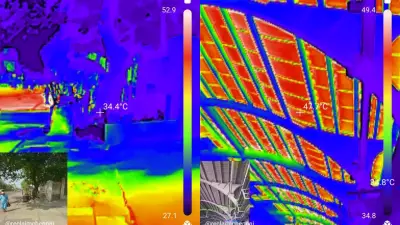
Tell el-Fara'in has been known to archaeologists since the 19th century. When the pioneering Egyptologist Flinders Petrie arrived at the site in 1886, he focused on a large cemetery, a Ptolemaic-era settlement area, and a temple complex. As the University of Manchester's own Egyptology research blog documents, Petrie found a foundation deposit beneath one of the smaller temples inscribed with the throne name of Amasis II, the penultimate ruler of Egypt's 26th Dynasty. However, the broader urban fabric of the city remained undetected. What changed the picture was remote sensing technology. Dr Nielsen and his team identified clusters of ancient mudbricks in high-resolution satellite and Landsat imagery before any ground excavation began, pinpointing concentrations of buried architectural remains on the site's eastern mound that earlier fieldwork had not reached. Once excavations opened, the patterns visible from orbit materialised as walls, floors, foundations, and living spaces the skeleton of a city that had been there all along.
Imet's tower houses: Vertical living in a flat landscape
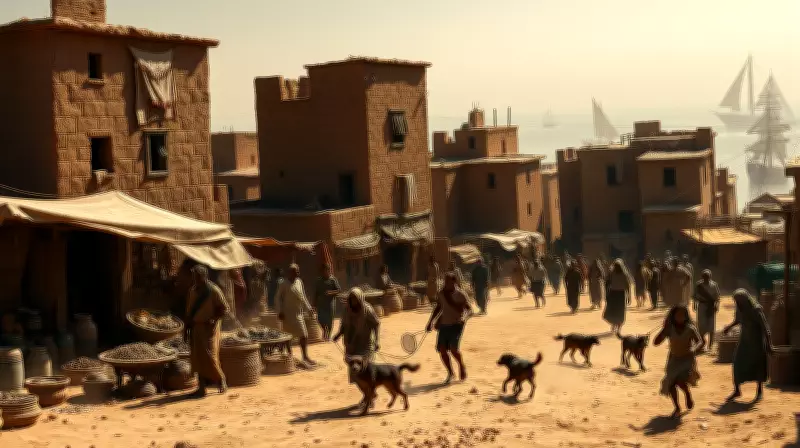
The most striking architectural discovery is a group of multi-storey mudbrick structures that researchers have termed tower houses. These buildings are supported by unusually thick foundation walls, designed to carry the load of upper floors in a region where the flat Delta landscape made vertical construction the primary solution to population pressure and limited buildable ground. According to Dr Nielsen, these structures are rare outside the Nile Delta and represent a distinct regional architectural tradition. A peer-reviewed study on Late Period urban architecture at Kom Firin, published as part of a broader survey of Egyptian urbanism, traces the emergence of tower house construction in the Delta to the mid-first millennium BCE exactly the period that Imet's remains date to and links it directly to the phenomenon of urban crowding in densely settled Delta communities. The fact that Imet shows the same pattern confirms that vertical domestic architecture was a Delta-wide response to the pressures of urban life rather than a feature unique to any single site. The same excavation season also revealed paved areas used for grain processing, animal enclosures integrated into the residential fabric, and storage buildings, painting a picture of households where food production, animal husbandry, and domestic life were woven tightly together in tight urban quarters.


Wadjet, the cobra goddess of Lower Egypt, and Imet's sacred landscape
Imet was a city closely associated with Wadjet, the cobra goddess who served as the tutelary deity of Lower Egypt throughout the dynastic period. Depicted as a rearing cobra on a papyrus stem, Wadjet was the divine protector of the king, one half of the "Two Ladies" pair alongside Nekhbet of Upper Egypt, and a goddess whose worship at the Delta was ancient enough to predate the unification of Egypt itself. The excavation uncovered a ceremonial road linked to Wadjet's cult, confirming that Imet's religious landscape was actively maintained and ritually used during the Late Period. But the most revealing find in the temple zone was a large structure with a limestone plaster floor and massive mudbrick pillars that appears to have been built directly over the processional road. This indicates that by the middle of the Ptolemaic period, the ceremonial route had fallen out of active use and was physically absorbed into a new building programme. Sacred spaces in ancient Egyptian cities were not permanent. As political power shifted, as cults rose or declined, and as cities grew and rebuilt around their sacred precincts, processional roads could be blocked, overbuilt, or repurposed entirely.
Artefacts from the 26th Dynasty: Funerary figurines, protective stelae, and ritual instruments
Some of the most informative finds from the Imet excavation were not architectural at all. The team recovered a green faience ushabti a small funerary figurine intended to serve the deceased in the afterlife dated to Egypt's 26th Dynasty (664–525 BCE), the last native Egyptian ruling dynasty before the Persian conquest. Ushabtis are among the most common objects in Egyptian funerary practice, mass-produced in enormous numbers during the Late Period when the convention of providing large sets of figurines for burial reached its peak. A carved stone stela depicted the child god Harpocrates Horus in his youthful form standing on two crocodiles while clutching snakes, with the protective dwarf god Bes positioned above. This iconographic combination was standard in amulets and stelae associated with domestic protection, particularly against illness, snake bite, and dangers threatening children. These objects were not exclusively for temples they circulated in households as practical protective devices, and their presence at Imet suggests a domestic religious life that ran parallel to the city's formal ceremonial activities. A bronze sistrum a ritual rattle used in Egyptian temple music was also recovered, decorated with the twin heads of the goddess Hathor. The sistrum was one of the primary instruments of Egyptian cult practice, closely associated with Hathor's worship and used in ceremonies to drive away negative forces and invoke divine protection.
Why the lost city of Imet matters for Egyptian archaeology
The significance of the Imet excavation sits precisely in what it is not. It is not a royal tomb, a pyramid, or a pharaonic monument. It is a city that housed real people families who stored grain, kept animals, buried their dead with ushabtis, carried protective amulets, and listened to the sound of bronze sistrums in temple courtyards. Egyptian archaeology has long been weighted towards elite and funerary contexts because those are the environments where stone and precious materials were used and survived. Mudbrick cities in the Delta dissolve, erode, and disappear beneath fields and villages, which is precisely why Imet vanished. The excavation at Tell el-Fara'in demonstrates that combining modern remote sensing with traditional fieldwork can uncover entire urban landscapes that were previously invisible. This approach opens new possibilities for understanding the daily lives of ordinary ancient Egyptians, who have often been overlooked in favour of monuments and tombs. The discovery of Imet provides a rare glimpse into the urban fabric of a Delta city, revealing how its inhabitants adapted to crowding, maintained religious traditions, and lived in close quarters with their animals and industries. As satellite technology improves and more sites are surveyed, archaeologists hope to uncover other lost cities that have been hidden beneath agricultural land for millennia.