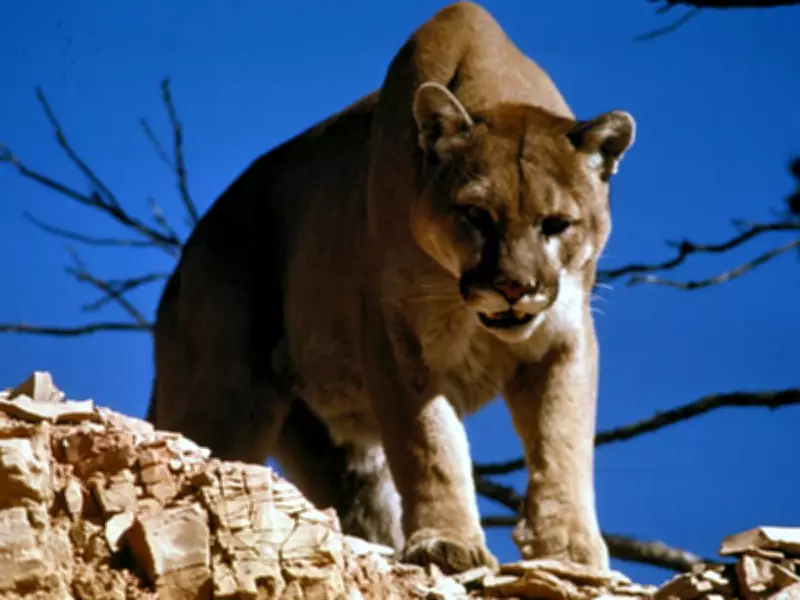
California's Santa Cruz Mountains attract millions of hikers, runners, and mountain bikers every year. Yet the same landscape is also home to one of North America's most elusive predators: the mountain lion.
Mountain Lions Adjust Behavior Around Humans
A new study has found that mountain lions adjust how they use shared spaces with people. It appears mountain lions don't just retreat from humans. Instead, they adjust their movements around high-traffic areas and often move away from trails before periods of peak human activity.
According to Phys.org, the research offers new insight into how animals and humans share wild spaces under growing pressure.

Mountain Lions Were Already Avoiding Humans
According to DataDryad, researchers at the University of California, Santa Cruz, tracked 36 wild mountain lions (or pumas) across the Santa Cruz Mountains for 6 years.
Using GPS collars on the big cats, the researchers analysed thousands of movement records and cross-referenced them with Strava data, a fitness-tracking app used by many hikers, runners and bikers to log their routes. The study found that mountain lions routinely avoided the immediate area around highly used trails, especially during periods of high recreational activity.
Lead author John Morgan, a doctoral candidate in environmental studies at the University of California, Santa Cruz, said the research aimed to understand how mountain lions cope with chronic human recreation in their habitat. The findings suggest that the animals adjust their behaviour in response to predictable patterns of human activity, which may help reduce overlap between people and mountain lions.
Scientists Used Technology to Track Humans and Cats
To understand how humans and pumas share the Santa Cruz Mountains' 267,000 acres, scientists overlaid recreation data with the movements of 36 wild pumas tracked by GPS collars over six years.
The GPS collars recorded the movements of mountain lions across various locations, including popular open-space preserves such as Rancho San Antonio and Monte Bello in California. Using publicly available recreation activity data collected from Strava, researchers mapped when and where human activity, like trail running and mountain biking, occurred.
By comparing these maps to where the pumas travelled, the scientists saw clear patterns showing the big cats moved away from areas that were consistently associated with heavy recreational use.
Chris Wilmers, professor of environmental studies at the University of California, Santa Cruz, and senior author of the study, said the animals appeared to know which trails were consistently busy and planned their movements accordingly. These findings build on years of research by the Santa Cruz Puma Project that has shown pumas' fear and avoidance of humans.
In a 2017 study published in Proceedings of the Royal Society B, researchers from the Santa Cruz Puma Project found that mountain lions altered their behaviour when exposed to recordings of human voices. The authors described humans as a "super predator" from the pumas' perspective.
Some Mountain Lions Adapted to the Presence of Humans
However, the research did reveal differences between mountain lions in different areas. Those living closer to intensely human-use areas displayed reduced levels of avoidance and were observed in closer proximity to trails compared to cats living in remote areas. The researchers describe this phenomenon as habituation.
But the study found that these 'tamer' mountain lions did not lead to more conflict incidents. The researchers analyzed 678 reports of human-puma conflicts ranging from sightings of the cats, attacks on domestic animals, unusual activity, or direct interactions with people between 2018 and 2023.
Using computer modelling, they found that recreational intensity, rather than puma habituation, was a stronger predictor of where conflicts were likely to occur.
What This Means for Mountain Lions
The findings arrive at an important time for mountain lions in the Santa Cruz Mountains. According to researchers from the University of California, Santa Cruz, the population faces ongoing challenges linked to limited genetic diversity and habitat fragmentation. The study's findings could help inform future wildlife management and recreation policies.

Conservationists suggest that the findings challenge assumptions that habituated large carnivores are inherently more dangerous, indicating that some degree of tolerance may help mountain lions coexist with people.
For anyone hiking, biking, or running in the Santa Cruz Mountains, the good news is clear: even in some of California's most popular spots for outdoor recreation, the research suggests that mountain lions are taking considerable steps to avoid encounters with people. And as research continues, the evidence points to human predictability as a factor in coexistence with mountain lions.