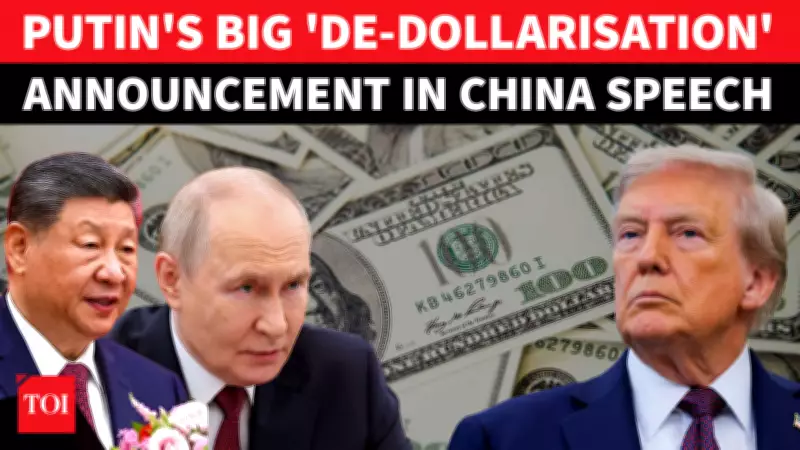
After meeting Vladimir Putin in Beijing, Chinese President Xi Jinping heard Moscow's pitch for a sanctions-proof trade model. Putin stated that Russia and China have built a stable bilateral system by shifting settlements into rubles and yuan, insulating commerce from external pressure and global market volatility. Nearly all export-import operations between the two nations are now conducted in their national currencies.
Putin's Announcement on De-Dollarisation
During the high-level meeting, Putin emphasized the success of de-dollarisation efforts, noting that over 100 local currencies are now used in bilateral trade. This move aims to reduce dependency on the US dollar and protect trade from Western sanctions. The Russian leader highlighted that the shift to national currencies has strengthened economic ties and provided a buffer against global financial instability.
Implications for Global Trade
The announcement signals a significant step in the ongoing de-dollarisation trend among emerging economies. By using rubles and yuan, Russia and China seek to create a more resilient trade framework. Analysts believe this could inspire other nations to explore similar arrangements, potentially reshaping the global financial landscape.

The meeting in Beijing also touched upon energy cooperation and investment projects, further solidifying the strategic partnership between the two countries. Putin's visit underscores the deepening alignment between Moscow and Beijing in the face of Western pressure.