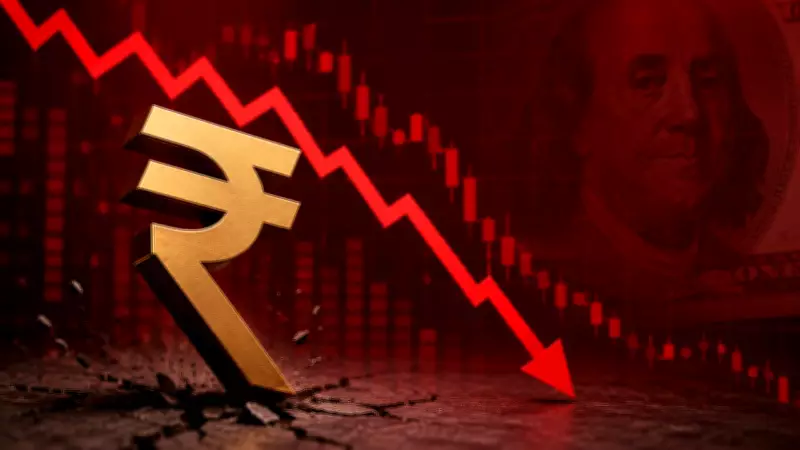
The Indian rupee touched a historic low of 96.14 against the US dollar on Friday before settling at 95.97, one paise lower than its previous close, as a combination of domestic and global factors weighed on the currency.
Domestic Pressures
The decline comes amid a widening current account deficit, continued selling by foreign investors, and broader macroeconomic pressures. According to Abhishek Goenka, founder of forex advisory firm IFA Global, the market is heavily one-sided. He noted that exporters are reluctant to hedge, and participants are divided into two camps: those who are long on USDINR and those expecting intervention from the Reserve Bank of India (RBI) or a sudden reversal, who remain on the sidelines. Goenka added that timing a reversal is very difficult, and very few are considering shorting USDINR at this point.
Goenka emphasized that the sentiment is reflected in price action, with incessant pressure on the rupee and no respite. The only factor holding the currency is RBI supply of dollars; if the central bank steps off, the USDINR pair could soar.

Global Factors
On the global front, US President Donald Trump’s comments that he is still strongly considering resuming attacks on Iran dampened risk sentiment. Additionally, a price hike by oil marketing companies is seen as a temporary measure, as it passes on only a tenth of the increase in costs. Yields on US treasuries have risen, with the two-year bond yield up 8 basis points to 4.05% and the 10-year yield rising 6 basis points to 4.52%, making US assets more attractive and drawing capital away from emerging markets.
Oil Prices
Brent crude futures rose more than 3% to $109 per barrel on Friday, nearing the $110 mark. Higher oil prices add to pressure on the rupee through increased import costs, as India is a major crude importer.
The rupee’s record low underscores the challenges facing the Indian economy, with the current account deficit widening and foreign portfolio outflows persisting. Market participants are closely watching for any intervention from the RBI to stabilize the currency.