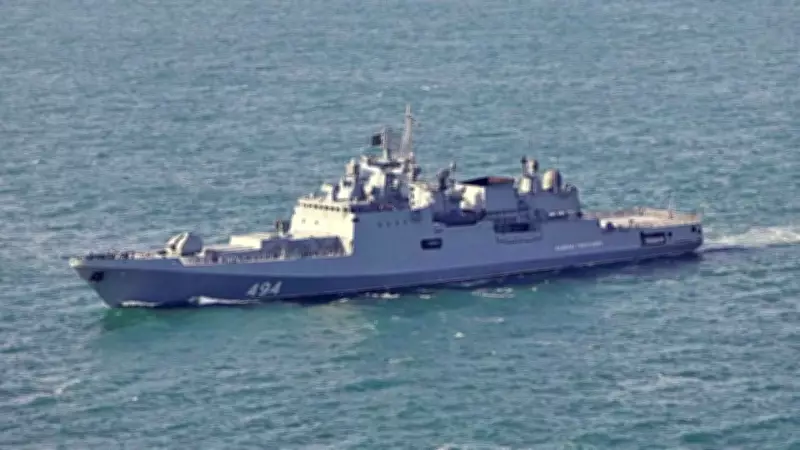
A recent confrontation between a Russian frigate and a British-flagged yacht in the English Channel has heightened tensions between Moscow and London. The incident occurred on June 16 at approximately 11:40 AM BST, about 20 nautical miles south of the Isle of Wight and outside UK territorial waters. Reports indicate that the yacht had drifted toward the Russian frigate in foggy conditions after departing from the UK.
UK Response and Monitoring
The UK Ministry of Defence confirmed it is examining the incident. A spokesperson stated, “We are investigating reports of an incident in the channel.” British media reported that the Royal Navy patrol vessel HMS Mersey was monitoring the Russian frigate at the time of the confrontation.
Historical Parallels: The Dogger Bank Incident of 1904
The event has revived memories of the 1904 Dogger Bank incident, when Russian naval forces opened fire on British fishing vessels near Britain's coast, nearly pushing the two nations to war. During the Russo-Japanese War, on the night of October 21-22, 1904, Russia’s Baltic Fleet mistakenly identified a group of British fishing trawlers at Dogger Bank as Japanese torpedo boats and attacked them. The assault killed two British fishermen and injured several others, sparking outrage in Britain. The Royal Navy was placed on alert, and Britain seriously considered retaliatory measures. For several days, Europe feared the crisis could escalate into a full-scale Anglo-Russian war. The situation was defused through diplomacy. An international commission of inquiry later concluded that the British fishing boats posed no threat and that the Russian fleet had acted without justification. Russia accepted responsibility and paid £66,000 (equivalent to £10.4 million today) in compensation to the affected fishermen and their families.

Strategic Importance of the English Channel for Russia
Stretching between southern England and northern France, the English Channel is one of the busiest shipping lanes in the world and serves as a crucial gateway connecting the North Sea and Baltic region to the Atlantic Ocean. For Russia, the Channel is particularly important because it lies on the main maritime route used by ships departing from major Baltic ports such as Ust-Luga, Primorsk, and St. Petersburg. These ports handle a significant share of Russia's crude oil, petroleum products, and other exports. According to Reuters, Primorsk exports more than 1 million barrels of crude oil per day, while Ust-Luga exported 32.9 million metric tons of oil products last year, and Primorsk 16.8 million tons. Primorsk and Ust-Luga are central nodes in Russia's seaborne oil exports.
Legal Limitations on UK Action
Although the English Channel is a vital gateway for Russian trade and oil exports, international maritime law prevents Britain from simply closing the route. Under the United Nations Convention on the Law of the Sea (UNCLOS), the English Channel and the Strait of Dover are considered international waterways through which ships of all nations enjoy the right of transit passage. London can impose sanctions on Russian ships, deny them access to its ports, monitor Russian shipping, and deploy Royal Navy vessels to shadow Russian warships, but it cannot legally blockade the Channel in peacetime.
The Shadow Fleet
A Sunday Times investigation found that Russia has exported approximately £239 billion worth of oil through the English Channel since 2022, much of it carried by the so-called shadow fleet. The shadow fleet is a network of aging tankers operating under complex ownership structures and often registered in third countries. These vessels are used to transport Russian crude oil to international markets despite Western sanctions and price-cap restrictions imposed after the invasion of Ukraine. Many of the shadow fleet tankers sail from Russian Baltic ports toward buyers in Asia, all passing through the English Channel, making it a key transit corridor for operations.

Conclusion
The latest English Channel incident may not have resulted in casualties, though it revived memories of the 1904 Dogger Bank Incident, bringing echoes of a maritime confrontation from over a century ago. At the same time, the confrontation highlights the strategic importance of the English Channel as a critical maritime route for Russian trade, energy exports, and naval movements.