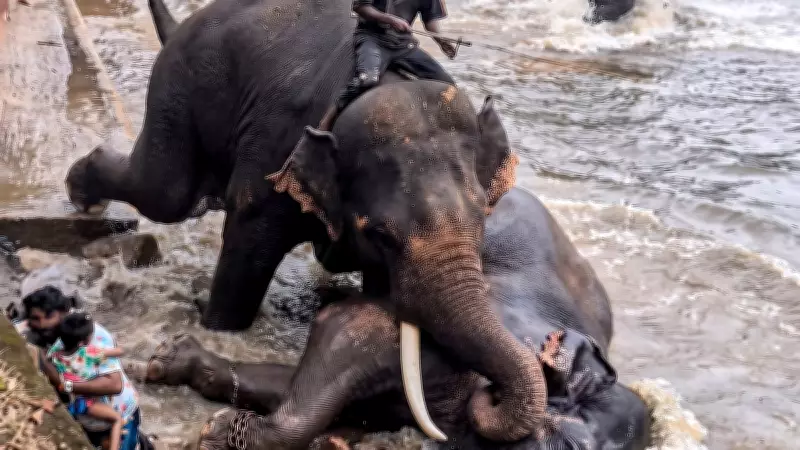
As summer temperatures soar in Karnataka, a combination of musth in male elephants and overcrowding in fragmented habitats is triggering heightened aggression among the animals, leading to increased human-elephant conflict. Forest officials report a surge in incidents involving crop raiding, property damage, and threats to human safety, particularly in regions bordering forest reserves.
Understanding Musth and Its Impact
Musth is a periodic condition in male elephants characterized by elevated testosterone levels, resulting in aggressive behavior, heightened irritability, and a strong drive to establish dominance. During summer, the onset of musth coincides with water scarcity and heat stress, exacerbating tensions. Elephants in musth are more likely to venture into human settlements in search of food and water, often leading to confrontations.
Overcrowding in Habitats
Habitat loss and fragmentation have forced elephants into smaller, isolated patches, leading to overcrowding. This intensifies competition for resources and social stress, making elephants more prone to aggression. In Karnataka, corridors between forests have been encroached upon, restricting elephant movement and pushing them into agricultural areas.

Human-Elephant Conflict on the Rise
According to the Karnataka Forest Department, the number of conflict incidents has increased by 30% compared to the previous year. Farmers in districts like Hassan, Kodagu, and Chamarajanagar have reported extensive crop damage, with some losing entire harvests. In response, authorities have deployed rapid response teams and erected solar-powered fences, but challenges persist.
Mitigation Measures
Forest officials are implementing a multi-pronged strategy: creating water bodies within forests to reduce elephant movement outside, clearing invasive plants to improve forage, and using early warning systems to alert villages. Community awareness programs emphasize safe practices, such as avoiding elephant paths during dusk and dawn. However, experts argue that long-term solutions require restoring habitat connectivity and reducing human encroachment.
Call for Sustainable Solutions
Wildlife conservationists stress the need for landscape-level planning that balances development with ecological needs. They advocate for the preservation of elephant corridors, compensation for farmers, and eco-tourism initiatives that generate revenue for conservation. As summer intensifies, the state must act swiftly to mitigate conflicts and protect both elephants and communities.