

Tragic Elephant Attack Claims Three Elderly Lives in Jharkhand's Bokaro District
In a devastating incident that has sent shockwaves through the community, three elderly members of a family were tragically killed in an elephant attack in Jharkhand's Bokaro district. The fatal encounter occurred in the early hours of Thursday, highlighting the escalating human-elephant conflict in the region.
Details of the Fatal Incident
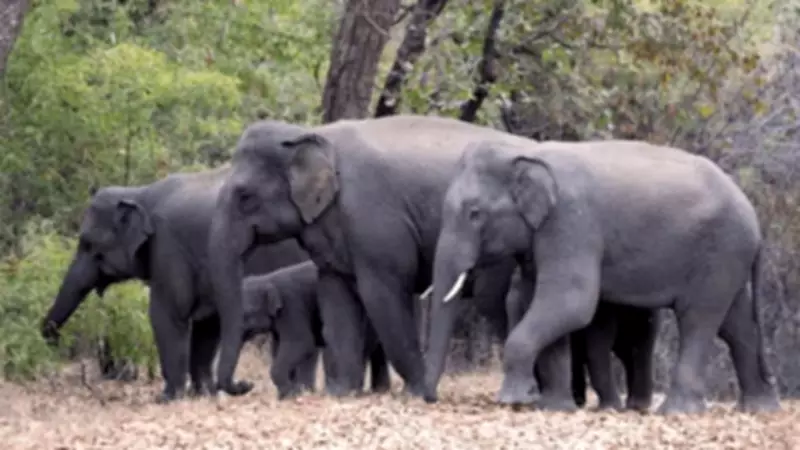
The tragic event unfolded around 3 am in Barkipunu village, located under the Gomia forest circle. According to Bokaro Divisional Forest Officer (DFO) Sandeep Shinde, a herd of five elephants entered the village, leading to the fatal trampling of three individuals while they were asleep.
The victims have been identified as Gangwa Karmali, his wife Kamla Devi, and his sister-in-law Bhagiya Devi. All three were between 60 and 65 years old and belonged to the same family. In addition to the fatalities, one woman sustained serious injuries in the incident and is currently undergoing medical treatment.

Forest Department's Response and Compensation
Forest department teams were immediately deployed to the site to track the elephant movement and prevent further escalation. DFO Sandeep Shinde confirmed that initial compensation has already been provided to the affected family, and the bodies are being sent for post-mortem examination.
"There is anger among villagers, which initially delayed the lifting of the bodies. However, the situation is now under control and the bodies are being taken for post-mortem," Shinde stated, acknowledging the community's distress.
Challenges Posed by Migratory Herd
The elephants involved in this tragic incident were part of a migratory herd, which complicates management efforts. Shinde explained that when herds split and move across multiple areas, it becomes significantly more challenging to monitor and control their movements.
"At present, elephants are reported at two to three different locations in the region. When herds split and move across multiple areas, management becomes challenging," he noted, emphasizing the complexity of the situation.
Underlying Causes of Human-Elephant Conflict
DFO Shinde pointed to several contributing factors behind the increasing human-elephant conflicts in the area. The affected region contains mining zones, highways, and new infrastructure projects that disrupt natural elephant corridors.
These developments have significantly altered the traditional migration paths of elephants, forcing them into closer contact with human settlements and increasing the likelihood of dangerous encounters.
Community Response and Demands
Following the incident, fear and tension have gripped Barkipunnu village. Residents have reported repeated elephant incursions in the area and are demanding stronger safety measures from authorities.
The community's demands include:
- Adequate compensation for the families of the deceased
- Proper medical care for the injured woman
- Enhanced safety measures to prevent future incidents
- Better management of elephant corridors and migration patterns
Coordinated Efforts to Manage the Situation
Forest department officials are mobilizing additional teams from neighboring districts to assist with tracking and managing the elephant herd. Authorities have also contacted officials in West Bengal's Bankura district to coordinate efforts and prevent further movement of the herd into populated areas.
The forest department has assured residents that efforts are underway to monitor elephant movement closely and implement measures to prevent similar incidents in the future. However, the challenge remains significant given the migratory nature of the herd and the ongoing infrastructure development in traditional elephant habitats.
This tragic incident serves as a stark reminder of the complex challenges facing both wildlife conservation and human safety in regions where development projects intersect with natural animal migration patterns. As authorities work to balance these competing interests, communities remain vulnerable to such dangerous encounters.






