

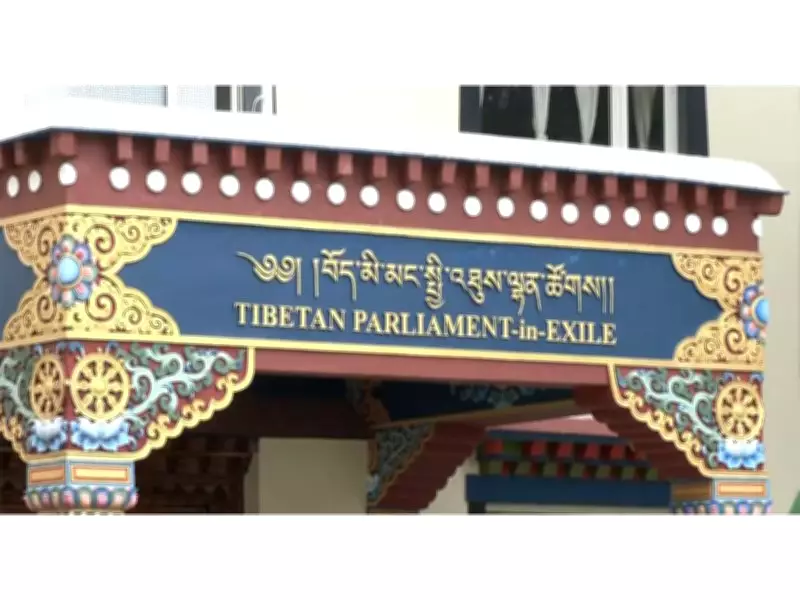
Tibetan Exile Leaders Decry China's Ethnic Unity Law as Legalized Repression
The Tibetan Government in Exile, based in Dharamshala, Himachal Pradesh, India, has issued a forceful condemnation of China's recently enacted Ethnic Unity and Progress Promotion Law. Leaders assert that this legislation, signed by Chinese President Xi Jinping on March 12, 2026, and set to take effect on July 1, 2026, will significantly escalate repression against ethnic minorities, including Tibetans and Uyghurs.
Law Seen as Mechanism for Cultural Assimilation
Critics widely view the law as a formal legal framework designed to assimilate China's 55 officially recognized ethnic minority groups into the dominant Han Chinese population. This move has sparked serious concerns over potential human rights violations and the systematic erasure of diverse cultural identities. According to exile leaders, the law represents a longstanding pattern of repression that is now being accelerated, threatening the survival of Tibetan, Uyghur, and other minority cultures.
Strong Accusations from Tibetan Parliament Members
Dorjee Tseten, a member of the Tibetan Parliament in Exile, provided a stark assessment in an interview with ANI. He stated, "The so-called China Ethnic Unity Law is effectively legalizing the genocide of Tibetan people and other regional communities." Tseten explained that the law, which has already been informally enforced in certain parts of China, is now being codified into formal legislation. He described it as embodying "China's colonial objective of eradicating Tibetan values, rights, language, and culture."

Tseten added, "We strongly condemn this Act," warning that it could criminalize individuals for practicing their native language and culture—fundamental human rights. His concerns were echoed by Thubten Wangchen, another MP in exile, who asserted that Beijing's broader aim is to "Sinicise Tibet, Uyghurs, Xinjiang, and other regions." Wangchen paraphrased this doctrine as "one country, one language, one nationality," labeling it "extremely dangerous" and calling on the international community to collaborate in preventing its success.
Critique of China's Narrative on Stability
Tenzin Lekshay, spokesperson for the Tibetan Government in Exile, challenged China's portrayal of the law as a tool for stability. He argued that it actually masks "a new mechanism to control people who are already oppressed and have a dissenting voice." Lekshay contended, "This ethnic law is not about unity but about uniformity—creating a homogeneous China under Chinese characteristics." He emphasized that genuine stability would arise from granting freedoms rather than imposing legal restrictions.
Call for International Action
The Tibetan leadership in exile has urgently appealed to the global community to closely monitor the implementation of the Ethnic Unity and Progress Promotion Law. They urge international bodies to raise concerns about its potential impacts on human rights and cultural freedoms, highlighting the need for vigilance against what they describe as an intensifying campaign of repression.






