Walking through the streets of Kampala, Uganda's capital, one is likely to encounter an Indian entrepreneur. From banking and agriculture to supermarket chains and shopping malls, Ugandan Indians have reestablished their significant role in the country's economy.
A Painful Past
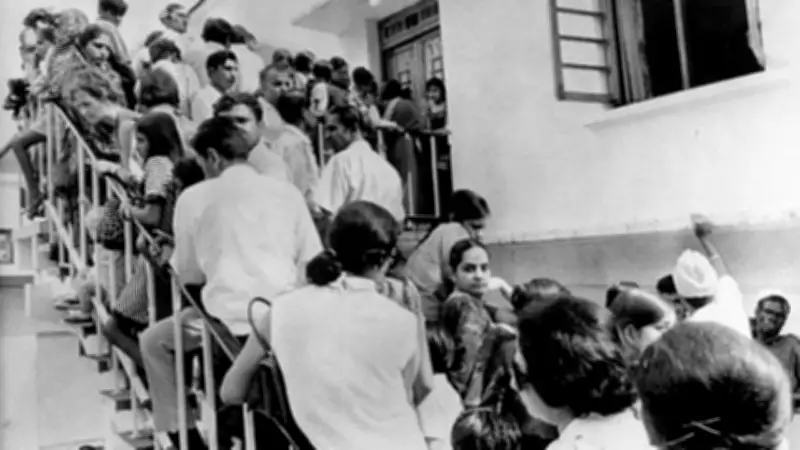
Approximately four decades ago, in 1972, around 50,000 Asians were forcibly expelled from Uganda under the orders of former military ruler Idi Amin. They were accused of "milking Uganda's money." At that time, Indians owned 90% of the country's businesses and contributed 90% of its tax revenues. After their exile, many dispersed globally, returning to India or migrating to the United States and the United Kingdom. In the following years, Uganda's economy plummeted by 20-25%. In 1986, President Yoweri Museveni, who recently won a fifth term, seized power and encouraged the exiles to return.
Return and Resurgence
Today, despite constituting less than 1% of the population, Indians are estimated to contribute up to 65% of Uganda's tax revenues. One notable returnee is Sudhir Ruparelia, Uganda's richest man, with an estimated net worth of $800 million. After spending time in Britain working menial jobs and saving money, he returned to Uganda. "I started my business from scratch with $25,000 (£17,000) and since then we have grown into seven different sectors of the business. We employ more than 8,000 people in this country," he told the BBC. His conglomerate spans banking, insurance, hospitality, real estate, education, broadcasting, and horticulture.

Another example is Ali Shah Jivraj, a 28-year-old founder and CEO of Royal Electronics. While his ancestors were in farming, his business focuses on consumer goods, electronics manufacturing, and real estate.
According to the Indian Association of Uganda, Indian contributions to tax revenue were 90% in 1972, dropped to 30% in 1985, and rebounded to 65% in 2016. Today, Asian business ownership in Uganda is more diverse than in the 1970s.
Challenges and Tensions
Racial tensions have historically been linked to Asian dominance in Uganda's economy. While such tensions still exist, they rarely escalate into violence. The BBC reports that locals sometimes complain about special incentives offered to foreign investors, which they believe disadvantage Ugandans. Additionally, there are concerns about labor exploitation, as Uganda has no official minimum wage.
Uganda's economy is projected to grow by up to 6% next year. However, challenges such as youth unemployment and wealth disparity remain, requiring collaboration between the Ugandan-Asian community and the native population.