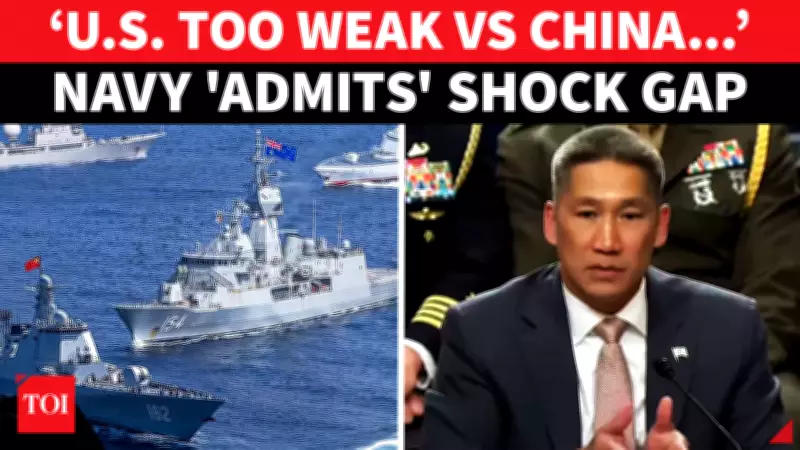
A striking warning emerged during a Senate defense hearing after Acting Navy Secretary Hung Cao acknowledged the 'growing gap' between American and Chinese maritime power. Cao told lawmakers that the United States currently has only 188 U.S.-flagged merchant ships and 105 Military Sealift Command vessels, while China operates more than 11,000 merchant ships. The remarks came during testimony on the Navy’s 2027 authorization request, as top U.S. military officials warned that strengthening America’s merchant marine and logistics network is now critical for national security and future military readiness.
Key Revelations from the Hearing
During the Senate Armed Services Committee hearing, Acting Navy Secretary Hung Cao presented stark figures highlighting the disparity in maritime capabilities between the United States and China. According to Cao, the United States possesses a mere 188 U.S.-flagged merchant ships, supplemented by 105 vessels under the Military Sealift Command. In stark contrast, China boasts a fleet of over 11,000 merchant ships, underscoring a significant imbalance in commercial and military logistics capacity.
Implications for National Security
Cao emphasized that this gap poses a direct threat to U.S. national security and military readiness. The ability to transport troops, equipment, and supplies across global waters is a cornerstone of American defense strategy. With China's vast merchant fleet, Beijing can project power and sustain operations far from its shores, while the U.S. relies on a dwindling number of commercial vessels that can be requisitioned in times of crisis.

Historical Context and Trends
The decline of the U.S. merchant marine has been a long-term trend. In the 1950s, the United States operated thousands of merchant ships, but decades of globalization, cost competition, and a shift to foreign-flagged vessels have eroded this capacity. Meanwhile, China has aggressively expanded its shipbuilding industry and commercial fleet, often with state support, to dominate global shipping lanes.
Military Sealift Command's Role
The Military Sealift Command (MSC) operates a fleet of support ships that provide logistics, replenishment, and transport for the U.S. Navy. However, its 105 vessels are far from sufficient to meet the demands of a major conflict. Cao noted that the MSC fleet is aging and in need of modernization, while China's rapidly expanding navy and merchant marine can be leveraged for dual-use purposes.
Calls for Action
Lawmakers from both parties expressed concern and called for urgent measures to revitalize the U.S. merchant marine. Proposals include tax incentives for shipbuilding, increased investment in the MSC, and policies to encourage the use of U.S.-flagged ships for international trade. Cao stressed that without immediate action, the United States risks losing its ability to project power and respond to global emergencies.
Strategic Competition
The hearing highlighted the broader strategic competition between the United States and China. As Beijing expands its naval capabilities and commercial fleet, Washington must adapt to maintain its edge. The admission by the Acting Navy Secretary serves as a wake-up call for policymakers to prioritize maritime strength as a key component of national defense.
In conclusion, the Senate defense hearing underscored the urgent need to address the growing maritime gap between the United States and China. With China's 11,000 merchant ships dwarfing America's 188, the U.S. must take decisive steps to rebuild its merchant marine and logistics network to ensure future military readiness and national security.