

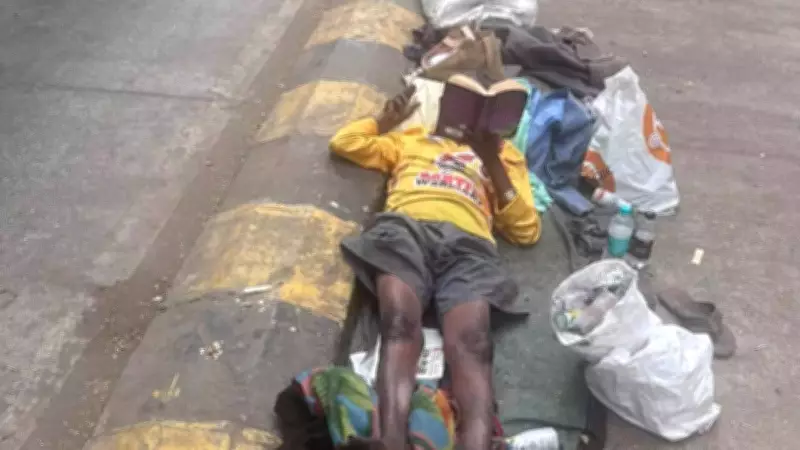
Viral Image of Mumbai's 'Reading Man' Ignites Social Media Firestorm
A compelling photograph that circulated widely across social media platforms last week captured a man lying by a Mumbai roadside, dressed in a yellow T-shirt and grey shorts, stretched out on a pile of rags. In one hand, he held a Sidney Sheldon novel; in the other, a beedi. The image, originally shared on Reddit's r/Mumbai subreddit, went viral within hours and triggered an extensive range of emotional and intellectual reactions from users across various platforms.
Contrasting Reactions: Admiration Versus Discomfort
While numerous social media users expressed admiration for the man's apparent concentration, focus, and evident passion for reading despite his circumstances, others voiced significant discomfort at the sight. For some observers, the photograph felt unsettling because it appeared to romanticize hardship—a perspective they argued should be avoided since the man genuinely appeared destitute, even as he tried to make the best of his situation. These viewers contended that the image raised deeper, more troubling questions about homelessness, economic inequality, and the critical lack of safe spaces in Mumbai for those without proper shelter.
The original poster, identified as User DisciplineOk3328, directly addressed this criticism in the comments section. "To those saying that I'm calling this the 'spirit of Mumbai' or romanticising it, nowhere in my post have I said that," they clarified. "I've simply described what's visible in the photograph and mentioned that it was taken in Mumbai. Nothing more has been implied. Since it was something strange and unique, I shared it here."

Humorous Takes and Philosophical Observations
Reactions within the Reddit thread ranged from thoughtful commentary to humorous observations. One user, Uchihamadaralord, remarked, "Well, a bit sad-looking state, but the old man sure has some style in reading a book." Another participant, KamalTheCoder, quipped, "Drink and read is better than drink and drive," a comment that received numerous approving responses from fellow users. User Inevitable_Bar1607 added philosophically, "Drink and read—exactly what I want to do for the rest of my life."
Broader Discussions on Governance and Social Responsibility
The viral post quickly evolved into a platform for broader discussions about governance, social responsibility, and urban policy. User Financial-Emotion316 wrote passionately, "Government should make more shelters. People don't deserve to live like this. Why are we giving so much tax every year, for people to struggle like this?" This sentiment echoed throughout the conversation, highlighting public frustration with systemic failures.
Some users shared personal anecdotes that complicated common assumptions about people seen begging on Mumbai's streets. GamerDeepesh recounted a revealing conversation with a beggar he once shared tea with. "He spoke English so well that I was shocked," the user wrote, adding that the man actually owned an apartment in South Mumbai but lacked basic identity documents such as Aadhaar or PAN cards. "Some beggars aren't beggars at all—they're just thrown out of their homes," he concluded, noting that the man had politely requested tea rather than demanding anything.
Unverified Claims About the Mysterious Reader
Numerous unverified claims emerged about the identity and background of the man in the photograph. One now-deleted comment suggested he lived nearby, spent his days reading and drinking, and often received food and clothes from compassionate locals, with a wine shop located conveniently close to where he was typically seen. The deleted post reportedly stated: "This guy lives near my home and I often see him carrying books by well-known authors, all he does is drink and read. He Begs/chills, Locality achi he so log khana/kapde bhi dete he + Wine shop bhi he baju me."

Reigniting Uncomfortable Urban Conversations
While the image has amused many viewers and drawn admiration for the man's apparent love for literature despite his challenging circumstances, it has simultaneously reignited uncomfortable but necessary conversations about homelessness, access to affordable housing, and the complex, often hidden realities faced by those living on the margins of India's financial capital. The photograph serves as a powerful visual catalyst for examining the intersection of poverty, dignity, and urban life in contemporary Mumbai.





