

Experience the 2026 Lunar Eclipse in India: A Guide to Witnessing the Blood Moon
There is something profoundly magical and awe-inspiring about gazing up at the night sky to witness a cosmic event that has unfolded for billions of years. A lunar eclipse transcends mere astronomy; it is a shared human experience that connects generations. Our ancestors stood beneath the same darkening Moon, pondering its meaning—some saw it as a scientific marvel, others as a spiritual sign. Today, science explains it clearly, yet the enchantment remains undiminished.
This year, a lunar eclipse is set to occur on March 3, 2026, and it will be visible across India. This celestial spectacle offers a unique opportunity to engage with the cosmos in a meaningful way.
The Science Behind a Lunar Eclipse
A lunar eclipse occurs when Earth moves directly between the Sun and the Moon, casting its shadow upon the lunar surface. Rather than vanishing, the Moon often glows in a deep coppery red hue, earning the evocative nickname Blood Moon. This surreal sight is a result of sunlight bending through Earth's atmosphere, where blue light scatters and red light passes through, bathing the Moon in warm tones—similar to the phenomenon that creates red sunsets.

However, in our fast-paced digital age, many of us treat such events as fleeting notifications. We might step outside briefly, capture a blurry photo, share it online, and move on. What if we slowed down? What if we prepared thoroughly, experienced it fully, and reflected deeply afterward? Here is a comprehensive guide to making the most of the lunar eclipse.
Before the Lunar Eclipse: Preparation Is Key
1. Check the Timing and Weather
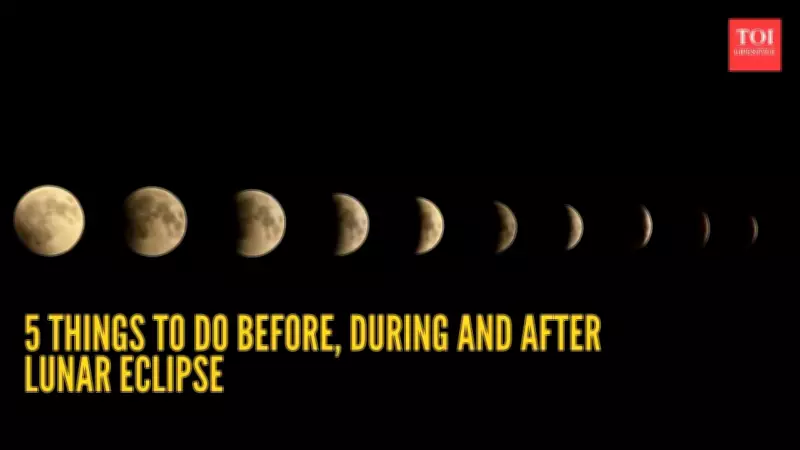
A lunar eclipse unfolds in distinct phases: the penumbral phase, when the shadow begins to touch the Moon; the partial eclipse, when the shadow partially covers it; and the total eclipse, when the Moon turns red. Verify the exact timing for your location, noting the start, peak, and end times. Set reminders to avoid missing the peak moment. Additionally, consult the weather forecast, as cloud cover can significantly impact visibility.
2. Choose the Right Viewing Spot
Unlike a solar eclipse, a lunar eclipse is completely safe to view with the naked eye. Nonetheless, location matters. Seek out a spot with minimal light pollution—such as a terrace, balcony, rooftop, or nearby open field. Darker surroundings enhance the dramatic appearance of the Moon. If available, bring binoculars or a telescope to reveal intricate surface details.
During the Lunar Eclipse: Be Present and Observant
3. Watch the Gradual Transformation
The shadow creeps across the Moon almost silently. If you step away and return after 20 minutes, you will notice significant changes. As totality approaches, the Moon transforms into the Blood Moon. Instead of immediately reaching for your phone, take a few minutes to simply watch. Observe how the sky feels and how the neighborhood grows quieter, immersing yourself in the moment.
4. Capture Memories Without Sacrificing Experience
If you enjoy photography, this is an excellent opportunity. Use a tripod for stability and adjust exposure settings to prevent over-bright images. Zoom lenses can help capture fine details. However, do not spend the entire eclipse fiddling with camera settings. Take a few photos, then set the device aside. Some experiences deserve your full, undivided attention. Consider watching with a friend, family member, or partner to share the wonder.
After the Lunar Eclipse: Reflect and Carry Forward
5. Take a Moment for Reflection
When the shadow recedes and the Moon returns to its usual brightness, the night feels subtly altered. This is an ideal time for reflection. Spiritually, lunar eclipses are often linked to closure, release, and emotional clarity. Even from a scientific perspective, the symbolism can resonate. Ask yourself questions like: Is there something in my life ready for closure? What am I holding onto that I no longer need? A few quiet thoughts or a brief journal entry can suffice.
6. Carry the Calm Forward

A lunar eclipse serves as a powerful reminder of perspective. The Moon we see nightly can shift, darken, and return to light, illustrating that change is natural and cycles are constant. Life mirrors this with phases of brightness and shadow, neither lasting forever. Let the calm experienced under the night sky stay with you. The next time the Moon begins to darken, step outside, breathe deeply, and watch slowly. Some moments in life are not meant to be rushed—they are meant to be witnessed fully.





