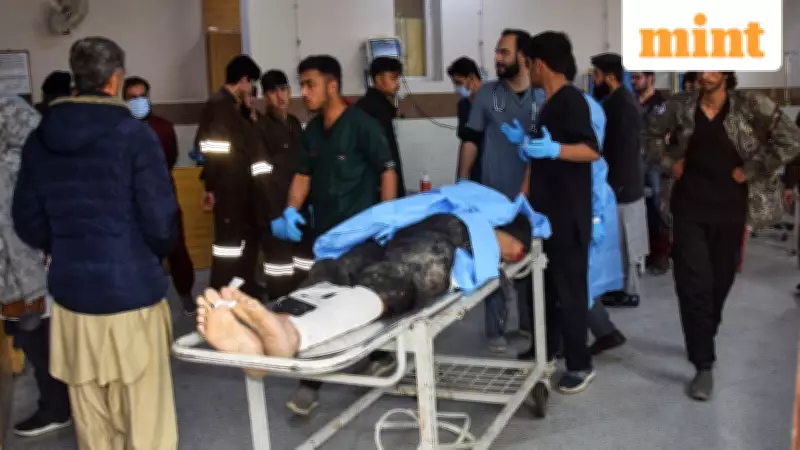
Coordinated Separatist Attacks in Balochistan Leave 33 Dead, 92 Militants Killed
In a devastating escalation of violence, at least 33 people were killed in a series of coordinated separatist attacks across Pakistan's Balochistan province on Saturday. According to official military statements, the casualties included 15 security personnel and 18 civilians, marking one of the deadliest incidents in the restive southwestern region in recent months.
Military Response and Casualty Figures
The Pakistan military reported that 92 militants, including three suicide bombers, were also killed during the security operations that followed the attacks. The military's media wing, ISPR, confirmed these numbers in an official statement, highlighting the intensity of the confrontation between state forces and separatist elements.
Balochistan, a mineral-rich province bordering Afghanistan and Iran, has been grappling with a separatist insurgency for decades. The region has witnessed frequent attacks targeting security forces, foreign nationals, and non-local residents, creating an atmosphere of persistent instability.

Multiple Attack Locations and Civilian Impact
The violence unfolded across multiple locations, including the provincial capital Quetta and the strategic port city of Gwadar. According to reports citing military statements, the attacks were described as "coordinated but poorly executed" by a senior military official in Islamabad.
The official noted that the attacks "failed due to poor planning and rapid collapse under effective security response." However, the circumstances surrounding the deaths of the 18 civilians remain unclear, raising concerns about collateral damage in the conflict zone.
Political Reactions and Accusations
Prime Minister Shehbaz Sharif praised security forces for "foiling" the attacks and preventing even greater loss of life. In an official statement, Sharif made serious allegations against neighboring India, accusing it of backing the separatist elements operating in Balochistan.
"We will continue the war against terrorism until its complete eradication," Sharif declared, emphasizing the government's determination to combat the insurgency despite the significant human cost.
On-the-Ground Situation and Additional Incidents
Reports from the ground indicated that the situation remained volatile in four districts, with attacks not yet completely under control. Journalists in Quetta reported hearing multiple explosions throughout the day, creating panic among residents.
Abdul Wali, a 38-year-old resident, described the terrifying experience: "Since morning, there have been explosions one after another. The police point guns at us and say 'go back,' otherwise they beat us. What should we do?"
The violence extended beyond direct attacks, with militants reportedly:
- Abducting a deputy district commissioner in Quetta
- Freeing at least 30 inmates from a district jail while seizing firearms and ammunition
- Attacking a police station and taking additional ammunition
Infrastructure Disruption and Communication Blackout
The attacks caused significant disruption across the province, with:
- Mobile phone services being jammed in affected districts
- Major roads deserted and businesses shut down
- Traffic severely disrupted throughout the region
- Train services suspended across the entire province
Baloch Liberation Army Claims Responsibility
The Baloch Liberation Army (BLA), recognized as the most active militant separatist group in the province, claimed responsibility for the coordinated attacks. In a statement sent to media outlets, the group declared it had targeted:
- Military installations
- Police facilities
- Civil administration officials
The BLA employed a combination of gun attacks and suicide bombings in what appears to be a significant escalation of their campaign. The group also stated that they had blocked major highways to disrupt military operations and logistical movements.

This latest wave of violence underscores the persistent security challenges facing Balochistan, where separatist aspirations, geopolitical tensions, and resource conflicts continue to fuel one of South Asia's longest-running insurgencies.