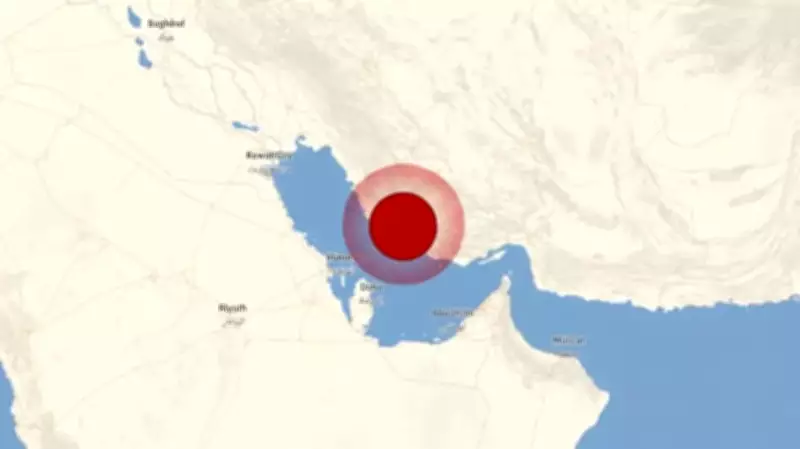
Moderate Earthquake Rocks Southern Iran, UAE Experiences No Impact
A moderate seismic event measuring 5.3 on the Richter scale struck southern Iran in the early hours of Sunday, February 1, 2026. The earthquake was precisely recorded at 8:11 AM UAE time by the sophisticated monitoring systems of the National Seismic Network, which operates under the National Center of Meteorology (NCM). While the tremor registered as significant enough to be classified as "moderate" in intensity, its geographical characteristics played a crucial role in determining its regional impact.
Seismic Details and Local Impact in Iran
According to official geological data released by monitoring agencies, the earthquake originated at a depth of approximately 10 kilometers beneath the earth's surface. This depth is considered typical for tectonic activity occurring within the Iranian plateau region, which often serves as a natural buffer zone for seismic energy dispersion toward neighboring areas like the Arabian Peninsula.
Initial reports from Iranian authorities, including the Iranian Seismological Center and local provincial governors, confirmed that the earthquake resulted in no fatalities or serious injuries among the population. The seismic event primarily affected areas around Mohr and nearby villages including Bidkhun and Akhand, where damage assessment teams documented only superficial or "cosmetic" structural issues.

Specific damage observed included:
- Shattered windows in residential and commercial buildings
- Household objects dislodged from shelves and storage areas
- Minor hairline cracks appearing in some older mud-brick constructions
The sudden shaking triggered a brief period of panic among residents, with many people following established safety protocols by evacuating their homes and gathering in open spaces—a common practice in earthquake-prone regions of Iran.
UAE Remains Completely Unaffected by Seismic Activity
Despite the earthquake's occurrence in relatively close geographical proximity, the United Arab Emirates experienced absolutely no effects from the seismic event. Residents across all seven emirates—from the towering skyscrapers of Dubai to the coastal communities of Ras Al Khaimah—reported feeling no vibrations or tremors whatsoever.
The National Center of Meteorology issued an immediate official statement confirming that the Iranian earthquake had "no effect in the UAE" and posed no threat to the country's infrastructure or population. This absence of impact can be attributed to several important geological and geographical factors:
- Distance and Depth Considerations: The earthquake's epicenter was situated sufficiently far across the Arabian Gulf that seismic waves lost substantial intensity before potentially reaching UAE coastal areas.
- Tectonic Shielding Mechanism: The UAE occupies a relatively stable section of the Arabian Plate, which naturally dampens and absorbs seismic energy originating from more active fault lines in neighboring Iran.
- Absence of Aftershock Transmission: While southern Iran may experience minor aftershocks following the main seismic event, the NCM has assured UAE residents that these secondary tremors are extremely unlikely to be felt within the country's borders.
Advanced Monitoring Systems Ensure Public Safety
The UAE's ability to maintain normalcy during regional seismic events stems largely from its sophisticated technological infrastructure managed by the Ministry of Presidential Affairs. The National Center of Meteorology operates an advanced 24/7 National Seismic Network capable of detecting even the most subtle underground movements in real-time.
This high-tech monitoring system enables authorities to provide immediate, accurate information to the public, effectively preventing the spread of misinformation or unnecessary panic during seismic events. The NCM emphasized that their stations continuously monitor both local and regional seismic activity to ensure any potential threats—however minor—are communicated to residents promptly and transparently.

Normalcy Prevails in Daily UAE Life
For ordinary UAE residents, the earthquake's "impact" was essentially non-existent. Sunday morning routines, weekend commutes, and leisure activities continued completely uninterrupted across the country. Unlike previous instances where larger magnitude earthquakes in Iran caused noticeable effects such as swaying fixtures or brief building evacuations in emirates like Sharjah or Dubai, this 5.3 magnitude event passed entirely unnoticed by the general public.
The incident serves as both a reminder of the region's dynamic geological landscape and a testament to the robustness of the UAE's infrastructure and early-warning capabilities. These systems collectively ensure that "business as usual" remains the prevailing status quo even when significant seismic activity occurs in neighboring territories.