

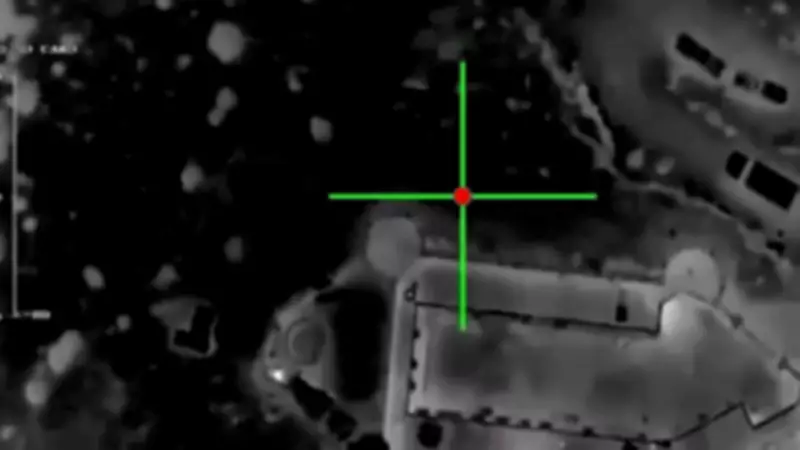
Afghanistan Releases Satellite Footage of Cross-Border Strikes on Pakistan
Afghanistan's Taliban-led Defence Ministry has released satellite footage showing strikes on multiple compounds inside Pakistan, as cross-border fighting between the two neighbours intensifies dramatically. This escalation marks one of the sharpest increases in tensions in recent months, with both sides trading air and ground attacks and issuing stark warnings that have raised fears of a broader conflict.
Details of the Strikes and Conflicting Accounts
Officials quoted by ToloNews stated that the strikes hit a military camp near Faizabad in Islamabad, a headquarters in Nowshera, the military township of Jamrud, and targets in Abbottabad. The ministry described the operation as "successful", claiming that key Pakistani army bases, centres, and facilities were struck effectively. In response, a Pakistani military official told the BBC that drones launched by the Afghan Taliban targeted three specific sites: the army's artillery school in Nowshera, an area close to a military academy in Abbottabad, and a location near a primary school in Swabi.
The Pakistani official asserted that air defence systems intercepted and destroyed all the drones, with no reported casualties or significant damage. However, the two governments have issued sharply conflicting accounts of the overall situation. Pakistan's military said its operations killed at least 274 Afghan forces and affiliated militants, while 12 Pakistani soldiers were killed. Kabul, in turn, claimed 55 Pakistani soldiers were killed and said several had been captured. Neither side's figures could be independently verified, adding to the uncertainty and mistrust.

Background and Escalation of Tensions
The latest flare-up began after Afghanistan announced it launched strikes late Thursday in retaliation for deadly Pakistani air raids on Afghan border areas earlier this week. Pakistan responded with airstrikes in Kabul and two other provinces, stating it had targeted military installations specifically. Pakistan's defence minister, Khawaja Mohammad Asif, wrote on X that "our patience has now run out. Now it is open war between us." This strong rhetoric underscores the deteriorating relations and the potential for further violence.
Afghan government spokesman Zabiullah Mujahid said the strikes were intended as "a message that our hands can reach their throats and that we will respond to every evil act of Pakistan." He accused Islamabad of refusing dialogue, while rejecting Pakistani claims of heavy Afghan casualties as "false". Later on Friday, Afghan officials reported that 19 civilians were killed and 26 wounded in Pakistani strikes in Khost and Paktika provinces, accusing Islamabad of targeting residential areas directly. Pakistan has consistently accused Afghanistan's Taliban authorities of harbouring militant groups, including the Pakistani Taliban (TTP), a charge that Kabul denies vehemently.
Diplomatic Efforts and International Calls for Restraint
Diplomatic efforts are under way to contain the crisis and prevent further escalation. Qatar has again stepped in to mediate between the two nations, while Turkey, Saudi Arabia, Iran, and Russia have all called for restraint and peaceful resolution. UN Secretary-General António Guterres urged both sides to resolve their differences through diplomacy and to protect civilians from harm. These international interventions highlight the global concern over the stability of the region and the need for de-escalation.
The situation remains fluid and highly volatile, with both sides entrenched in their positions and no immediate signs of a ceasefire. The release of satellite footage by Afghanistan's Defence Ministry serves as a provocative move, likely aimed at demonstrating military capability and justifying their actions. As cross-border fighting continues, the risk of civilian casualties and broader regional instability grows, making diplomatic solutions more urgent than ever.






