

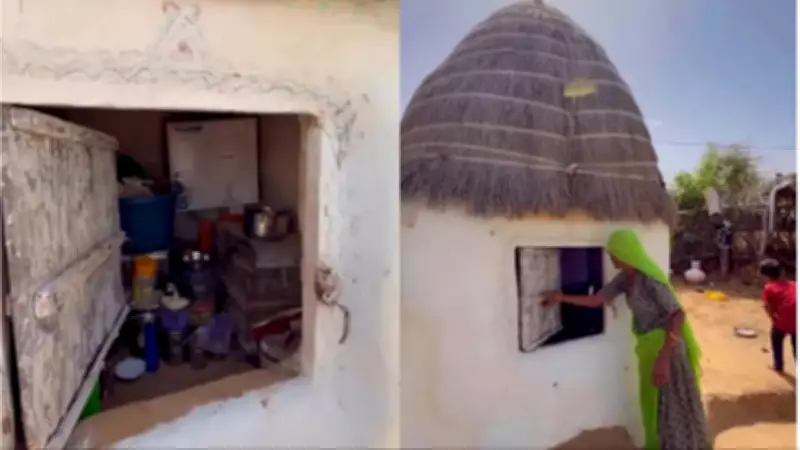
Rajasthan's Ancient 'Desi Fridge' Emerges as Viral Sensation in 2026
In an era dominated by energy-intensive appliances like refrigerators and air conditioners, a traditional invention from Rajasthan is unexpectedly capturing global attention in 2026. Commonly referred to as the "desi fridge," this age-old cooling method, crafted from mud, cow dung, and grass, is resonating with people not only across India but worldwide. It achieves what modern electrical devices struggle to do: maintaining food freshness during extreme heat without any electricity consumption.
Rediscovering a Forgotten Technique Amid Rising Temperatures
As temperatures frequently exceed 40°C throughout India, this ancient technique is being revived not merely as a cultural relic but as a scientifically validated solution for sustainable living. The system leverages porous, locally sourced materials to generate a robust cooling effect, effectively preserving perishable items even in the hottest summer months. Typically, it consists of clay pots or chambers, moistened sand or organic matter, and natural insulators like cow dung and grass.
This combination results in a zero-energy refrigeration method that has been utilized in rural Indian communities long before the advent of electricity. Its simplicity is just the surface; its efficacy is what truly stands out.

The Science Behind the Evaporative Cooling Phenomenon
The core of this technology lies in the natural process of evaporative cooling. Similar to how sweating cools the human body, water evaporation from the porous clay walls of the pot continuously draws heat away, thereby reducing the internal temperature.
A 2026 research paper titled Evaporative Cooling and Deposition Patterns of Nanofluid Droplets highlights that the evaporative cooling effect intensifies with increased heating. This finding demonstrates that such cooling systems operate more efficiently at higher temperatures, making them particularly effective in hot, arid regions like Rajasthan.
Further supporting this, a 2026 article published by Springer, which provides research context on pot-in-pot cooling systems, reveals that these setups can lower temperatures by 8 to 18°C. The study indicates that clay-based systems, rooted in traditional principles, not only significantly reduce temperature but also enhance humidity, thereby extending the shelf life of fruits and vegetables by weeks in some cases.
Modern investigations confirm that the porous structure of terracotta enables powerful passive cooling, explaining why these methods have endured for millennia.
Why This Century-Old System Is Trending Again
The resurgence of the "desi fridge" is driven by necessity rather than nostalgia. With climate change exacerbating heatwaves, escalating electricity costs, and persistent power outages in many areas, this sustainable alternative offers a zero-carbon footprint, independence from electrical grids, and use of biodegradable, local materials.
Even urban dwellers are increasingly exploring eco-friendly options to cut energy consumption, integrating this ancient wisdom into contemporary homes. However, these solutions have limitations and perform best in warm, dry climates with adequate airflow and low soil moisture. Despite this, for vast portions of India, they remain a practical and affordable choice.
The appeal of Rajasthan's "desi fridge" extends beyond its function; it embodies indigenous knowledge systems and serves as a reminder that innovative, non-conventional solutions exist. As the world seeks greener alternatives, this earth-friendly device proves that the path to sustainability often leads through history, revealing it not as an outdated invention but a profoundly wise one.






