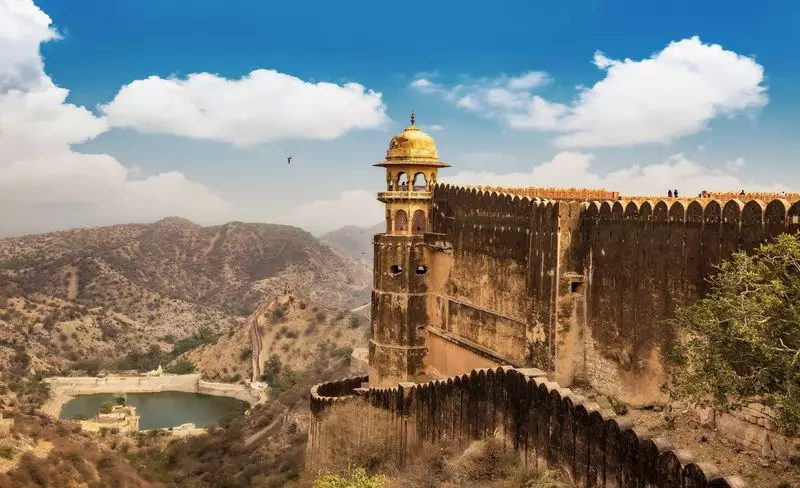
As India grapples with a deepening water crisis, a journey into its past reveals a reservoir of forgotten solutions. The architectural marvels of ancient forts, standing tall for centuries, are not just monuments of war but also timeless textbooks of water wisdom. Their sophisticated systems for capturing, storing, and managing rainwater offer a powerful blueprint for a nation facing severe scarcity.
Engineering Marvels of a Bygone Era
The sheer scale of water management in forts like Chittorgarh in Rajasthan is staggering. Constructed between the 7th and 16th centuries, this massive fort complex was designed to sustain a population of over 50,000 people. The key to its endurance lay not just in its formidable walls, but in its ingenious network of water bodies.
Chittorgarh alone boasts 22 major water bodies, including talabs (ponds), kunds (stepwells), and baoris (reservoirs). The most famous among them, the Gaumukh Reservoir, is fed by a perennial spring flowing through a natural rock formation shaped like a cow's mouth. This system ensured a continuous, gravity-fed water supply. Another masterpiece, the Vijay Stambh Talab, demonstrates advanced hydrological planning, effectively harvesting runoff from a large catchment area within the fort.

These structures were built with a deep understanding of local topography, geology, and climate. The builders employed techniques like creating multiple, interconnected reservoirs at different levels to maximize collection and minimize evaporation. The stepwells, or baoris, were designed to reach deep aquifers and provided cool, accessible water even during the peak of summer, serving as vital social hubs.
Contrast with Modern Urban Failures
The sophistication of these ancient systems stands in stark contrast to the water mismanagement plaguing many modern Indian cities today. Despite advanced technology, urban centers frequently face crippling shortages, flooding during monsoons, and rapidly depleting groundwater. The ancient approach was inherently sustainable: catch every drop where it falls.
Modern infrastructure often relies on energy-intensive methods of pumping water over long distances, treating it centrally, and then dealing with massive distribution losses. The fort model, however, was decentralized, gravity-based, and required minimal external energy. It was a system built for resilience, ensuring self-sufficiency for years, even under siege conditions.
Experts point out that this traditional knowledge focused on augmentation and prudent consumption. Water was treated as a sacred, communal resource, not a commodity. The design of the forts ensured that not a single drop of rainwater was wasted; it was channeled, stored, and filtered through natural means.
Reviving Ancient Wisdom for a Thirsty Future
The lessons from these historical sites are more relevant than ever. As climate change intensifies rainfall variability and groundwater levels plummet, revisiting decentralized water harvesting is not an option but a necessity. The principles visible at Chittorgarh and other forts can be adapted to contemporary urban and rural planning.
Key takeaways for modern water conservation strategies include:
- Maximizing Catchment: Utilizing every available surface—rooftops, paved areas, and natural landscapes—to harvest rainwater.
- Creating Storage Networks: Building interconnected systems of ponds, tanks, and recharge wells instead of relying on single, large sources.
- Community-Centric Design: Planning water infrastructure as a public good that fosters community management and collective responsibility.
- Respecting Hydrogeology: Designing systems based on a deep understanding of local water flow and aquifer conditions.
Initiatives across India are already looking back to move forward. Revival of traditional stepwells, construction of new check dams based on old principles, and mandates for rainwater harvesting in buildings are steps in the right direction. However, a broader paradigm shift is needed—one that views water security through the lens of these ancient engineers.

The forts of India are silent sentinels holding a message. Their enduring strength was as much about water as it was about war. In their stones and reservoirs lies a potent answer to one of the 21st century's most pressing challenges. Embracing this traditional water wisdom could be the key to securing a sustainable and water-secure future for the nation.