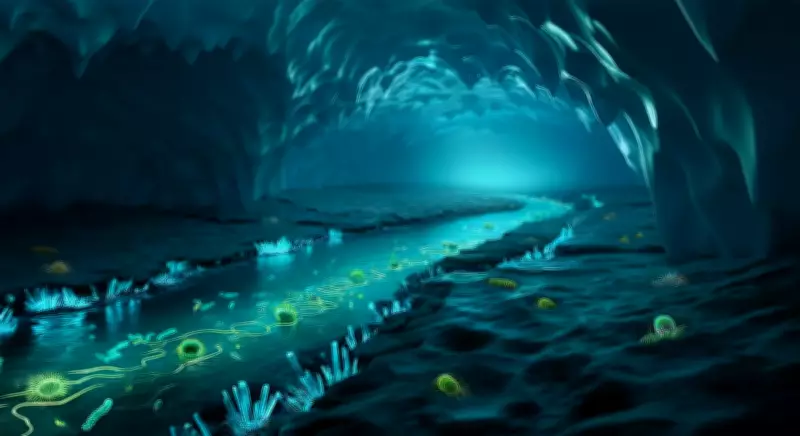
Scientists have uncovered an unexpected ecosystem beneath Antarctica, revealing an active estuarine system with flowing water, nutrient circulation, and living microbes in total darkness, hundreds of meters below the ice. This discovery challenges previous perceptions of the continent's interior as a sealed, barren region.
Discovery Beneath the Ross Ice Shelf
Research published in Nature Communications describes how investigators exploring the cavity under the Ross Ice Shelf found phylogenetically and functionally diverse microorganisms thriving in the dark sub-ice environment. Using hot-water drilling, they penetrated hundreds of meters of floating ice to access the hidden cavity, which harbored active microbial populations influenced by oceanic water and subglacial discharge.
How a River-Like Estuary Exists Under Ice
An ice shelf does not always freeze all the way to the seafloor. Ocean currents beneath the ice can melt the underside, creating gaps where fresh meltwater mixes with salty seawater. A 2022 study on the Nansen Ice Shelf in Communications Earth & Environment examined how warm and cold waters interact under floating ice, contributing to melting and circulation. These processes can form stable, river-like structures that allow water and substances to flow through isolated cavities.

A Hidden Ecosystem in Complete Darkness
The key biological data centers on microorganisms, not larger creatures. The detected microbes were not contaminants but organized communities linked to ocean influx and subglacial water flow. This exchange of nutrients and water drives biological processes within the dark cavity. While scientists caution that a complex food chain with larger organisms has not been confirmed, the physical environment appears suitable for sustaining an active ecosystem.
Why This Discovery Matters
The findings have implications beyond biology, extending to climate studies. Changes in sea ice coverage near Antarctica affect coastal environments and ice shelf stability. Hidden networks of water systems may influence ice dynamics more than previously thought, impacting ocean circulation, heat and nutrient transport, and the stability of floating ice masses. From a research perspective, this discovery opens new avenues for exploring life adaptation under extreme isolation.