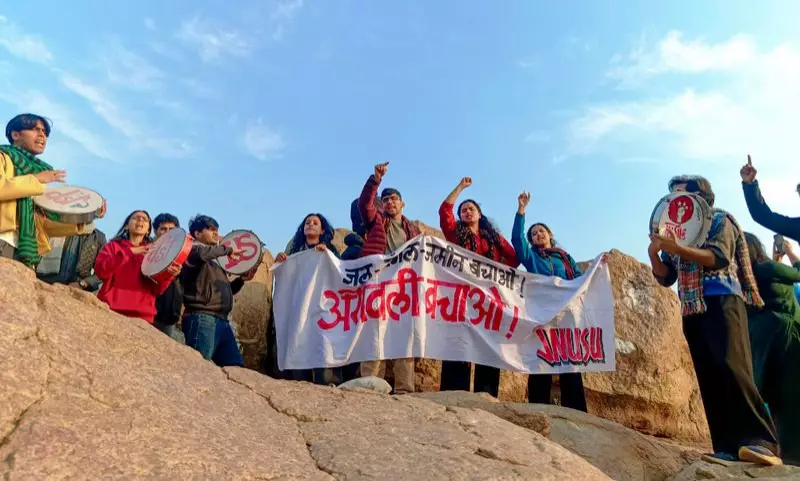
The Aravalli mountain range, one of the world's oldest geological formations, is suffering damage on a scale that is difficult to quantify. A recent analysis reveals a grim picture where rampant, often illegal, mining and construction activities are systematically dismantling this crucial ecological barrier, with dire consequences for millions in North India.
The Unfolding Ecological Catastrophe
For decades, the hills of the Aravalli, particularly in regions like Gurugram, Faridabad, and Nuh in Haryana, have been treated as a resource to be extracted. The quest for construction materials like stone, gravel, and silica sand has led to the proliferation of mining pits, both legal and illegal. This has resulted in a landscape scarred by deep quarries that resemble lunar craters more than a forested hill range.
The scale of destruction is staggering. Official figures likely capture only a fraction of the actual mining activity, with a vast network operating beyond the reach of regulation. Each blast and excavation not only removes the vegetative cover but also destroys the delicate underlying geological structure that has taken millennia to form.

Consequences Beyond the Quarries
The impact of this devastation extends far beyond the immediate visual blight. The Aravalli range acts as a natural recharge zone for aquifers and a barrier against the encroaching Thar Desert from the west. Its degradation has direct, severe implications.
First, it has critically endangered the region's water security. The porous rock formations of the Aravalli are designed to absorb rainwater, channeling it underground to replenish the water table. Mining shatters this natural plumbing system. Gurugram's alarming water crisis, where the water table has plummeted by over 80% in two decades, is a direct consequence of this disrupted hydrology. The city now relies on expensive, piped water from hundreds of kilometers away.
Second, the loss of native forests and scrublands has led to a massive decline in biodiversity. Species like the leopard, hyena, and numerous bird and reptile populations have lost their habitat and corridors, pushing them closer to conflict with humans and local extinction.
Third, the removal of the natural barrier exacerbates desertification and dust storms. The range no longer effectively checks the spread of sand from the Rajasthan desert, leading to increased particulate matter in the air of the National Capital Region.
Legal Battles and a Glimmer of Hope
The fight to save the Aravallis has been long and fought primarily in courtrooms. The Supreme Court of India has intervened multiple times. In a landmark 2009 order, the court banned all mining activities in the Aravalli hills of Haryana, specifically in the districts of Faridabad and Gurugram.
Subsequent rulings, like the 2018 judgment by the Supreme Court's Forest Bench, have reinforced this protection. The court mandated that areas conforming to the dictionary meaning of "forest," including the Aravalli's hills, ridges, and natural features, must be afforded protection regardless of their official land records. This was a significant move to close loopholes that allowed exploitation.
However, enforcement remains the Achilles' heel. Despite the bans, reports of illegal mining continue to surface, indicating a failure of ground-level monitoring and political will. The economic incentives for mining are powerful, and the regulatory machinery is often outmatched or complicit.
The solution lies not just in stricter policing but in a fundamental shift in perception. The Aravalli must be valued not for the stone that can be ripped from it, but for the indispensable ecological services it provides: water security, clean air, climate regulation, and biodiversity conservation. Its restoration and protection are not an environmental luxury but a non-negotiable necessity for the survival and sustainability of one of India's most populous regions.