Kishangarh's 'White Desert': A Toxic Tourist Attraction in Rajasthan
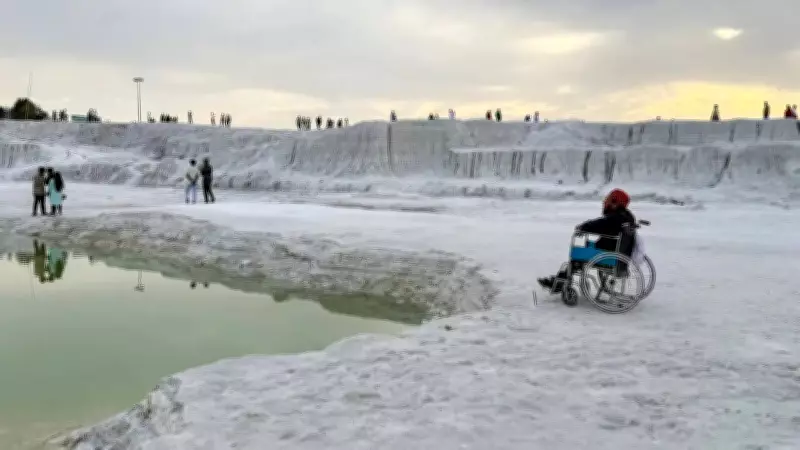
Under the relentless Rajasthani sun, endless white plains shimmer, creating an illusion of a winter wonderland or a scene from Bolivia's Salt Flats. This striking landscape, however, is not a natural marvel but Asia's largest marble waste dumping site, located in Kishangarh, Ajmer district. What began as an industrial necessity has transformed into a controversial tourist destination, drawing thousands daily for photography and recreation while raising serious environmental alarms.
The Making of a 'Toxic Tourist Destination'
The Kishangarh marble industry took shape in the 1980s, and approximately three decades ago, the Rajasthan State Industrial Development and Investment Corporation (RIICO) allotted two dumping plots to the Kishangarh Marble Association (KMA). Today, over 1,200 marble cutting units operate in the city, generating massive waste. Every day, more than 700 tankers discharge around 22 lakh litres of marble slurry across 350 acres, gradually forming vast white plateaus and mountains.
For years, this site remained obscure until comedian Kapil Sharma filmed a song here for his 2016 debut film Kis Kisko Pyaar Karoon. This exposure catapulted the location into the spotlight, attracting celebrities like Nora Fatehi, Honey Singh, Nushrratt Bharuccha, Tiger Shroff, and Shraddha Kapoor for music videos and shoots. The pristine white landscapes and blue ponds also became a magnet for pre-wedding photographers, turning the dumping yard into an unexpected backdrop for romantic shoots.

Tourism Boom Amid Environmental Crisis
Recognizing its potential, the KMA developed an innovative model to formalize tourism at the site. Entry is free, but visitors must obtain a pass from the KMA office about a kilometre away. Fees range from Rs 500 for a single digital camera to Rs 5,100 for pre-wedding shoots and up to Rs 21,000 daily for commercial shoots. The revenue funds maintenance, including changing rooms, a helipad, restaurants, recreational activities, and a dedicated kids zone.
"The dumping yard has put Kishangarh on the national tourism map," said KMA president Sudhir Jain. "We have not received any health-related complaints from any tourist. In fact, the NGT also did not find anything hazardous here." Daily footfall averages 5,000, soaring to 20,000 on weekends and holidays, with visitors often comparing the site to Switzerland or Gulmarg.
Severe Health and Environmental Hazards
Despite its popularity, scientific studies by the Central University of Rajasthan have labeled it a "toxic tourist destination." Professor Laxmi Kant Sharma of Environmental Science highlighted rampant violations of environmental safeguards: no engineered liner system, decanting wells, dust suppression mechanisms, or monitoring of air and groundwater. These failures have led to severe groundwater contamination, agricultural land degradation, and high fugitive dust pollution.
Research indicates total dissolved solids in water sources within a 6-km radius are ten times above safe limits, with elevated levels of lead silicate in soil and nitrate and fluoride in water. PM2.5 concentrations exceed ambient air quality standards, and waste particles smaller than 75 micrometres spread widely, rendering soil infertile. "Several people may be suffering from silicosis. The government needs to take immediate action," Sharma warned.
Local Impact and Official Responses
Farmers from nearby villages like Tokra, Bhojiyawas, and Rahimpura report marble dust settling on crops and contaminating irrigation water, reducing yields. Mandraj, a farmer turned tea stall owner, noted, "Last year, slurry ran into my field, forming a thick layer that made it unfit for sowing." During visits, children were seen rubbing their eyes, and while tourists rarely wore masks, activity managers covered their faces with towels.

The National Green Tribunal (NGT) established a joint committee with state and central pollution control boards to address concerns. Kishangarh MLA Vikas Chaudhary acknowledged the tourism benefits but stated, "If there are any pollution or health concerns, we are open to addressing them." He added that modern machinery generates less waste and praised the KMA's maintenance efforts.
As tankers arrive every 10 minutes to offload slurry, tourists like Ashok Puri from Ahmedabad continue to flock for perfect selfies, drawn by online videos calling it "mini Switzerland." The site now features horses, jeeps, kiosks for photo props, and chaupati-themed restaurants where visitors dine amidst blowing marble dust. This juxtaposition of recreational allure and ecological peril underscores the complex reality of Kishangarh's marble waste dumping yard—a stunning yet hazardous landmark on Rajasthan's tourism map.