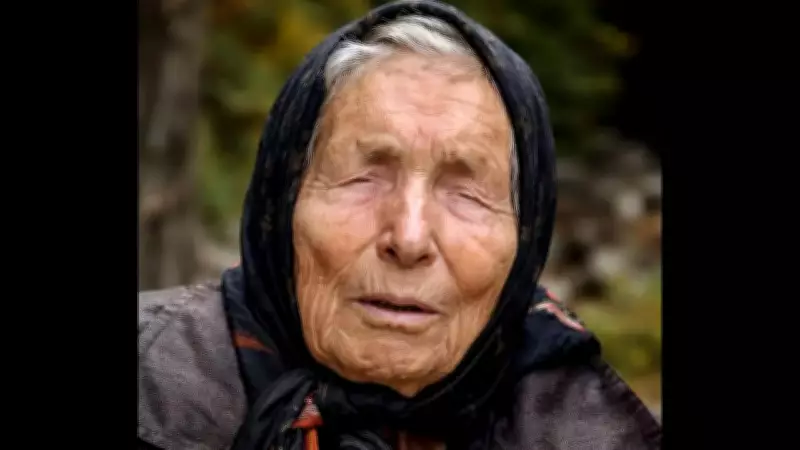
Baba Vanga's World War 3 Prediction Resurfaces Amid Global Conflicts
As conflicts continue to unfold across different parts of the world, online discussions about global security are once again gaining significant momentum. Recent fighting and heightened tensions involving Pakistan and Afghanistan, Israel and Iran, and the ongoing Russia-Ukraine war have pushed the topic of a wider global conflict back into public debate. Against this backdrop, an old prediction attributed to Baba Vanga has resurfaced on social media and news platforms, with many posts claiming that her words point toward the possibility of a third world war.
Baba Vanga War Prediction Breaks the Internet
Baba Vanga is said to have warned that a major world war could start if tensions in the Middle East and parts of Europe worsen. Some versions of the prediction describe tensions between powerful countries, prolonged wars in specific regions, and widespread destruction. Social media posts frequently link these claims to current events, such as the fighting in Eastern Europe or clashes in West Asia. However, the prediction lacks specific details like timing, exact locations, or involved countries, leading to numerous interpretations spreading online.
Why the Baba Vanga Prediction Is Going Viral Now
The prophecy has regained popularity due to ongoing wars around the world. The Russia-Ukraine conflict shows no clear end in sight, while recent security and military events have escalated tensions between Israel and Iran. Simultaneously, border issues and safety concerns have drawn significant attention to the problems between Pakistan and Afghanistan. When multiple conflicts occur concurrently, public anxiety tends to increase, creating an environment where old predictions and prophecies, especially those related to major wars, can resurface.

Current Conflicts Are Often Linked to the Prophecy
Discussions frequently connect Baba Vanga's warning to active conflict zones. The Russia-Ukraine war has altered European security dynamics and involved global powers through military aid and sanctions. In West Asia, the tense relationship between Israel and Iran raises fears of a broader regional war. Meanwhile, the Pakistan-Afghanistan issues prompt concerns about South Asian stability. Despite the severity of these conflicts, experts and governments generally view them as separate events rather than components of a single global war.
What Experts Say About Such Predictions
Historians and analysts often caution against linking prophecies to present-day events, as reported in news sources. Baba Vanga's predictions were not officially recorded, making it difficult to verify their accuracy or intent. Experts note that many prophecies use vague language, allowing them to be connected to various events over time. During crises, people tend to seek patterns and meaning, which can accelerate the spread of such claims.
How Social Media Amplifies Fear-Based Content
Platforms like Facebook, Twitter, and YouTube are effective at spreading viral predictions. Headlines, short videos, and posts often employ dramatic language without providing context. Algorithms tend to prioritize emotionally charged content, especially in uncertain times, enabling old predictions to gain new traction quickly, even without verified evidence.
Who Was Baba Vanga
Baba Vanga was a blind mystic from Bulgaria who lived during the 20th century, gaining fame in Eastern Europe for predictions that supporters believe described future events. Over the years, claims have linked her to forecasts about political change, natural disasters, and global conflicts. It is important to note that Baba Vanga did not leave written records herself; most predictions attributed to her come from books, interviews, and secondhand accounts, resulting in no single source to confirm her exact words.
Separating Prophecy from Present Reality
While it is crucial to pay close attention to real global tensions, mystical predictions should not replace factual analysis. Governments, international organizations, and security experts rely on intelligence, diplomacy, and historical data to assess risks. The fear surrounding Baba Vanga's supposed World War 3 prediction often outweighs evidence-based assessments.