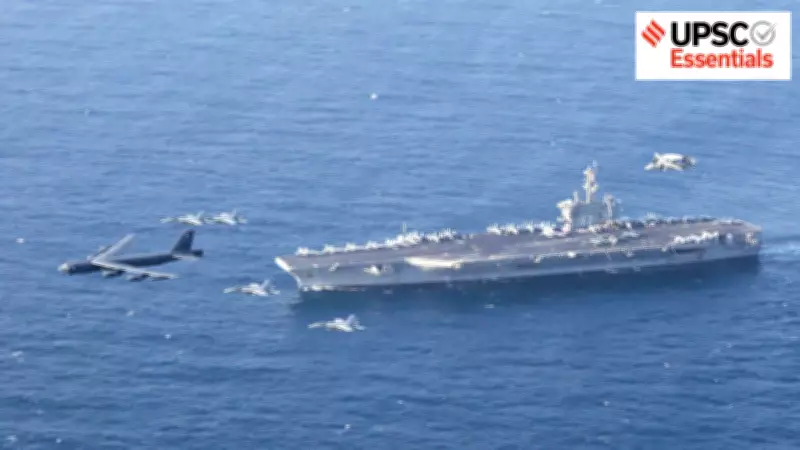
As tensions between Iran and the United States continue to escalate, with the US deploying warships like the USS Abraham Lincoln to the Arabian Sea and Iran threatening immediate retaliation, the international community watches closely. In this volatile scenario, Arab Gulf states are actively working to de-escalate the situation and prevent a full-scale war, highlighting the critical role of diplomacy in managing global conflicts.
What is the Balance of Power?
The balance of power is a fundamental concept in international relations that refers to the relative distribution of power among sovereign states. In an anarchical international system, where no central authority exists, states engage in balancing behaviors to maintain equilibrium and resist hegemonic dominance. This system is inherently anti-hegemonic, pushing nations to form alliances and adjust strategies in response to shifting power dynamics and perceived threats.
Key Conditions of Balance of Power Systems
According to scholars like Martin Griffiths, Terry O'Callaghan, and Steven C. Roach, balance of power systems are characterized by several conditions:

- A multiplicity of sovereign states without a legitimate central authority.
- Continuous but controlled competition over scarce resources or conflicting values.
- An unequal distribution of status, wealth, and power potential among political actors.
These conditions help explain why states, such as those in West Asia, constantly adjust their policies and alliances to preserve stability.
Evolving Dynamics in West Asia
The current tensions between the US and Iran exemplify these balancing acts. The US, under policies reminiscent of the Trump administration, projects military force to demand concessions from Iran, including halting uranium enrichment and limiting missile programs. Iran, in response, adopts a defensive stance, resisting what it views as US attempts at strategic dominance and threatening counterattacks on US assets in the region.
Arab Gulf states, caught in the middle, fear the outbreak of an uncontrollable war. They see the Iran nuclear deal as a pivotal tool for achieving a new balance of power in the region. Beyond military concerns, these states are also wary of economic disruptions and the potential for Israel to gain unchecked influence, as noted by analyst Vali Nasr.
Theoretical Insights
Michael Sheehan, in his book The Balance of Power: History & Theory, emphasizes that power is never permanently balanced. Instead, states must perpetually engage in the act of balancing, adjusting to the ebb and flow of power within the international system. This perspective underscores the dynamic nature of global politics, where change and movement are constant features.
As the situation unfolds, it remains uncertain whether diplomacy or conflict will define the new balance of power in West Asia. The interplay of military posturing, diplomatic efforts, and international law continues to shape the responses of regional and global actors.