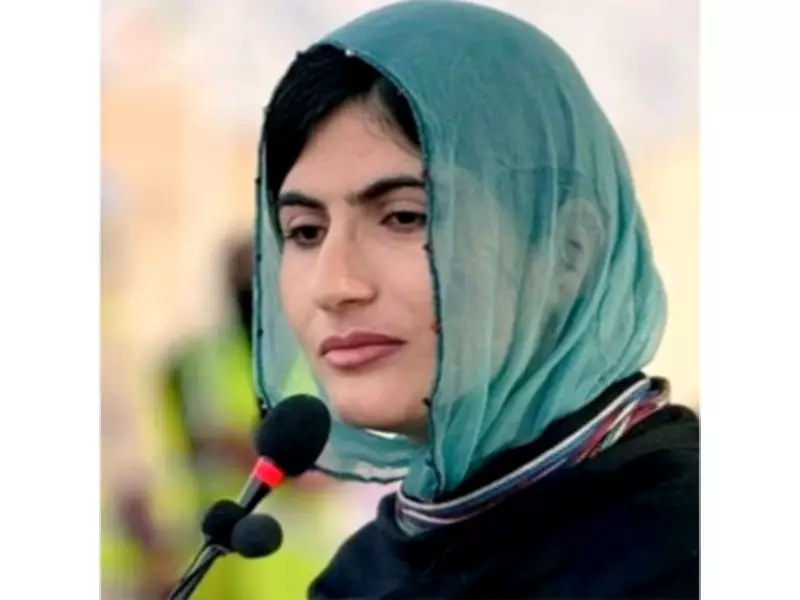
Baloch Activist Slams Pakistan's 'Poetry Radicalisation' Claim as Distraction
Baloch activist Sammi Deen Baloch has issued a scathing critique of remarks made by the chief minister of Balochistan, who alleged that Balochi poetry is being used to radicalize young people in the province. The statement, delivered during a session of the Balochistan Assembly, has sparked significant backlash from activists and political voices, who argue it is an attempt to divert attention from deeper systemic issues.
Government Accused of Shifting Blame
According to reports from The Balochistan Post, the chief minister claimed that certain Balochi poems are encouraging youth to join armed groups. In response, Sammi Deen Baloch, a leader of the Baloch Yakjehti Committee (BYC), asserted that authorities should instead evaluate their own policies in Balochistan. She emphasized that the growing frustration among Baloch youth stems not from literature but from long-standing grievances, including enforced disappearances, restrictions on civil liberties, and ongoing security operations.
Sarcastic Retort Highlights Irony
In a sarcastic reaction, Baloch suggested that if poetry truly has the power to radicalize, then institutions promoting the Balochi language should be strictly monitored and books confiscated. She remarked that books encourage critical thinking, and authorities often perceive "thinking youth" as a threat. By this logic, she added, libraries should be closed and Baloch students removed from universities, as education fosters questioning of government policies and narratives.

Systematic Efforts to Silence Dissent
Baloch further criticized what she described as systematic efforts to suppress dissent in the province. She pointed to restrictions on movement, limited employment opportunities, and frequent internet shutdowns, stating these measures prevent people from witnessing state repression in Balochistan. The issue of enforced disappearances was highlighted, with claims that many Baloch individuals are taken into custody for years and later denied by official accounts.
Root Causes of Mistrust and Violence
Accusing the state of relying on bans, restrictions, and violence instead of addressing root causes, Baloch referenced recent developments in Panjgur, where 22 young men were allegedly killed in suspected extrajudicial actions within roughly twenty days. She stated that Baloch youth are turning against the state due to prolonged repression, bloodshed, and policies that suppress dissent, not because of poetry or books.
In summary, the controversy underscores a broader conflict in Balochistan, where activists argue that blaming cultural expressions like poetry is a tactic to obscure real issues of human rights abuses and political marginalization.