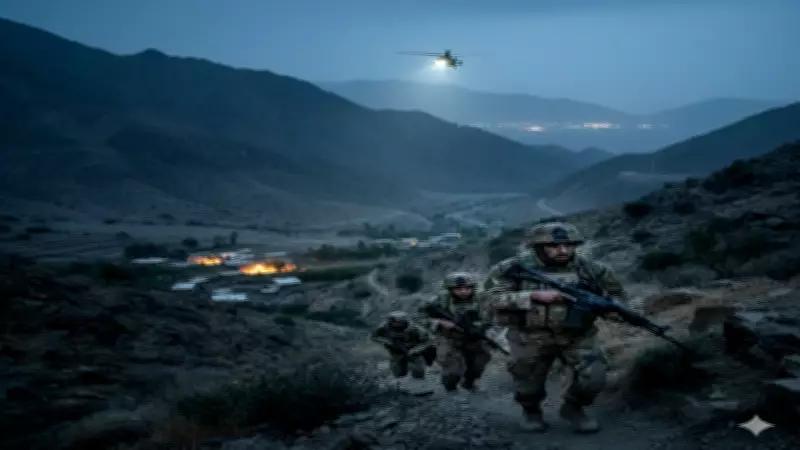
Deadly Violence Erupts in Pakistan's Balochistan Province
As fighting subsided across the Sulaiman and Kirthar mountain ranges in Balochistan, Pakistan's largest but least populated province found itself once again engulfed in a deadly cycle of separatist violence, military response, and deep-seated grievances. The recent coordinated attacks have brought the long-standing conflict back into sharp focus, revealing the complex dynamics at play in this resource-rich region.
Coordinated Attacks Trigger Massive Military Response
For nearly 40 hours, Pakistani security forces engaged in intense battles against what officials described as a coordinated wave of attacks across more than a dozen locations throughout Balochistan. The banned Balochistan Liberation Army (BLA) claimed responsibility for these assaults, which have been identified as one of the deadliest flare-ups in the province in recent years.
According to official military statements, the violence resulted in nearly 200 casualties, including 31 civilians, 17 security personnel, and 145 BLA fighters. Pakistani authorities have strongly contested the militant group's claim that they killed 84 members of the security forces during the attacks.

Government Response and Regional Context
In Quetta, a city that has endured decades of insurgency, the government projected an image of control and resilience. Information Minister Attaullah Tarar emphasized the bravery of security forces, stating that personnel and officers had fought courageously against the militants. However, the significant civilian casualties highlighted how deeply entrenched the conflict remains in Balochistan.
The Pakistani government once again attributed the violence to external interference, branding the fighters with allegations aimed at neighboring countries. While Islamabad pointed fingers at external forces, residents and analysts on the ground pointed to long-standing local grievances as the primary fuel for the conflict.
Understanding the Baloch Liberation Army
The Baloch Liberation Army represents the strongest of several insurgent groups operating in the mineral-rich province that borders Afghanistan and Iran. This banned separatist organization seeks independence for Balochistan, arguing that the federal government unfairly exploits the province's substantial gas and mineral resources. The BLA maintains that Balochistan's natural wealth rightfully belongs to its people and rejects federal control over resource extraction and security arrangements.
Evolution of BLA Tactics and Operations
What was once considered a low-intensity insurgency has evolved into more frequent and coordinated attacks. The BLA's operational capabilities have demonstrated significant escalation in recent years. In 2022, militants stormed army and navy bases, while August 2024 witnessed coordinated highway assaults where passengers were pulled from buses and shot after identity checks.
March 2025 saw militants open fire on the Jaffar Express after sabotaging railway tracks, briefly taking hostages according to officials and local media reports. The group has employed women suicide bombers, including in an attack targeting Chinese nationals in Karachi, leading to its designation as a foreign terrorist organization by the United States.
Targets and Regional Implications
The BLA primarily targets security forces and infrastructure within Balochistan but has expanded its operations to include Karachi. The group has specifically attacked Chinese citizens and interests, accusing Beijing of collaborating with Islamabad to exploit the province's resources. Officials note that attacks on civilian laborers from other provinces mark a particularly concerning escalation in tactics.
The organization was also at the center of tit-for-tat strikes between Iran and Pakistan last year over alleged militant bases on each other's territory, bringing the neighboring countries dangerously close to open conflict.

Root Causes: Economic Grievances and Political Marginalization
Balochistan's strategic importance cannot be overstated, particularly as it lies at the heart of the $46 billion China-Pakistan Economic Corridor (CPEC), anchored by the deep-water port of Gwadar. Despite these massive development projects, many local residents report that these initiatives have failed to translate into meaningful job opportunities or improved services for the Baloch people.
At a coal mine in Spin Karez, a security official highlighted the dangerous conditions, questioning the safety of journalists documenting mining operations. "Sir, are you crazy! The insurgents come in their hundreds and pick up everything, including paramilitary checkpoints. Who said it's safe for you to be in this area?" he remarked, illustrating the pervasive insecurity.
Baloch militants have repeatedly attacked mines and killed laborers from other provinces, deepening the cycle of violence and reinforcing perceptions of lawlessness throughout the region.
The Human Cost and Governance Challenges
A security source provided poignant insight into the conflict's complexity: "A military can neutralize a militant, but it cannot neutralize a grievance. The state sees them as a terrorist network; many here see their sons and brothers who took up arms." This statement captures the fundamental disconnect between how the conflict is perceived by different stakeholders.
Corruption has emerged as another critical factor eroding trust in state institutions. A former chief minister of Balochistan, speaking anonymously, stated bluntly: "Everyone here is corrupt." Residents report that corruption has drained funds intended for healthcare, education, and infrastructure development, leaving security as an abstract promise rather than a tangible reality.
The recent violence in Balochistan underscores the persistent challenges facing Pakistan's largest province. As development projects continue alongside ongoing conflict, the fundamental issues of political representation, economic distribution, and security remain unresolved, creating fertile ground for continued instability in this strategically vital region.