Bengaluru's Path to Low-Waste Living: Experts Outline Practical Strategies
In Bengaluru, a bustling metropolis with a population nearing 1.5 crore that produces over 6,000 tonnes of waste daily, the concept of "zero waste" might appear unattainable. However, urban sustainability specialists and waste-management professionals argue that while achieving absolute zero waste remains difficult, embracing low-waste lifestyles is not only feasible but is already gaining momentum across the city.
Redefining Zero Waste: A Shift in Perspective
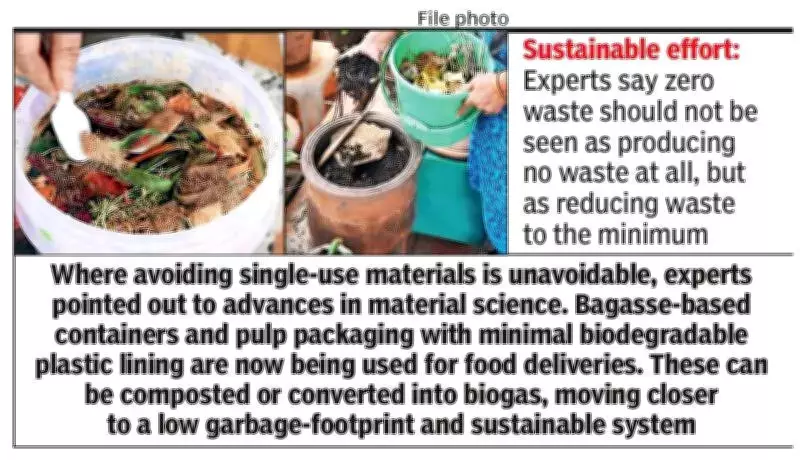
During a recent panel discussion on Science for Sustainable Urban Living, organized by the Bengaluru Apartments Federation and the Bengaluru Science and Technology Cluster, experts clarified that zero waste should not be interpreted as producing no waste whatsoever. Instead, it involves minimizing waste generation to the lowest possible levels through conscious efforts.
Shekar Prabhakar, CEO of Hasiru Dala, elaborated, "The zero waste concept is not about achieving absolute zero. It's about generating minimal waste and making deliberate choices that alleviate the problem rather than exacerbate it."

Digital Choices and Behavioral Shifts
Several speakers highlighted how everyday digital decisions are subtly contributing to waste reduction. HN Chanakya, a retired chief research scientist from IISc, noted, "On platforms like Zomato, users can permanently decline cutlery, while on Zepto, opting out of paper bags is possible. These seemingly minor decisions wield significant power." He emphasized that individual behavioral changes can collectively impact the entire city, adding that current waste management lacks AI interventions and relies solely on human collaboration.
Managing Wet Waste at Source
Experts repeatedly stressed the critical importance of handling wet waste locally. Ramamani VK, COO of Bengaluru Solid Waste Management Limited, explained, "When wet waste is processed at its source, landfill pressures decrease substantially. We encourage apartments and large complexes to manage their own waste, reducing the volume transported by our vehicles."
Innovations in Material Science
For situations where single-use items are unavoidable, panelists pointed to advancements in material science. Bagasse-based containers and pulp packaging with minimal biodegradable plastic linings are now utilized in food deliveries. These materials can be composted or converted into biogas, edging closer to a system with a reduced garbage footprint.
Addressing Gaps in Waste Conversations
The discussion also shed light on overlooked aspects of waste management. Archana Tripathi, CEO of Saahas, remarked, "While reduce, reuse, and recycle are commonly discussed, repair is often forgotten. Extending the lifespan of items through repair is vital, particularly for textiles and electronics, and can foster livelihood opportunities."
Textile Waste: A Growing Concern
Textile waste emerged as a major issue, fueled by disposable culture and complex fabric blends that hinder recycling. GL Sivakumar Babu, a retired professor from IISc, discussed the role of larger apartments and communities, stating, "These entities possess the space to drive collective change by implementing simple regulations on permissible items, ensuring sustainable gatherings, and more."
Overall, the panel underscored that Bengaluru's journey toward sustainability hinges on integrated efforts combining individual accountability, community initiatives, and innovative solutions to tackle its waste challenges effectively.