Bengaluru Kitchens Overcome LPG Crisis with Sustainable and Tech Innovations
In Bengaluru, as numerous eateries grapple with a severe shortage of commercial LPG, several community kitchens and restaurants have continued operations seamlessly, thanks to forward-thinking sustainability measures and advanced technological adaptations implemented years ago.
Sustainable Fuel Models Ensure Uninterrupted Service
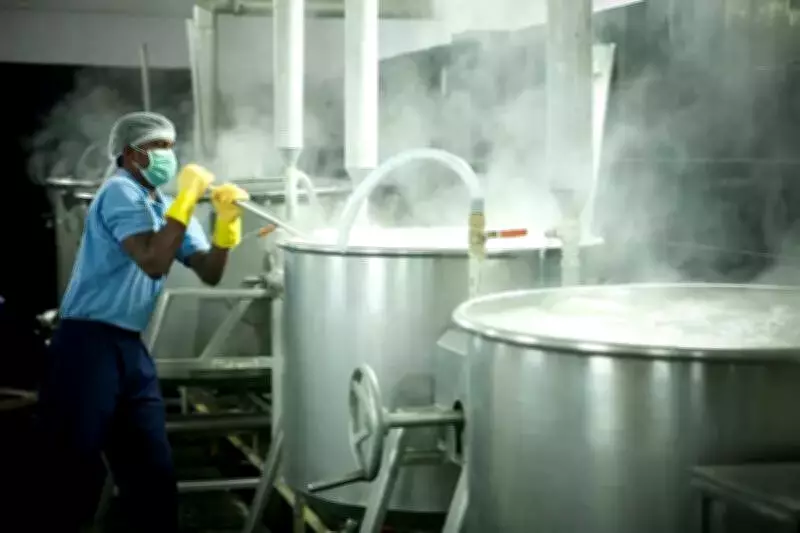
Adamya Chetana, a community kitchen that prepares midday meals for thousands of schoolchildren, has remained largely unaffected by the fuel crisis. Over the past 16 years, the kitchen has gradually shifted away from fossil fuels, now relying on briquettes made from agricultural and biomass waste to generate steam for cooking.
This model not only reduces dependence on petroleum fuels but also utilizes locally available waste as an energy source. Currently, Adamya Chetana serves approximately 40,000 students in Bengaluru under the midday meal scheme and conducts annadaanam (free food supply) at 10 locations across the city, preparing nearly five tonnes of food daily.

Tejaswini Ananth, head of Adamya Chetana, stated, "Our initial focus was on renewable energy and demonstrating that a kitchen can operate without fossil fuels. While we did not anticipate war or fuel shortages, this transition now allows us to continue cooking without disruption."
AI-Driven Electric Kitchens Eliminate Gas Dependence
On Brigade Road, a commercial kitchen operates entirely on electric and AI-controlled cooking machines, without using a single gas burner. Developed by restaurateur Ananth Narayan for his bar-restaurant Just BLR, this technology-driven setup automates everything from vegetable chopping and marination to the final cooking of complex dishes like biryani.
The system comprises almost 30 specialized machines. Ingredients are cleaned and chopped through automated systems before being transferred to programmable cooking machines that follow pre-fed recipes, precisely controlling temperature, timing, and stirring. Using a central kitchen model, dishes are cooked up to about 70% in bulk, then vacuum-sealed and frozen at -18 degrees Celsius.
Upon order, chefs simply add required items into the machines and initiate them based on pre-fed recipe SOPs. "It takes less than 4-5 minutes to cook any dish, with over 100 menu items pre-fed into our AI-controlled machines. Our bar is also fully automated, where tapping on a drink shown on the screen automatically mixes and serves it," Narayan explained.
This approach ensures consistency, reduces waste, and completely eliminates reliance on LPG.
Renewable Energy Powers Hotel Operations
At The Oterra Hotel in Electronics City, all major kitchen operations—including restaurants, banquets, and the staff cafeteria—utilize electric cooking systems. The hotel sources its electricity from third-party wind and solar power suppliers connected to the state grid.
Srinivas Adiga, the hotel's general manager, noted, "All our cooking equipment runs on electricity, so the LPG crisis has not impacted us at all." This sustainability initiative, started nearly a decade ago, aimed to reduce carbon emissions and move towards net zero. "We didn't foresee such a situation, but the transition has ensured our operations continue without disruption," he added.
Akshaya Patra Foundation's Strategic Fuel Shift
Every morning, the Akshaya Patra Foundation's kitchens across Bengaluru cook thousands of meals to feed about 1.5 lakh schoolchildren under the midday meal programme. These kitchens operate smoothly, with two-thirds not depending on LPG for cooking.
Of the six Akshaya Patra kitchens in Bengaluru, three run on biomass briquettes. Located along Kanakapura Road and near Kempegowda International Airport, these kitchens use compressed biomass fuel made from agricultural waste for large-scale cooking operations.
Naveena Neerada Dasa, executive director of strategy and international relations at Akshaya Patra Foundation, World Food Movement, said, "Approximately 90–95% of our cooking in Bengaluru does not rely on commercial LPG. One kitchen has a direct gas pipeline connection, and only two smaller kitchens depend on LPG."

He emphasized that the shift to alternative fuel sources was a conscious long-term strategy. "Our leadership anticipated potential fuel challenges years ago and encouraged adopting sustainable fuel sources. This foresight ensures our kitchens can continue running even if LPG supply is disrupted," Dasa concluded.