

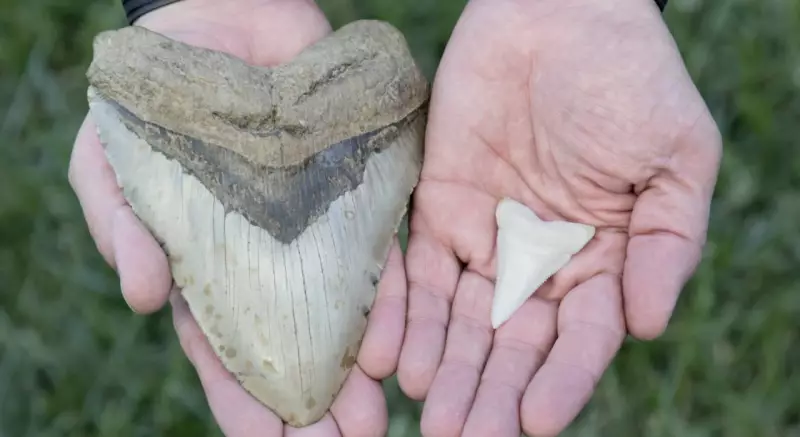
In the vast, silent depths of the Pacific Ocean, a single, unexplained sound captured in 1997 ignited a global mystery that persists in online forums and pop culture nearly three decades later. Known as the "Bloop," this powerful, low-frequency noise was instantly folded into YouTube conspiracy theories, Lovecraftian memes, and endless debates about whether the prehistoric giant shark, Megalodon, could still be alive. The journey from deep-sea enigma to scientific explanation is a fascinating tale of how mystery captures the human imagination.
From Deep Ocean Rumble to Internet Legend
The saga began in the summer of 1997. Hydrophones—underwater microphones—operated by the U.S. National Oceanic and Atmospheric Administration (NOAA) were monitoring the southern Pacific for volcanic activity. Instead, they picked up something extraordinary: a sound that was extremely loud, travelled over 3,200 kilometres, and had a unique, rising frequency pattern. It was unlike any known geological or biological noise, earning its catchy nickname.
With no immediate explanation, speculation ran wild. Some scientists noted its resemblance to an amplified whale call, but its volume dwarfed any known animal. Others pointed to geophysical causes like undersea volcanoes. Yet, in the vacuum of certainty, the internet's favourite theory took hold: the sound must be from a colossal, living creature. And what creature loomed larger in the public mind than Otodus megalodon, the extinct shark that could grow up to 24.3 metres long?

The Scientific Hunt for the Source
For years, the Bloop remained an unsolved puzzle. NOAA's Pacific Marine Environmental Laboratory (PMEL) continued its work, gradually deploying hydrophones closer to Antarctica. The breakthrough finally came in 2005, after years of comparative analysis. The source was not a monster, but the Earth itself. The Bloop was the sound of an icequake—a massive iceberg cracking and breaking away from an Antarctic glacier.
NOAA's explanation connected the phenomenon directly to a pressing global issue: "With global warming, more and more icequakes occur annually, breaking off glaciers, cracking and eventually melting into the ocean." The mystery's solution shifted the narrative from hidden predators to a planet audibly straining under climate change.
Why Megalodon Could Not Be the Culprit
Even before the icequake revelation, marine scientists consistently dismissed the 'living Megalodon' theory. The logic is rooted in basic ecology and evidence. A predator of that immense size would leave a trail of fresh evidence, particularly its large, frequently shed teeth, which would wash up on shores worldwide. None have been found that are younger than 3.6 million years.
Furthermore, such a massive shark would require enormous amounts of food, likely found near coastlines along whale migration routes or seal colonies—areas heavily monitored by shipping, fishing, and satellites. An animal up to 24 metres long cannot be both a dominant predator and completely invisible to modern science.
The Lasting Echo of the Bloop
By 2025, the Bloop is a solved case. Yet, its legacy endures. The public's initial disappointment—expressed in online forums where users lamented the loss of a "HUGE" biological discovery—highlights our cultural draw to mythical beasts over complex environmental truths.
The story underscores a critical lesson: the ocean's most unsettling whispers often come from the planet itself. The Bloop did not reveal a ancient monster lurking in the dark. Instead, it amplified the sound of a warming world, reminding us that sometimes the most profound mysteries point not to what we've lost, but to the changes we are causing right now.






