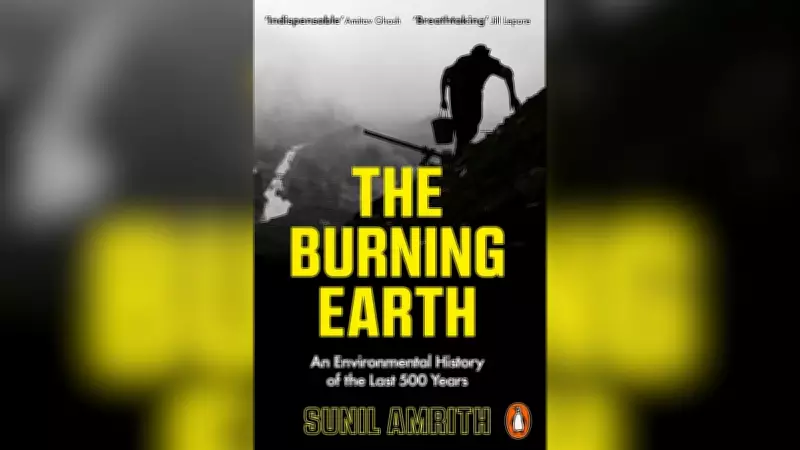
Book Review: 'The Burning Earth' Examines Human Impact on the Planet
In a thought-provoking and critically acclaimed work, author Sudhirendar Sharma delves into the profound ways human ambition has reshaped the Earth. Titled 'The Burning Earth', this book offers a comprehensive exploration of the environmental consequences of our relentless pursuit of progress. Sharma meticulously tracks the historical and contemporary impacts of human activities, from industrialization to modern extraction practices, painting a vivid picture of a planet under stress.
A Deep Dive into Human Ambition and Environmental Change
The book raises pivotal questions about the sustainability of our current trajectory. Sharma asks whether humanity's insatiable appetite for advancement can truly coexist with the natural world. Through detailed analysis and compelling narratives, he examines the conflicts between economic growth and ecological preservation. The work highlights how extraction-based economies have led to significant environmental degradation, including deforestation, pollution, and climate change.
Sharma's writing is both accessible and scholarly, making complex environmental issues understandable to a broad audience. He draws on scientific data, historical records, and personal observations to build a compelling case for reevaluating our relationship with nature. The book encourages readers to reflect on their own roles in this dynamic and consider more sustainable paths forward.

Key Themes and Insights from the Book
'The Burning Earth' covers several critical themes that are relevant in today's global context:
- Historical Perspective: The book traces the evolution of human impact on the environment from ancient times to the present day.
- Economic vs. Ecological Balance: Sharma explores the tensions between development goals and environmental protection.
- Future Implications: The work discusses potential scenarios if current trends continue, urging for immediate action.
Published on February 28, 2026, this timely book arrives at a moment when environmental concerns are at the forefront of global discourse. Sharma's insights are particularly valuable as nations grapple with climate change, biodiversity loss, and resource depletion. His call for a more harmonious coexistence with nature resonates with ongoing efforts in sustainability and conservation.
Overall, 'The Burning Earth' is a must-read for anyone interested in environmental science, policy, or ethics. It serves as a powerful reminder of the urgent need to balance human progress with planetary health. As Sharma concludes, the future of our planet depends on the choices we make today, making this book an essential contribution to the conversation on sustainable development.