Unusually Wet Winter Sparks Colorful Desert Transformation in Southern California
Southern California has experienced an exceptionally wet winter season this year, with a relentless series of storms drenching urban areas and even the typically arid desert valleys. This sustained moisture is now manifesting in a more subtle yet visually striking manner across the region's harsh landscapes.
Wildflowers Emerge Across Typically Barren Desert Terrain
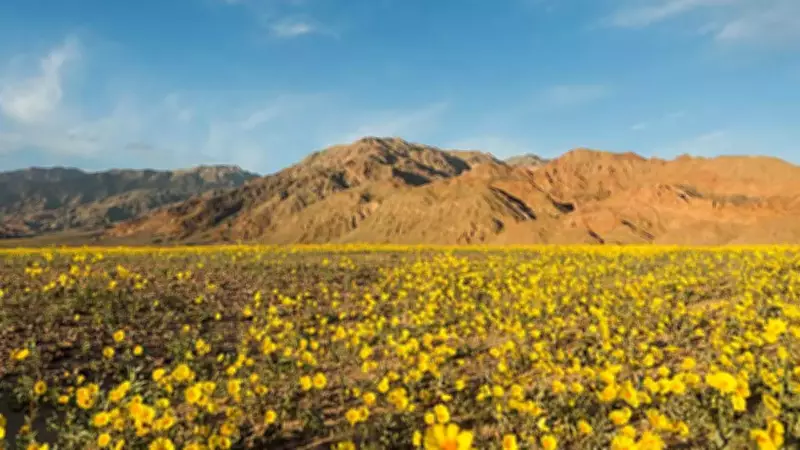
Across desert environments that normally appear stark and lifeless, vibrant wildflowers are beginning to emerge in noticeable displays. Travelers en route to Death Valley National Park are already observing patches of yellow, purple, and orange blossoms spreading across sandy expanses, creating unexpected bursts of color against the desert backdrop.
Despite these promising signs, botanical experts remain cautiously optimistic. While current blooms appear impressive in certain locations, many specialists indicate the phenomenon hasn't yet reached the dramatic proportions characteristic of a genuine 'superbloom' event. Multiple factors including precise timing, temperature fluctuations, and wind patterns all contribute significantly to determining the ultimate scale of desert flowering.

Rainfall alone doesn't guarantee spectacular floral displays, as the complex interplay of environmental conditions ultimately determines whether fragile desert ecosystems will produce widespread blooms. For the present moment, Southern California appears to be experiencing an above-average flowering season that feels particularly special to observers, even if it doesn't quite achieve historic desert bloom status.
Death Valley Shows Promising Conditions for Future Superbloom Potential
Even Death Valley, renowned globally as one of Earth's hottest and driest locations, has recorded approximately double its typical seasonal rainfall this winter. While this substantial moisture seems like ideal fuel for spectacular blooms, experts emphasize that storm spacing proves more critical than raw precipitation totals.
Desert seeds require early moisture initiation, consistent rainfall throughout winter months, and gentle spring warmth to successfully germinate and thrive. Sudden heatwaves or powerful winds can rapidly desiccate delicate young plants before they have opportunity to spread across broader landscapes.
Defining the Elusive 'Superbloom' Phenomenon
The term "superbloom" receives frequent casual usage, but true events of this magnitude typically occur only about once per decade according to ecological specialists. Erica Newman, an ecologist from James Madison University, explains that these remarkable floral displays depend on a complicated convergence of multiple factors.
While rainfall represents one essential component, soil conditions, air temperature patterns, and specific germination cues all contribute significantly to determining bloom outcomes. Newman notes that strong winds alone can disrupt developing plants, preventing flowers from achieving the sweeping, landscape-scale coverage associated with classic superblooms.
Climate change introduces additional uncertainty into this delicate ecological balance, gradually altering seasonal patterns that desert plants have adapted to over centuries of evolution.
Death Valley's Extreme Geography and Current Bloom Conditions
Death Valley constitutes a massive structural basin primarily located within Inyo County in southeastern California. Widely recognized as North America's lowest, hottest, and driest region, the valley extends approximately 140 miles from north to south, varying between 5 and 15 miles in width.
Mountain ranges frame this dramatic landscape, with the Panamint Range rising to the west and the Black, Funeral, and Grapevine mountains of the Amargosa Range forming its eastern boundary. The valley occupies a transitional zone between the Great Basin and Mojave Desert ecosystems.
The desert doesn't typically reveal its colorful potential so readily. During most years, scattered flowers appear briefly before quickly fading. This season feels distinctly different according to park officials, with National Park Service updates indicating that low-elevation areas are already blooming and might continue through mid-to-late March.

Roadways including Badwater Road and Highway 190 reportedly offer some of the best early viewing opportunities for floral displays. This inherent unpredictability contributes to the region's unique appeal, with higher elevations potentially blooming later in spring, extending displays into April or even June if conditions remain favorable.
This staggered flowering timing often encourages visitors to make multiple return trips, hoping to witness the desert at its absolute peak vibrancy.
Rainfall Measurements and Historical Comparisons
Winter precipitation totals appear unusually robust across Southern California. Downtown Los Angeles has recorded rainfall well above average levels since October, while nearby Burbank has logged even higher percentages compared to normal seasonal measurements.
Many observers continue to compare current blooms to Death Valley's famous 2016 superbloom event, which transformed extensive desert stretches into vibrantly colored fields visible from considerable distances. That year witnessed dramatic attendance surges as visitors flocked to experience the rare natural spectacle.
Interestingly, rainfall totals preceding the 2016 bloom weren't exceptionally high. The crucial factor appeared to be well-timed early storms followed by ideal spring conditions that allowed flowers to flourish. This year's bloom might demonstrate particular strength in isolated areas, but the widespread, landscape-scale coverage that defines a true superbloom hasn't fully materialized yet.
Visitors are already sharing photographs of California poppies, desert gold flowers, and tiny purple blossoms pushing determinedly through sandy soil, capturing moments of natural beauty in an otherwise challenging environment.