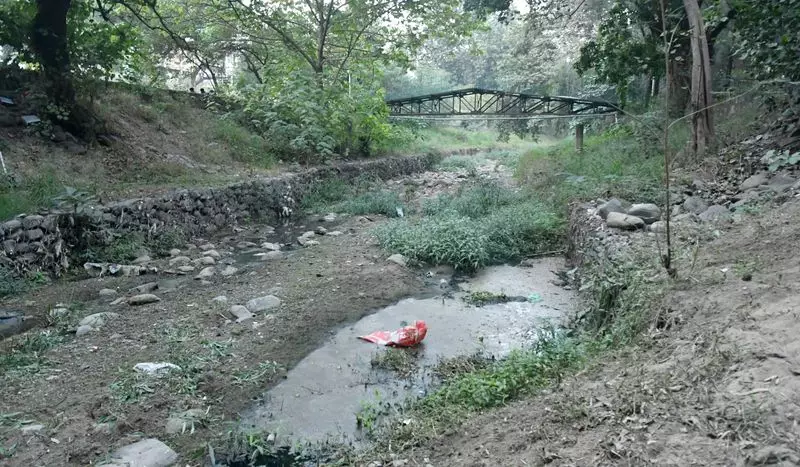
The Central Government has officially acknowledged a significant environmental issue plaguing Chandigarh. In a statement before Parliament, it admitted that untreated or partially treated wastewater is flowing into the N-Choe, a major seasonal rivulet in the Union Territory.
Parliamentary Admission Highlights Sewage Crisis
This critical admission was made by the Union Ministry of Jal Shakti in a written reply to the Lok Sabha. The government confirmed that wastewater from several sources is entering the N-Choe. This revelation brings to light the ongoing challenges in managing the city's sewage and stormwater, despite its reputation as a well-planned urban center.
The primary source of this pollution, as identified by the Centre, is discharge from the Sewage Treatment Plant (STP) at Diggian. Furthermore, the government noted that untreated wastewater from villages in Punjab, specifically Khuda Alisher and Khuda Lahora, also reaches the choe. This indicates that the problem transcends municipal boundaries, involving areas outside Chandigarh's direct administrative control.

Infrastructure Gaps and Ongoing Projects
The parliamentary reply shed light on the technical shortcomings contributing to the crisis. A key issue is the overflow from the city's stormwater drainage system, which is not designed to handle sewage. During periods of heavy rainfall, this system gets overwhelmed, leading to the discharge of contaminated water into the natural watercourse.
To combat this, the Chandigarh Administration is undertaking several corrective measures. A major project involves the laying of a dedicated sewage pipeline from the Diggian STP to the outlet point of the N-Choe. This pipeline is intended to carry treated effluent away from the sensitive rivulet. Officials state that approximately 70% of the work on this 5.5-kilometer pipeline has been completed.
Broader Implications for Environment and Health
The pollution of the N-Choe is not an isolated problem. Seasonal rivulets like this one are crucial parts of the local ecosystem and drainage network. Contaminating them with untreated sewage poses severe risks:
- Environmental Damage: Harmful chemicals and organic matter degrade water quality, harm aquatic life, and pollute groundwater.
- Public Health Hazard: Stagnant, polluted water becomes a breeding ground for mosquitoes and pathogens, leading to vector-borne diseases.
- Urban Aesthetics and Odor: The flow of sewage through the city tarnishes its 'City Beautiful' image and creates persistent nuisance for residents.
The Centre's admission in Parliament underscores the urgency of the situation. It places accountability on the local administration and highlights the need for inter-state coordination with Punjab to address inflows from surrounding villages. The completion of the ongoing pipeline project is a critical step, but long-term monitoring and upgraded sewage network maintenance are essential to permanently resolve the issue of wastewater flowing into Chandigarh's N-Choe.