

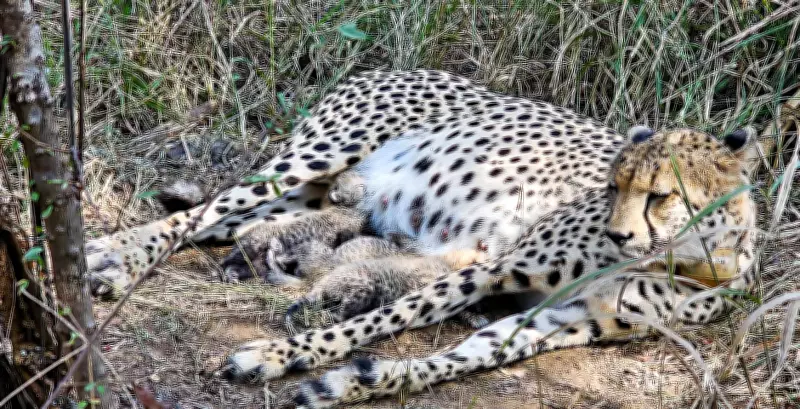
Kuno National Park Welcomes New Cheetah Cubs as Project Cheetah Gains Momentum
In a significant development for wildlife conservation in India, Gamini, a South African cheetah introduced to Kuno National Park three years ago under the ambitious Project Cheetah, gave birth to three healthy cubs on Wednesday. This event follows closely on the heels of another cheetah, Aasha, who delivered three cubs earlier this month, marking a promising trend for the reintroduction program.
Consolidation Phase Achieved with Multiple Successful Births
Officials involved in the project have emphasized that the survival of these second-generation cubs, coupled with the successful motherhood of both Aasha and Gamini, signals a critical consolidation phase for the initiative. This phase is crucial as it demonstrates the cheetahs' adaptation to their new habitat and their ability to reproduce, which are key indicators of the program's long-term viability.
The births are seen as a testament to the careful planning and execution of Project Cheetah, which aims to reestablish a viable cheetah population in India after the species was declared extinct in the country decades ago. The program has faced challenges, but these recent successes provide a much-needed boost to conservation efforts.

Madhya Pradesh CM Sets Ambitious Target for Cheetah Population
At a recent review meeting, Madhya Pradesh Chief Minister Mohan Yadav set an ambitious target of increasing the cheetah population in Kuno National Park to 50 individuals by the end of this year. This goal underscores the state government's commitment to the project and its role in enhancing biodiversity and promoting eco-tourism in the region.
The CM's directive highlights the importance of sustained efforts in monitoring, habitat management, and community engagement to ensure the cheetahs' well-being and growth. Officials are optimistic that with continued support and favorable conditions, this target can be achieved, further solidifying India's position in global wildlife conservation.
Key Factors Contributing to the Success of Project Cheetah
The recent births point to several positive factors within the program:
- Adaptation to Habitat: The cheetahs have shown remarkable resilience in adapting to the Indian environment, which is essential for their survival and reproduction.
- Effective Management: Ongoing monitoring and veterinary care by park authorities have played a crucial role in supporting the cheetahs through critical phases like pregnancy and cub-rearing.
- Community Involvement: Local communities around Kuno National Park have been engaged in conservation efforts, helping to reduce human-wildlife conflicts and foster a supportive environment for the cheetahs.
As Project Cheetah moves forward, the focus will remain on ensuring the health and safety of both the adult cheetahs and their cubs, with hopes that this success story will inspire similar conservation initiatives across the country.






