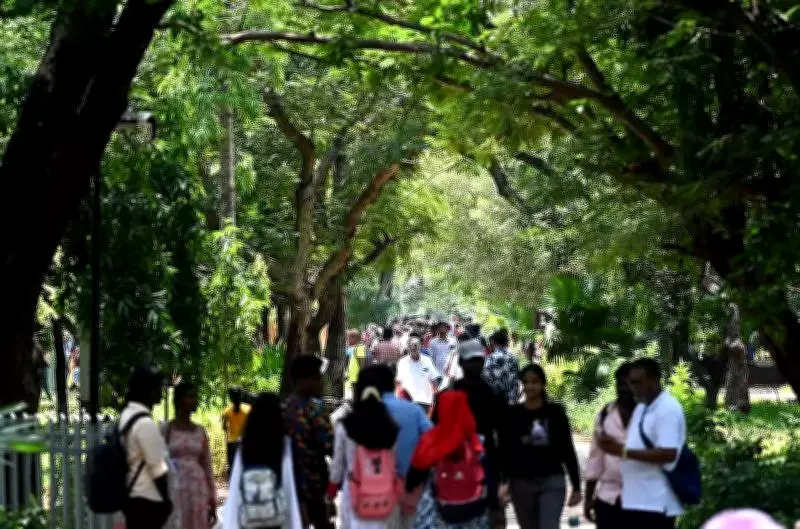
Chennai Corporation Unveils 10 Crore Green Chennai Initiative to Boost Urban Canopy
The Greater Chennai Corporation (GCC) has officially announced the ambitious Green Chennai scheme, allocating an estimated budget of 10 crore rupees to significantly enhance urban green spaces and oxygen production throughout the city. This comprehensive program will involve the annual distribution of saplings to residents, schools, and various community groups, marking a strategic shift in the city's environmental approach.
Establishing Nurseries for Sustainable Sapling Production
Under this groundbreaking initiative, the civic body plans to establish three dedicated nurseries in Madambakkam, Mylapore, and Sathangadu by the conclusion of this year. These facilities will operate with crucial technical guidance and support from the Tamil Nadu state forest department. Officials project that these nurseries will collectively produce nearly two lakh saplings annually, which will be available for free public distribution, creating a sustainable source of greenery for the metropolitan area.
"The Green Chennai scheme represents a fundamental shift from sporadic one-time plantation drives to a more structured and systematic strategy," explained GCC chief engineer for parks, C A Balamurali. "Our focus will be meticulously placed on planting the appropriate species in suitable locations while ensuring their long-term upkeep and survival. We are actively planning ward-level monitoring systems and fostering community partnerships to significantly improve sapling survival rates."

Addressing Past Failures with Native Species Selection
To rectify previous shortcomings in urban forestry efforts, the corporation has decided to prioritize native and drought-tolerant tree species that are particularly well-suited to Chennai's specific climatic conditions. The selected species include marudham, punnai, and neem trees, which demonstrate greater resilience to local environmental challenges. Environmental experts emphasize that expanding the urban canopy has become critically urgent as Chennai contends with a growing heat island effect and steadily diminishing open spaces.
"The noticeable reduction in green cover across various parts of the city has directly contributed to rising temperatures and altered microclimates," stated Vetriselvan, an environmentalist associated with Poovulagin Nanbargal. "Strategic urban forestry represents one of our most effective tools for climate mitigation in densely populated urban environments."
Learning from Previous Environmental Campaigns
The civic agency has previously launched several tree-planting campaigns, particularly following the devastating 2015 floods that highlighted Chennai's environmental vulnerabilities. Subsequent cyclones further underscored the city's ecological fragility. Environmental activists and urban planners have noted that many of those earlier efforts to nurture plants and trees ultimately failed due to multiple factors including:
- Irregular watering schedules and inadequate hydration
- Poor maintenance practices and lack of consistent care
- Damage during infrastructure development projects such as stormwater drain construction
- Road relaying activities that compromised root systems
Vetriselvan further highlighted that GCC has recently implemented stricter regulations, mandating prior approval for tree felling activities with penalties reaching up to 1 lakh rupees for violations. "Such regulatory measures provide essential protection for existing green infrastructure while simultaneously benefiting the overall urban environment and helping reduce heat accumulation in the city," he emphasized. "Every citizen and institution must contribute more actively to protecting our urban trees."

Community Engagement and Resident Participation
Numerous resident welfare associations across Chennai have expressed their support for the civic agency's renewed plan to improve urban green cover. T K Shanmugam, president of the Federation of North Chennai Residents Welfare Association, commented: "The civic body has historically planted saplings on various occasions but consistently failed to maintain them properly. If genuine responsibility is delegated to residents through structured partnerships, we possess the capability to maintain them effectively and substantially help expand the city's green cover."
Municipal officials acknowledge this perspective, agreeing that consistent upkeep and genuine citizen ownership represent essential components for the scheme's ultimate success. They emphasize that such collaborative approaches will strengthen Chennai's climate resilience in the coming years, creating a more sustainable urban environment for future generations. The Green Chennai scheme ultimately aims to transform the city's relationship with its natural environment through systematic planning, appropriate species selection, and meaningful community involvement.